



In the fast-paced world of business, procurement is the backbone that keeps organizations running smoothly. But what exactly is procurement? It’s the process through which companies acquire goods and services from external sources.
Now, let’s talk about putting on a strategic hat! Learn what strategic procurement is, its key objectives, benefits, and how to implement it to improve cost control, supplier value, and efficiency, or strategic sourcing, is a long-term game plan to ensure a steady flow of essential goods and services, supporting the organization’s main goals. It’s like chess, where every move is calculated, from reducing supplier numbers to building strong relationships with them.
Strategic procurement is your passport to navigating the labyrinth of challenges and opportunities in global markets. From managing pricing pressures to adapting to tech advancements, it’s got you covered!
Let’s take a deep dive at what strategic procurement is, what are objectives, and benefits of it.
What is Strategic Procurement?
Strategic procurement, also known as strategic sourcing, is a long-term approach aimed at ensuring a reliable supply of essential goods and services, which in turn supports the organization’s core objectives. It encompasses actions such as reducing the number of suppliers, engaging in negotiations, effective communication, and fostering long-term relationships with suppliers.
Strategic procurement is particularly relevant in a globalized world as it helps companies navigate the challenges and opportunities presented by global markets. This includes managing competitive pressures on pricing, leveraging purchasing opportunities, and adapting to advancements in communication and information technology. Additionally, strategic procurement addresses evolving customer expectations, environmental consciousness, transparency standards, and competitive dynamics.
Objectives of Strategic Procurement
Knowing the main goals is crucial for making the transition to strategic procurement. Let’s look at this:
- Enhancing and strengthening relationships with the key supplier while identifying the specific components that lead to the biggest bottom-line savings, ending maverick purchasing and, if necessary, mandating centralized procurement.
- To make transactions between vendors and purchasers easier, contract compliance should be expedited and errors should be removed.
- Junior executives should also be prepared to handle procurement difficulties if the requirement for a proactive strategy materializes, in addition to high level management.
- The supply base should constantly be optimally trimmed, removing duplicates and irrational decisions.
- It is important to integrate technology tools like web-based purchasing systems and finish the workforce’s changeover.
- The organization’s procurement and sourcing operations must be focused on the transition from manual to automated, which will eventually result in considerable bottom-line savings.
- If relationships are to be preserved and strengthened, supplier management programs need to be elevated to a vital level and kept at the center.
Implementing Strategic Procurement
Organizations may reduce errors, identify cost-saving opportunities, and get rid of concerns with erratic spending and insurance policy compliance with the aid of a flexible and effective strategic procurement strategy.
- Analyze spending within the organization by gathering data from internal stakeholders, suppliers, and other involved parties to identify cost reduction opportunities and potential savings.
- Understand the organization’s needs through fact-based analysis and challenging the status quo in order to develop a strategic procurement strategy.
- Assess the current market conditions by collecting data from suppliers and potential suppliers to determine the most cost-effective options and identify any risks.
- Establish clear objectives for the procurement strategy that are Specific, Measurable, Achievable, Relevant, and Time-bound (SMART).
- Create a procurement policy that outlines best practices, fair practices, remedies for violations, and risk management.
- Implement procurement software to streamline the process, eliminate errors, and reduce manual data entry.
- Develop a strategic procurement strategy that outlines goals and tactics, allowing flexibility to adapt to market changes.
- Execute the procurement strategy with involvement from other departments and continuously monitor and refine it to ensure it meets objectives.
6 Ways Strategic Procurement can be Beneficial for You
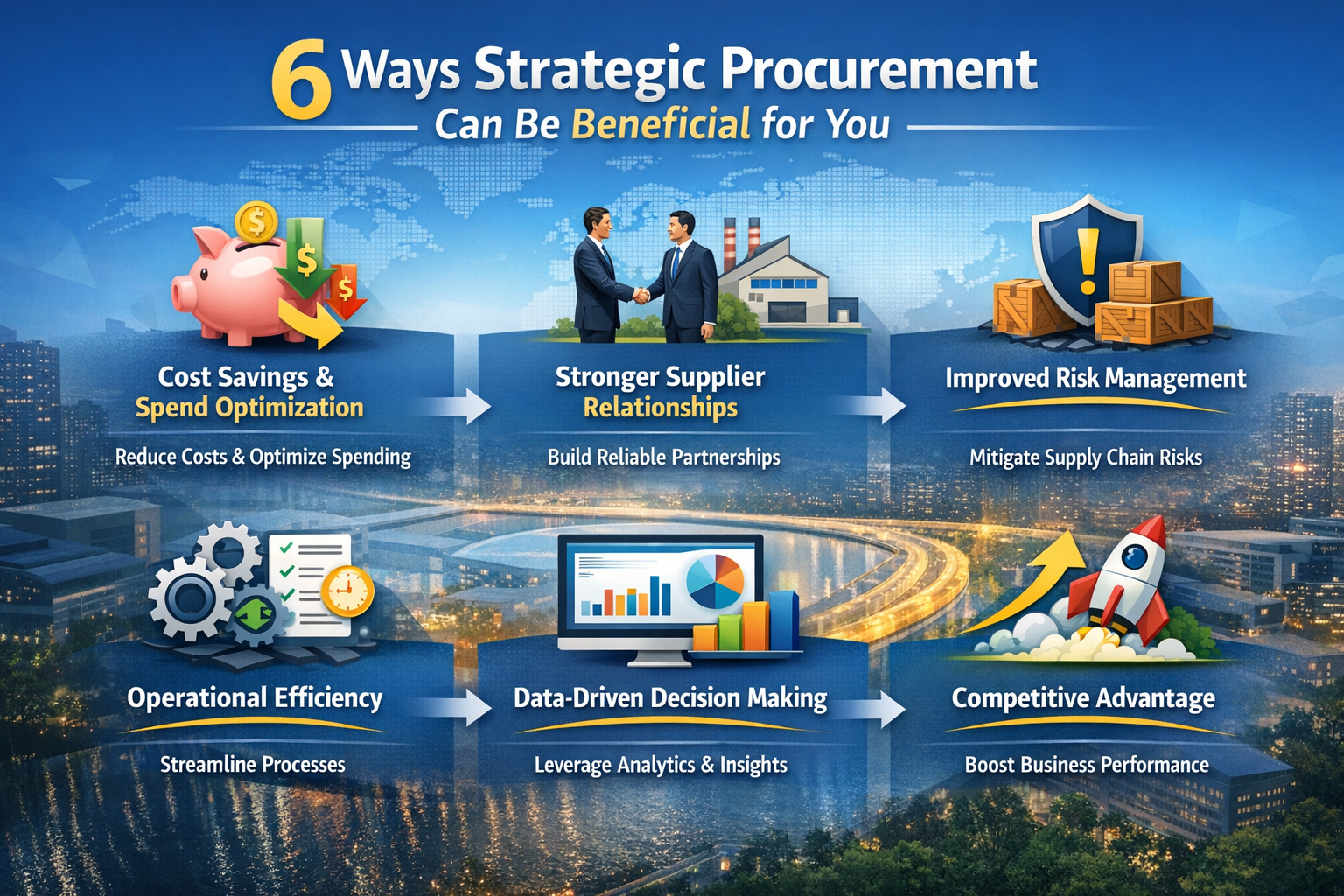

Here are some benefits of having a flexible and robust strategic procurement plan.
Streamlined Processes and Standardization:
Strategic procurement involves analyzing and optimizing procurement processes. By standardizing procedures, leveraging technology, and implementing best practices, organizations can achieve greater efficiency, reduce cycle times, eliminate redundancies, and improve overall process effectiveness.
Increased visibility:
A robust procurement strategy can help organizations gain better visibility into their spending and identify areas where savings can be achieved.
Cost Savings:
Strategic procurement focuses on identifying cost-saving opportunities through negotiations, volume discounts, supplier consolidation, and process efficiencies. By optimizing the procurement process and supplier relationships, organizations can achieve significant cost reductions and improve their bottom line spends.
Improved Supplier Relationships:
Strategic procurement emphasizes building strong relationships with key suppliers. By establishing collaborative partnerships and engaging in open communication, organizations can gain access to supplier expertise, innovation, and value-added services. This can lead to improved product quality, timely delivery, and better responsiveness to changing business needs.
Robust risk management:
A flexible strategic procurement can help organizations mitigate risks associated with their supply chain.
Enhanced Quality and Innovation:
Through strategic procurement, organizations can select suppliers based on their capabilities, track record, and commitment to quality. This enables access to high-quality goods and services that meet or exceed expectations. Strategic procurement also encourages suppliers to provide innovative solutions and collaborate on product development or process improvements.
Want to stay ahead in today’s competitive market?
Dive deeper into strategic procurement and learn how a smarter sourcing approach can future-proof your business.
Frequently Asked Questions
What are the three strategic procurement strategies?
There are several procurement strategies that organizations can adopt to optimize their procurement processes. However, three common strategic procurement strategies are:
Cost Reduction: This strategy focuses on reducing the costs associated with procurement. It includes tactics such as bulk purchasing, supplier negotiation, and sourcing from low-cost suppliers.
Supplier Relationship Management (SRM): This strategy involves developing and managing long-term relationships with suppliers. Through SRM, organizations can ensure a stable supply chain, negotiate better terms, and collaborate on innovations.
Risk Management: This strategy aims to identify, assess, and mitigate risks in the procurement process. This can include diversifying the supplier base, implementing quality controls, and developing contingency plans for supply chain disruptions.
What are the strategic procurement pillars?
The strategic procurement pillars are fundamental components that underpin an effective procurement strategy. These pillars are:
Sourcing and Supplier Selection: This involves identifying and selecting suppliers that can provide the required goods or services at the right quality, price, and time.
Cost Management and Reduction: This pillar focuses on optimizing costs through negotiation, volume discounts, and efficient procurement processes.
Quality Management: Ensuring that the procured goods or services meet the required quality standards and specifications.
Supplier Relationship Management (SRM): Building and maintaining strong relationships with suppliers to ensure a reliable and efficient supply chain.
Risk Management: Identifying and mitigating risks in the procurement process, such as supply chain disruptions, quality issues, or regulatory compliance.
Sustainability and Corporate Social Responsibility (CSR): Incorporating environmental and social considerations into procurement decisions to ensure ethical and sustainable sourcing.
Technology and Process Optimization: Leveraging technology to streamline procurement processes, improve transparency, and make data-driven decisions.
Legal and Regulatory Compliance: Ensuring that procurement activities comply with relevant laws, regulations, and industry standards.
What are the four areas of procurement?
The four areas of procurement are:
- Sourcing: This involves identifying and selecting suppliers, negotiating contracts, and securing the best terms and pricing for goods or services.
- Purchasing: The actual process of acquiring goods or services from selected suppliers, including issuing purchase orders, managing supplier relationships, and ensuring timely delivery.
- Inventory Management: Managing and controlling the stock of goods and materials to ensure optimal levels, minimize costs, and meet demand.
- Supplier Management: Monitoring and evaluating supplier performance, maintaining strong relationships, and addressing any issues or concerns that may arise during the procurement process.


