Comparable Company Analysis: How to identify comparable companies






Comparable Company Analysis (CCA) is one of the most widely used valuation techniques in finance, yet it is also one of the most misunderstood. At its core, this method seeks to determine a company’s value by examining how similar publicly traded businesses are valued in the market. While the concept appears straightforward, the real challenge lies in identifying the right comparable companies. Selecting inappropriate peers can distort valuation conclusions, weaken strategic decisions, and reduce analytical credibility.
This in-depth guide explains how to identify comparable companies in a descriptive, structured, and professional manner. Instead of relying on rigid checklists, we will explore the reasoning, financial logic, and qualitative judgment required to build a strong and defensible peer group
Understanding the Foundation of Comparable Company Analysis
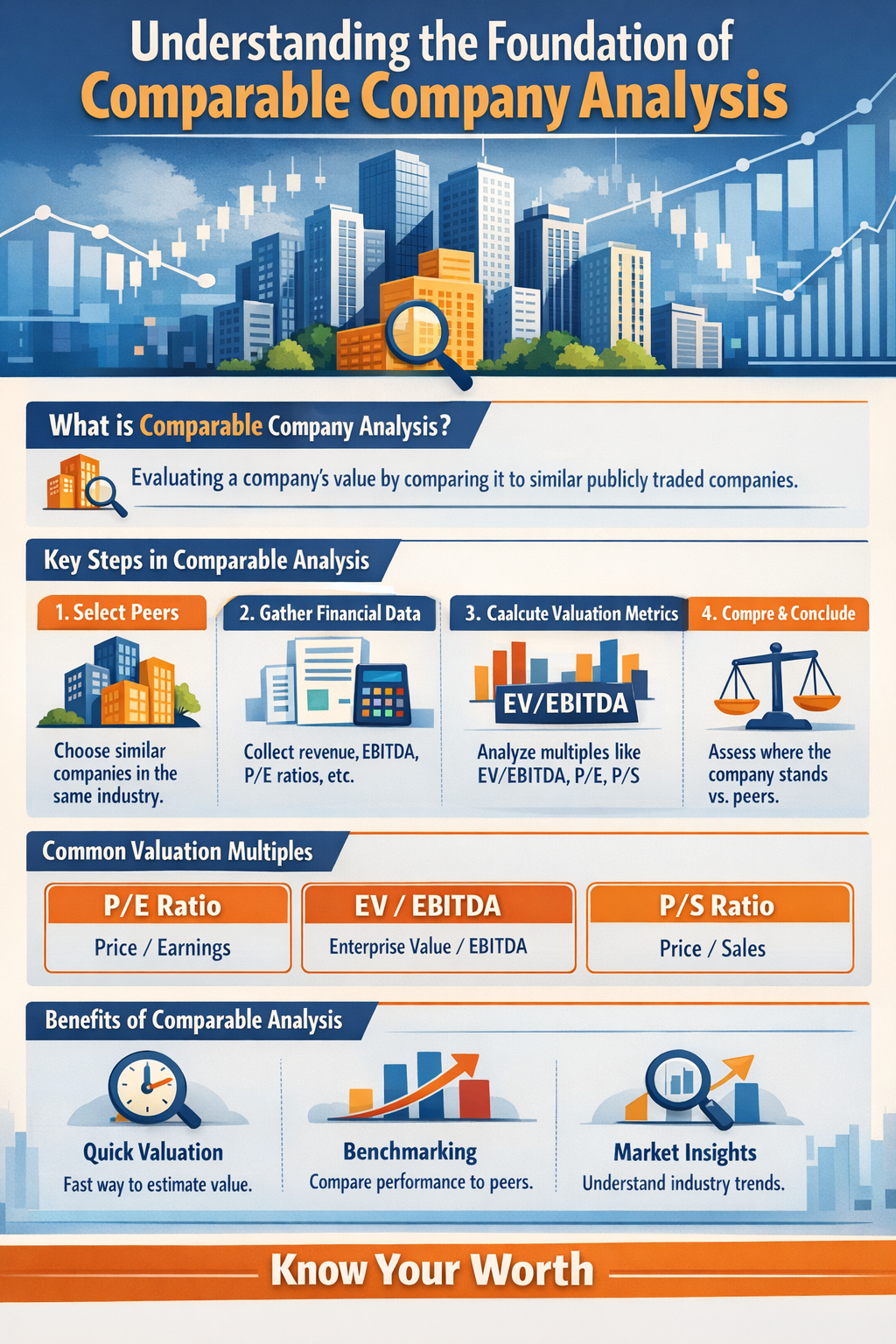
Comparable Company Analysis is built on the principle that similar businesses operating under similar conditions should trade at similar valuation multiples. These multiples may include Enterprise Value to EBITDA, Price to Earnings, Enterprise Value to Revenue, and other market-based ratios. The method reflects how investors currently price risk, growth, and profitability in a given sector.
Unlike intrinsic valuation methods that project future cash flows, CCA captures real-time market sentiment. This makes the selection of comparable companies extremely important. If the peer group is flawed, the valuation outcome will likely be misleading.
Identifying comparables requires more than matching industry labels. It demands a deep understanding of business economics, competitive positioning, financial structure, and growth dynamics.
Beginning with Industry Classification A Starting Point, Not a Conclusion
The process typically begins by identifying companies within the same industry classification. Standard frameworks such as GICS or NAICS provide a logical starting place. If a company operates in the global beverage sector, for example, it would make sense to initially examine large players like The Coca-Cola Company and PepsiCo.
However, stopping at industry classification would oversimplify the analysis. Even within the same industry, companies may differ significantly in product diversification, regional exposure, and revenue concentration. One company might derive most of its revenue from carbonated beverages, while another could generate a significant portion from snacks or bottled water. These differences influence growth prospects, margins, and risk profiles.
Industry alignment is necessary because it ensures a shared competitive environment. Yet it is only the foundation upon which deeper analysis must be built.
Evaluating the Business Model and Revenue Structure
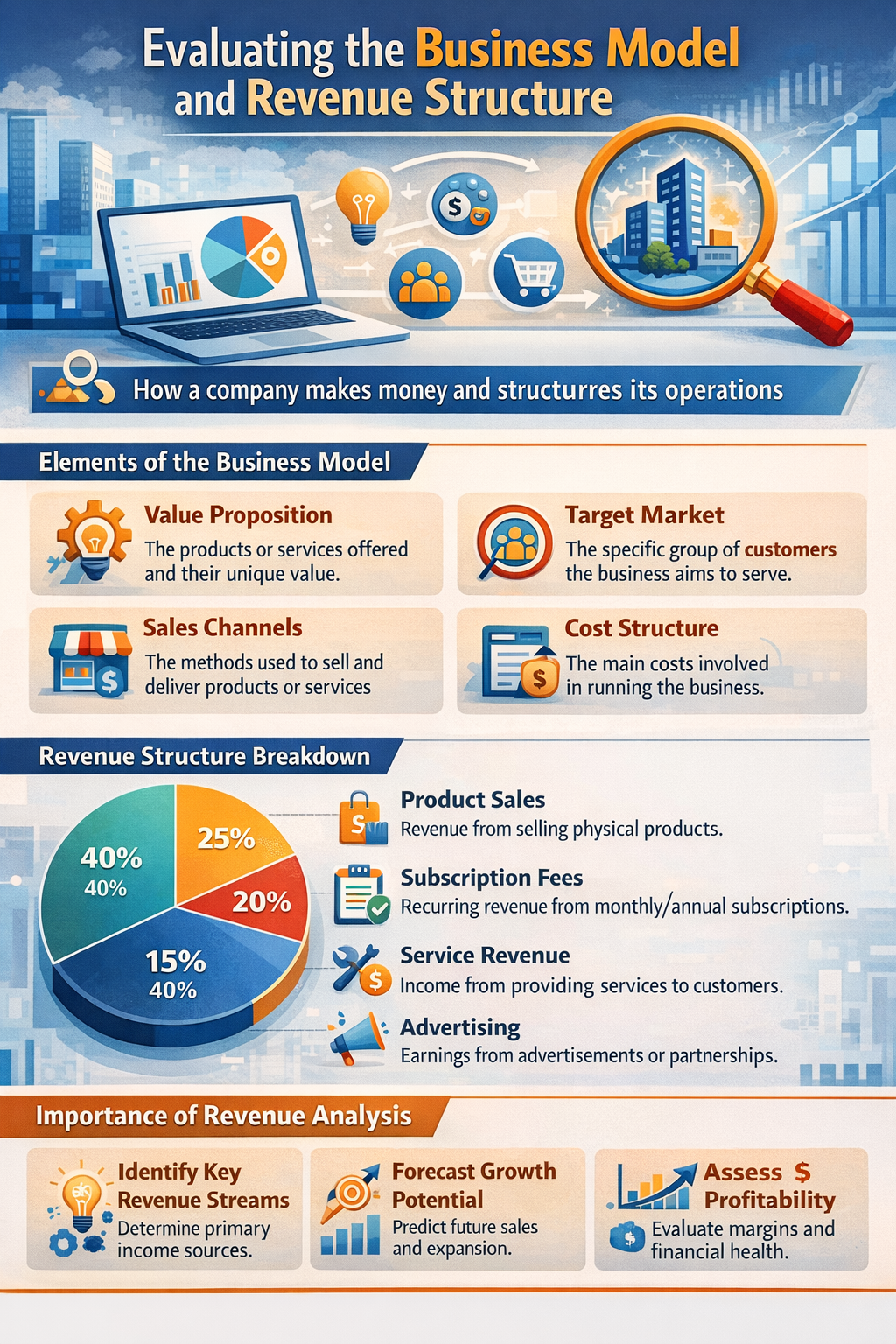
Two companies can sell similar products yet operate under entirely different economic structures. This is why understanding the business model is critical when identifying comparable companies.
Consider the technology sector. A cloud-based subscription company such as Salesforce generates recurring revenue through subscription contracts. This creates predictable cash flow, strong customer retention, and scalability. In contrast, a legacy software company relying on one-time license sales may experience more volatile revenue patterns.
Markets typically reward recurring revenue models with higher valuation multiples because they offer stability and visibility. Therefore, comparing a subscription-based firm with a transaction-based firm could distort valuation conclusions.
To properly identify comparables, one must examine how revenue is generated, how customers are acquired, how long they are retained, and how pricing structures function. Economic similarity matters more than product similarity.
Considering Size and Scale
Company size plays a meaningful role in valuation. Larger firms often benefit from economies of scale, stronger brand recognition, diversified revenue streams, and broader geographic reach. These characteristics generally reduce risk and may justify premium or more stable multiples.
For example, comparing a regional retailer with a multinational giant such as Walmart would likely create distortion. The smaller retailer may face higher operational risk, limited supplier bargaining power, and narrower margins.
When identifying comparable companies, analysts typically look for businesses within a reasonable range of revenue, market capitalization, or enterprise value. A peer group composed of similarly sized firms ensures that valuation multiples reflect comparable operational scale and market perception.
Aligning Growth Profiles
Growth expectations significantly influence valuation multiples. Companies experiencing rapid expansion often trade at higher multiples because investors anticipate future earnings acceleration.
If a target company is growing revenue at 20–30 percent annually, comparing it to mature firms growing at low single-digit rates may undervalue its potential. Conversely, pairing a slow-growth company with high-growth peers could inflate valuation beyond what fundamentals justify.
The automotive industry illustrates this concept clearly. Traditional automakers such as Toyota Motor Corporation operate in a mature industry with stable but moderate growth. Comparing such firms with emerging electric vehicle companies experiencing rapid adoption would not provide an accurate benchmark.
Growth alignment ensures that market expectations embedded in valuation multiples are consistent across the peer group.
Examining Profitability and Margin Structure
Profitability is another defining factor in identifying comparable companies. Margins reflect operational efficiency, cost structure, and competitive positioning.
A company operating with high gross and EBITDA margins typically demonstrates strong pricing power or operational discipline. In contrast, businesses with thin margins may face intense competition or higher cost burdens.
If two companies generate similar revenue but have drastically different margin profiles, the market may value them differently. Therefore, comparables should ideally exhibit similar profitability characteristics.
When margin differences exist, analysts must understand why. Is the variation driven by temporary factors, structural cost advantages, geographic exposure, or strategic investment phases? These qualitative insights strengthen the reliability of the peer selection process.
Assessing Geographic Exposure and Market Environment
Geography influences risk, regulation, consumer behavior, and economic stability. A company operating exclusively in developed markets may face different regulatory standards and economic conditions compared to one focused on emerging economies.
For instance, comparing a regional bank in Europe with a large American institution like JPMorgan Chase may require careful consideration of regulatory frameworks, interest rate environments, and capital requirements.
Currency exposure, political stability, and local market growth rates also affect valuation multiples. Therefore, identifying comparable companies often involves selecting firms operating in similar geographic regions or adjusting for regional differences when necessary.
Understanding Capital Structure and Financial Risk
Capital structure directly impacts valuation, especially when using equity-based multiples such as Price to Earnings. Companies with high leverage carry greater financial risk, which may influence how investors price their equity.
Two firms with identical operating income may trade at different equity multiples if one carries significantly more debt. This is why enterprise value multiples are often preferred when capital structures differ.
Evaluating debt levels, interest coverage ratios, and credit ratings ensures that comparables share similar financial risk profiles. Without this alignment, valuation conclusions may reflect capital structure differences rather than operational similarity.

Identifying Lifecycle Stage and Market Position
Companies evolve through stages of development. Some are in early growth phases, investing heavily in expansion. Others are mature, focusing on efficiency and shareholder returns.
A rapidly scaling company should not be compared directly with a slow-growth incumbent simply because they share an industry label. Lifecycle stage affects reinvestment needs, risk appetite, and strategic priorities.
Market positioning also matters. A company with a strong ecosystem and brand dominance, such as Apple Inc., may command higher multiples than competitors lacking similar integration and brand loyalty.
Strategic differentiation must be factored into comparable company selection to ensure economic equivalence.
Refining the Peer Group Through Judgment and Validation
Screening tools and financial databases can generate an initial list of potential comparables. However, automated filters cannot replace analytical judgment.
After generating a preliminary group, analysts must review annual reports, investor presentations, and financial disclosures to confirm business alignment. It is common to remove companies that appear similar at first glance but differ in meaningful ways upon closer inspection.
A strong comparable set usually includes a manageable number of well-justified peers. Too many companies dilute relevance, while too few reduce statistical reliability. The goal is not to create a large list but a defensible one.
Managing Imperfect Comparables
In practice, no two companies are perfectly identical. Markets are complex, and businesses are unique.
When perfect matches are unavailable, analysts may adjust by excluding statistical outliers, focusing on median multiples instead of averages, or segmenting peer groups into subcategories. Qualitative reasoning should always accompany numerical outputs.
For example, if one company’s multiple is temporarily inflated due to acquisition speculation, including it without adjustment may distort the overall valuation range.
Recognizing imperfections and applying thoughtful corrections enhances the credibility of Comparable Company Analysis.
Conclusion: Identifying Comparables Is Both Art and Science
Identifying comparable companies requires structured financial analysis combined with informed judgment. Industry classification provides a starting framework, but deeper evaluation of business model, scale, growth, margins, geography, capital structure, and strategic positioning ensures true economic similarity.
Comparable Company Analysis remains one of the most practical and widely accepted valuation tools because it reflects real market behavior. However, its reliability depends entirely on the quality of the peer group.
When comparable companies are selected with precision and strategic understanding, the resulting valuation becomes more than a numerical estimate. It becomes a market-informed insight that supports investment decisions, acquisition strategies, fundraising negotiations, and corporate planning.
Mastering the process of identifying comparable transforms CCA from a mechanical spreadsheet exercise into a powerful financial analysis skill one that adds clarity, credibility, and confidence to valuation decisions.