Vendor Concentration Risk: Meaning, Impact, and How to Manage It Effectively
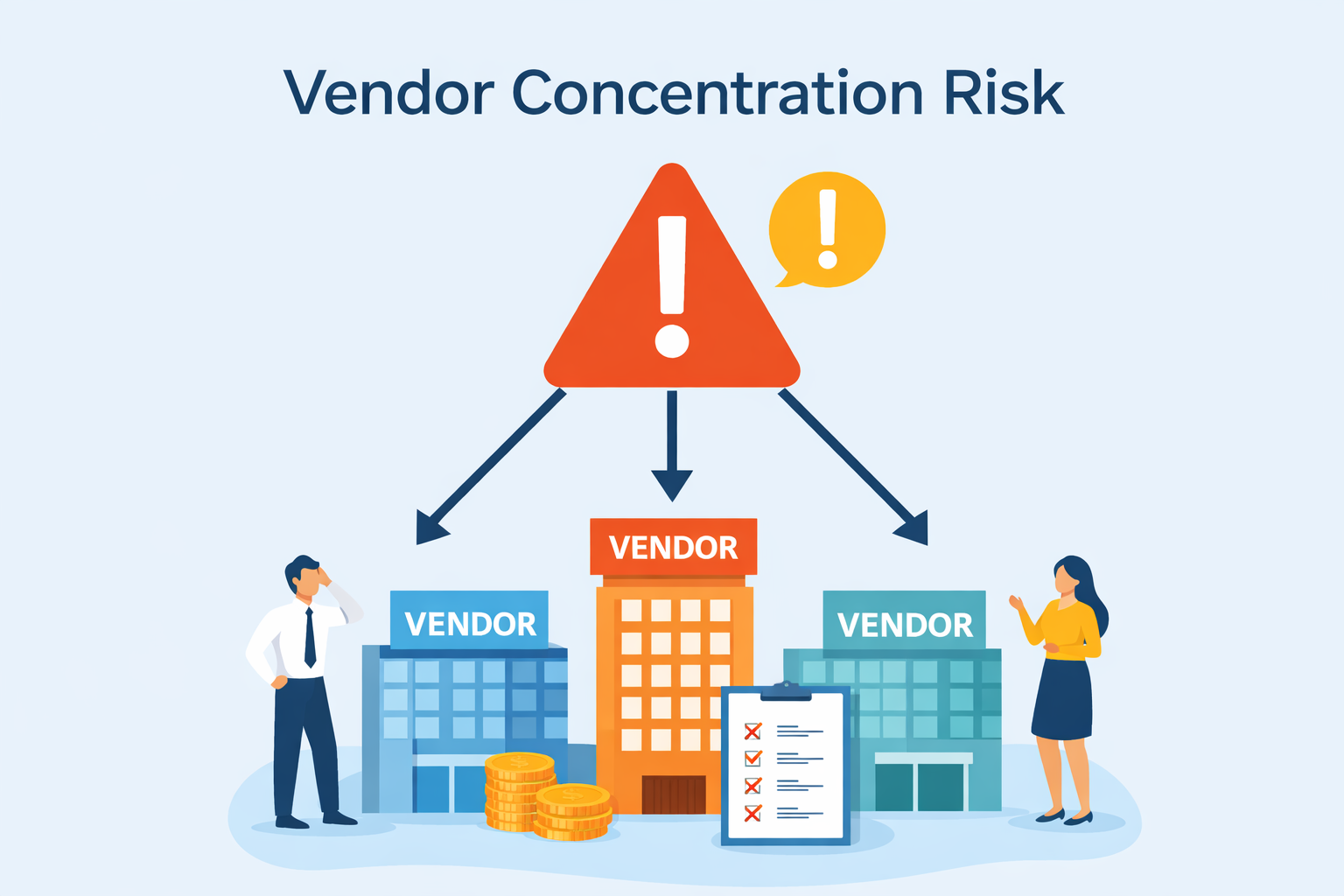





In an era of cost pressures and operational efficiency, businesses are increasingly narrowing their vendor base. Consolidating suppliers helps simplify procurement, reduce administrative overhead, and negotiate better pricing. However, this efficiency-driven approach often creates a serious and underestimated challenge: vendor concentration risk.
Vendor concentration risk develops quietly. Over time, organizations may rely heavily on one or two vendors for essential services such as IT infrastructure, logistics, manufacturing inputs, compliance support, or cloud platforms. When such vendors face disruptions whether due to financial stress, regulatory action, cyber incidents, or operational failure the impact on the business can be immediate and severe.
Recent supply chain disruptions, SaaS outages, MSME bankruptcies, and regulatory crackdowns have exposed how fragile concentrated vendor ecosystems can be. At the same time, regulators and auditors are placing greater emphasis on third-party risk management. As a result, managing vendor concentration risk is no longer optional. It is a strategic necessity for business resilience, compliance, and sustainable growth.
What Is Vendor Concentration Risk?
Vendor concentration risk refers to the level of exposure an organization faces when a significant portion of its operations, spending, data, revenue, or regulatory obligations depends on a single vendor or a small group of vendors. The risk becomes critical when the failure of one vendor can disrupt business continuity or cause financial and compliance damage.
This risk often arises unintentionally. Businesses may continue renewing contracts with familiar vendors, expand the scope of existing relationships, or rely on long-term exclusive agreements. Over time, switching costs increase, alternatives disappear, and dependency deepens.
It is important to distinguish vendor concentration risk from related concepts. Vendor risk evaluates the health and reliability of an individual vendor. Supplier dependency focuses on operational reliance on a specific supplier. Vendor concentration risk, however, looks at cumulative exposure across the entire vendor ecosystem. Even a financially stable vendor can pose high concentration risk if it represents a single point of failure.
Real-World Examples of Vendor Concentration Risk
Vendor concentration risk manifests across industries and functions.
A company that relies on a single managed IT service provider may face complete operational downtime if that provider suffers a cyberattack, system outage, or financial collapse. Similarly, organizations dependent on one logistics partner can experience delivery backlogs, customer dissatisfaction, and revenue loss during strikes, regulatory restrictions, or regional shutdowns.
In manufacturing, reliance on a single MSME vendor for a critical component can halt production if the supplier faces cash flow issues or operational disruptions. In the digital economy, organizations that depend on one cloud or SaaS provider risk data inaccessibility and service disruption during outages or compliance investigations.
These scenarios demonstrate how vendor concentration amplifies risk, even when vendors appear reliable under normal conditions.
Key Causes of Vendor Concentration Risk
Several factors contribute to the buildup of vendor concentration risk.
- Aggressive Cost Optimization
Vendor consolidation often starts as a cost-saving initiative but can unintentionally reduce supplier diversity.
- Exclusive or Long-Term Contracts
Long-term agreements without exit flexibility can lock businesses into high-risk dependencies.
- Weak Vendor Discovery and Onboarding
Without continuous market scanning, organizations fail to identify viable alternative vendors.
- Limited Visibility into Vendor Health
Many companies rely on outdated, periodic vendor assessments that fail to capture evolving risks.
Types of Vendor Concentration Risk
Vendor concentration risk affects businesses in multiple ways.
- Operational risk arises when vendor outages, delays, labor disputes, or infrastructure failures disrupt daily operations.
- Financial risk emerges if a concentrated vendor faces insolvency, liquidity stress, or rising costs, forcing expensive and urgent replacements.
- Compliance and regulatory risk occurs when vendor non-compliance with GST, MCA, or sector regulations exposes businesses to audits, penalties, or blocked input tax credits.
- Reputational risk stems from vendor involvement in fraud, unethical practices, or legal disputes that damage brand credibility.
- Cybersecurity and data risk increases when sensitive systems or data are centralized with one vendor, magnifying the impact of breaches or outages.
Impact of Vendor Concentration Risk on Indian Businesses
Vendor concentration risk is particularly significant in the Indian context.
Many Indian businesses operate within MSME-heavy vendor ecosystems. While MSMEs are vital to economic growth, they often have limited financial buffers, making them more vulnerable to economic shocks. Disruptions at the vendor level can quickly cascade through supply chains.
GST compliance adds another layer of risk. Vendor filing delays, mismatches, or non-compliance can block input tax credits and trigger scrutiny from tax authorities. Similarly, MCA non-compliance or strike-off risks among vendors can disrupt contracts and statutory obligations.
Vendor disruptions also affect working capital cycles, inventory planning, and customer commitments directly impacting cash flow and profitability.
Warning Signs of High Vendor Concentration Risk
Organizations should watch for early indicators of excessive vendor dependency, including:
- More than 40–50% of total spend concentrated with one vendor
- Absence of qualified backup or alternative vendors
- Limited visibility into vendor financial health or compliance status
- Reliance on manual spreadsheets for vendor tracking
- Lack of continuous monitoring or early warning alerts
Ignoring these signals increases the likelihood of sudden and costly disruptions.
How Vendor Concentration Risk Is Measured
Vendor concentration risk is commonly assessed using a combination of quantitative and qualitative metrics.
Spend concentration ratios measure how procurement spending is distributed across vendors. Dependency metrics evaluate operational, revenue, and compliance reliance on critical vendors. Exposure mapping assesses the potential business impact if a vendor fails.
Advanced risk scoring models combine financial indicators, compliance records, and operational signals to provide a holistic view. However, manual and periodic assessments remain a major limitation. They are slow, static, and reactive, often identifying risk only after damage has occurred.
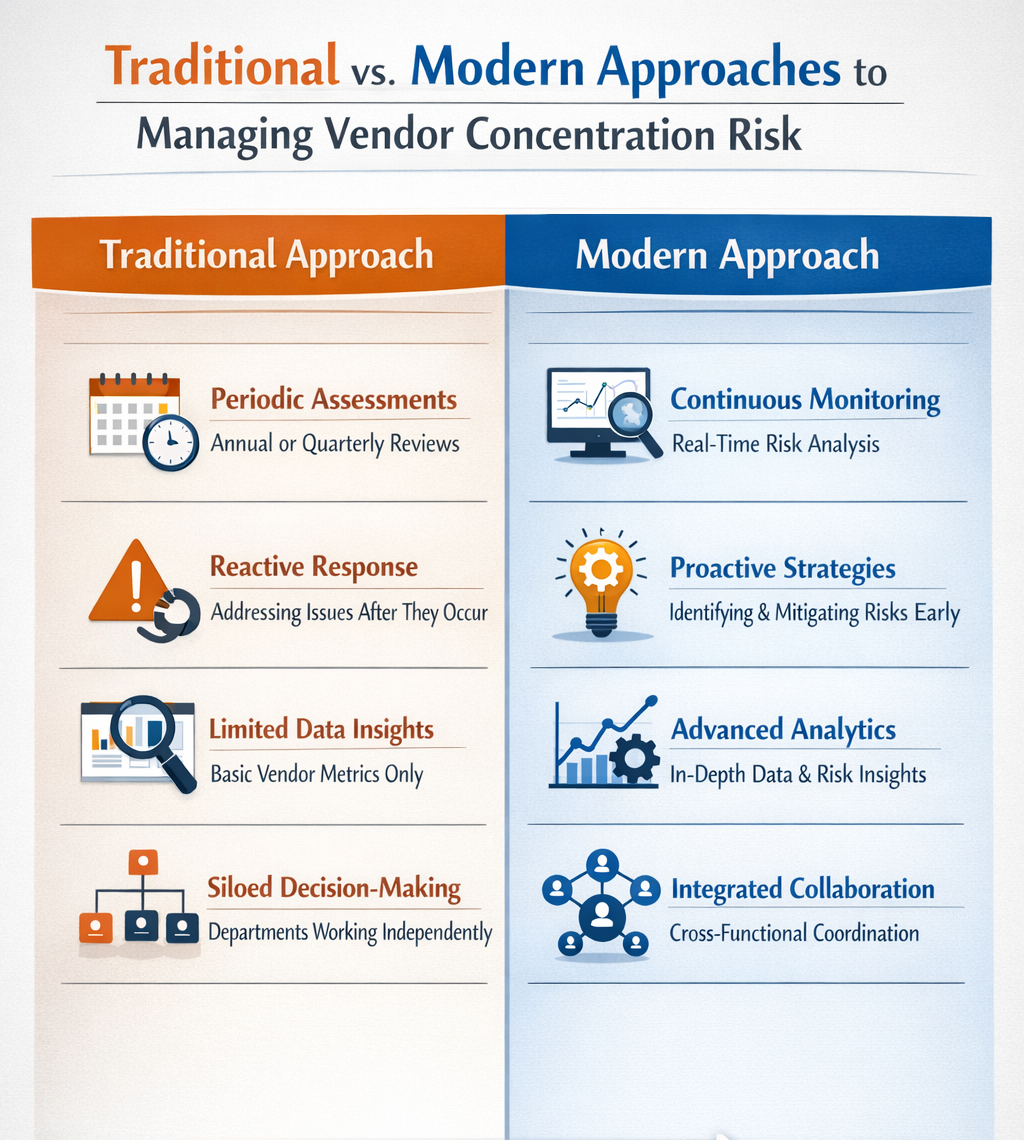
Traditional vs Modern Approaches to Managing Vendor Concentration Risk
Traditional vendor risk management relies on periodic reviews, static data, and manual controls. These methods fail to capture emerging risks and provide little time for intervention.
Modern approaches focus on continuous monitoring, real-time intelligence, and predictive alerts. Instead of reacting to disruptions, organizations can identify early warning signals and take preventive action. This shift is critical as vendor ecosystems become larger and more complex.
Best Practices to Mitigate Vendor Concentration Risk
Effective vendor concentration risk management requires a proactive strategy.
Organizations should avoid single-vendor dependency for critical functions by adopting vendor diversification as a core principle. Vendors should be segmented based on criticality and risk, with deeper monitoring applied to high-impact relationships.
Contracts must include clear SLAs, exit clauses, and contingency provisions. Equally important is business continuity planning ensuring that transition plans exist before disruptions occur, not after.
How SignalX Helps Manage Vendor Concentration Risk
SignalX enables organizations to move from reactive vendor reviews to proactive risk prevention through real-time intelligence.
SignalX provides continuous monitoring of vendor risk signals, visibility into financial health, GST and MCA compliance tracking, and early warning alerts for vendor distress. It also offers vendor network and exposure analysis, helping organizations identify hidden concentration risks across their ecosystem.
With India-specific regulatory insights, SignalX empowers businesses to strengthen resilience, maintain compliance, and make informed vendor decisions.
Strengthen Vendor Resilience with Proactive Risk Intelligence
Monitor financial, compliance, and concentration risks across your vendor ecosystem with SignalX.
Who Should Monitor Vendor Concentration Risk?
Vendor concentration risk affects multiple stakeholders across the organization.
Procurement teams can identify over-dependence and diversify suppliers. Risk and compliance professionals can ensure regulatory adherence and third-party oversight. Finance and audit teams can assess financial exposure and improve audit readiness. CXOs and founders gain enterprise-wide visibility to support strategic planning and growth decisions.
Vendor Concentration Risk Checklist
- Review vendor spend distribution regularly
- Verify vendor statutory and compliance filings
- Monitor vendor financial stability
- Identify and onboard backup vendors
- Enable continuous monitoring and early alerts
The Future of Vendor Concentration Risk Management
The future of vendor risk management will be driven by AI-powered analytics, predictive failure alerts, and increased regulatory oversight of third parties. Continuous monitoring will become standard practice rather than a best-to-have capability.
Final Thought
Vendor concentration risk is no longer a hidden operational issue. It is a strategic, financial, and regulatory challenge that can define business resilience. Organizations that proactively manage vendor concentration risk using real-time intelligence will be better positioned to withstand disruptions, maintain compliance, and remain competitive in an increasingly uncertain business environment.
Frequently Asked Questions (FAQs) on Vendor Concentration Risk
1. What is vendor concentration risk in simple terms?
Vendor concentration risk occurs when a business depends too heavily on one vendor or a small group of vendors for critical operations, services, compliance, or revenue. If that vendor fails, faces regulatory action, or experiences disruption, the business may suffer operational, financial, or compliance issues.
2. Why is vendor concentration risk a growing concern for businesses?
Vendor consolidation driven by cost optimization, SaaS adoption, and supply chain efficiency has increased dependency on fewer vendors. At the same time, disruptions such as MSME bankruptcies, cloud outages, cyber incidents, and regulatory enforcement have made concentrated vendor ecosystems more fragile and risky.
3. How is vendor concentration risk different from vendor risk?
Vendor risk evaluates the health, compliance, and reliability of an individual vendor. Vendor concentration risk assesses cumulative exposure across the entire vendor ecosystem. Even a financially stable vendor can pose high concentration risk if it represents a single point of failure.
4. What are common examples of vendor concentration risk?
Examples include relying on:
- A single IT or cloud service provider for core operations
- One logistics partner for nationwide deliveries
- A single MSME supplier for critical manufacturing inputs
- One compliance or payroll vendor for statutory filings
In each case, disruption at the vendor level can halt business operations.
5. How does vendor concentration risk impact Indian businesses specifically?
Indian businesses often depend on MSME-heavy vendor networks that may have limited financial resilience. GST and MCA non-compliance by vendors can block input tax credits, trigger audits, or invalidate contracts. Vendor disruptions also affect working capital, inventory cycles, and customer commitments.
6. What are the warning signs of high vendor concentration risk?
Key indicators include:
- More than 40–50% of spend concentrated with one vendor
- No qualified backup or alternative vendors
- Limited visibility into vendor financial health or compliance
- Manual vendor tracking using spreadsheets
- Absence of continuous monitoring or early warning alerts
7. How is vendor concentration risk measured?
It is measured using metrics such as:
- Spend concentration ratios
- Dependency on vendors for critical operations or compliance
- Exposure analysis to assess business impact if a vendor fails
- Risk scores combining financial, compliance, and operational data
Modern approaches rely on continuous monitoring rather than periodic assessments
8. What are the risks of managing vendor concentration manually?
Manual, spreadsheet-based reviews are static and reactive. They fail to detect early warning signals such as compliance lapses, financial stress, or network-level exposure. By the time issues surface, the business may already face disruption or regulatory consequences
9. How can businesses reduce vendor concentration risk?
Best practices include:
- Diversifying vendors for critical services
- Segmenting vendors based on risk and criticality
- Including exit clauses and SLAs in contracts
- Maintaining business continuity and transition plans
- Using continuous monitoring and early warning systems
10. How does SignalX help manage vendor concentration risk?
SignalX provides real-time vendor risk intelligence, continuous monitoring of financial health, GST and MCA compliance tracking, and early warning alerts for vendor distress. Its vendor network and exposure analysis helps identify hidden concentration risks across the ecosystem, enabling proactive risk prevention.