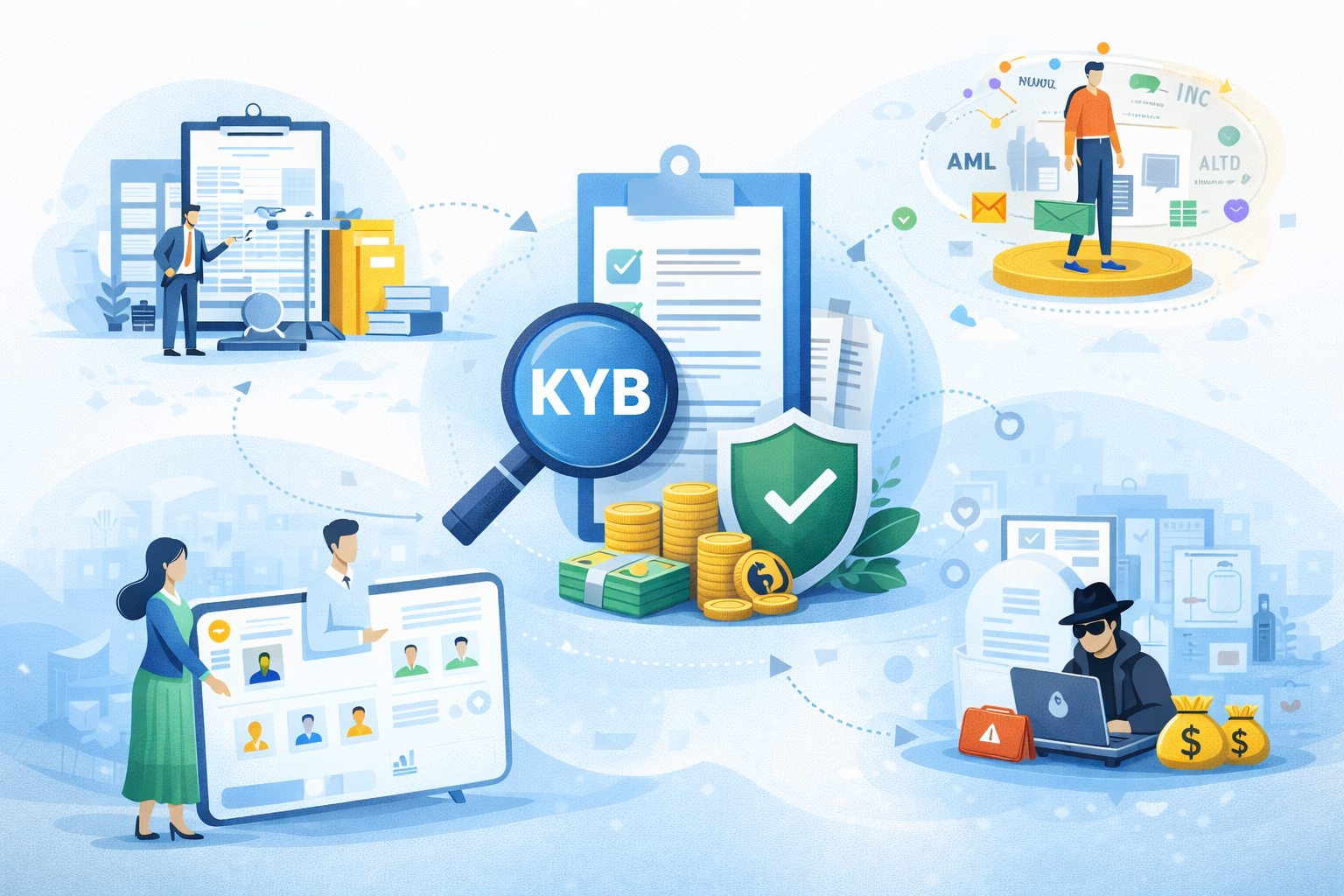
AML & KYB Verification
AML & KYB (Know Your Business) verification answers the most critical question in third-party relationships: Is this business legitimate, transparent, and compliant?
Why AML & KYB Verification Matters
KYB verification ensures that businesses are not shell entities, front companies, or vehicles for illicit financial activity. It verifies ownership, control, and financial legitimacy, helping organizations detect corporate identity fraud, money laundering risks, and regulatory non-compliance early.
Without proper KYB checks:
Forged incorporation documents or manipulated UBO lists may go unnoticed
Illicit actors can disguise ownership and move funds through corporate accounts
High-risk entities may be onboarded as “compliant” businesses
AML & KYB checks act as a first line of defense against financial crime and reputational damage.
What a Standard AML & KYB Report Covers
Identity & Corporate Verification
We confirm a company’s legal identity by validating registration details, incorporation records, and statutory filings through official sources such as ROC and MCA. This includes verification of incorporation documents, tax identifiers, business licenses, and alignment between registered and operating addresses to identify discrepancies early.
Ownership Structure
We map shareholding and ownership layers to identify ultimate beneficial owners (UBOs) and controlling interests. Parent–subsidiary relationships and frequent ownership changes are analyzed to highlight transparency gaps and potential risk signals.
Management Verification
We verify directors and key management personnel to assess governance integrity and leadership risk. This includes identifying active and resigned directors, as well as flagging disqualifications or compliance issues linked to individuals.
AML, Sanctions & PEP Screening
We screen entities and beneficial owners against global sanctions, watchlists, and politically exposed person (PEP) databases. Coverage includes major international lists such as the UN, OFAC, EU, and HM Treasury to ensure AML compliance.
Adverse Media & Reputation
We monitor negative news, legal disputes, and regulatory actions associated with the entity or its stakeholders. This helps surface reputational and compliance risks that may not appear in official filings.

Ongoing Monitoring
We provide continuous monitoring to track ownership changes, sanctions updates, and emerging adverse media. This ensures risk profiles remain current and enables timely action throughout the business relationship.

Don’t Be the Last to Discover a High-Risk Business
Book a quick call to see how AML & KYB risks are identified before onboarding.
Common KYB Red Flags Identified Early
Effective AML & KYB verification helps surface warning signs such as:
Mismatch between registered office and operating or shipping addresses
Absence of a verifiable credit or financial footprint
Discrepancies across incorporation documents, MoA, AoA, and trade licenses
Frequent or unexplained ownership and shareholding changes
Inconsistencies in management or director information
Identifying these indicators early prevents downstream exposure to fraud, enforcement action, and business disruption.
FAQs
AML (Anti-Money Laundering) focuses on detecting and preventing financial crime, while KYB (Know Your Business) verifies the legitimacy, ownership, and control of business entities. KYC applies to individuals, whereas KYB applies to companies and legal entities.
AML and KYB checks help businesses identify financial crime risks, avoid dealing with shell or fraudulent companies, and comply with regulatory requirements before onboarding customers, vendors, or partners.
AML & KYB screening can detect sanctions exposure, politically exposed persons (PEPs), adverse media, hidden beneficial owners, high-risk jurisdictions, and irregular ownership or control structures.
Yes. AML and KYB checks are mandatory for regulated entities such as banks, fintechs, crypto companies, and financial institutions under global frameworks like FATF, AML Directives, and local AML laws.
A KYB verification evaluates how a business is legally formed and controlled, including its registration status, operational address, directors, shareholding pattern, and the individuals who ultimately influence or benefit from the company.
AML signals can be screened quickly, but KYB verification depends on jurisdiction-specific corporate data, ownership complexity, and document availability, which often requires additional validation time beyond automated checks.
UBO (Ultimate Beneficial Owner) identification determines who ultimately owns or controls a business. It is critical for detecting hidden ownership, front companies, and potential misuse of corporate structures.
By verifying entity legitimacy, screening against sanctions and watchlists, and identifying ownership and reputational risks, AML & KYB screening prevents businesses from being used for money laundering or fraud.
AML and KYB checks allow organizations to identify compliance, ownership, and reputational risks within their vendor or partner ecosystem before engagement, helping prevent exposure to hidden liabilities or regulatory breaches.
AML & KYB should be risk-based and ongoing. Changes in ownership, sanctions lists, or adverse media after onboarding can introduce new risks that require continuous monitoring.
Identify Vendor Risk Before It Impacts Your Business
Use SignalX to verify vendors, uncover hidden risks, and stay AML and KYB-compliant.