Assess Slavery & Child Labor Risks: 10 Questions to ask Suppliers

Modern supply chains are more complex than ever. A single product can involve raw materials from one continent, processing in another, and final assembly in yet another. While globalization has created efficiency and growth, it has also increased the risk of hidden labor abuses including forced labor, debt bondage, and child exploitation.
High-profile cases in industries such as cocoa production in Côte d’Ivoire, garment manufacturing in Bangladesh, and mining operations in the Democratic Republic of the Congo have shown that slavery and child labor risks can exist deep within supply chains. Regulatory pressure is also rising, with laws such as the UK Modern Slavery Act and the California Transparency in Supply Chains Act requiring companies to actively address and disclose their efforts to combat modern slavery.
For procurement leaders, compliance officers, and sustainability teams, supplier due diligence is no longer optional; it is a core business responsibility. One of the most effective ways to begin assessing risks is by asking the right questions.
Below are ten essential questions every organization should ask its suppliers to assess slavery and child labor risks effectively.

What Policies Do You Have on Forced Labor and Child Labor?
A supplier’s written policies are the foundation of its labor standards. Ask for documented policies that explicitly prohibit forced labor, bonded labor, human trafficking, and child labor.
The policy should align with internationally recognized standards, such as the conventions of the International Labour Organization. It should clearly define minimum working age requirements, outline consequences for violations, and apply not only to the supplier’s own operations but also to subcontractors.
If a supplier lacks formal policies, this signals a potential governance gap.
How Do You Verify Workers’ Age and Identity?
Child labor often persists due to weak age verification systems. Suppliers should have a reliable process to confirm the legal working age of every employee.
Ask how they:
Verify government-issued identification
Handle cases where documentation is unavailable
Monitor apprenticeships or young worker programs
Effective age verification includes secure recordkeeping and regular audits. In high-risk regions, companies may need enhanced procedures to prevent falsified documents.
Are Workers Required to Pay Recruitment Fees?
Debt bondage frequently begins with recruitment fees. Workers may borrow money at high interest rates to secure employment, trapping them in exploitative conditions.
Ask suppliers:
Who pays recruitment and placement fees?
Are third-party recruiters used?
How are recruitment agents monitored?
A responsible supplier should follow the “employer pays” principle, ensuring that workers are not burdened with hiring-related costs.
Do Workers Have Freedom of Movement?
Confiscation of passports, identity cards, or personal belongings is a common indicator of forced labor. Workers should be free to leave their workplace and accommodation outside of working hours.
Ask whether:
Employees retain control of their identification documents
There are restrictions on movement
Workers can resign without penalty
Clear answers supported by policy and practice reduce the risk of coercion.
What Are the Working Hours and Overtime Practices?
Excessive working hours can signal exploitative conditions, especially when combined with low wages or threats of dismissal.
Suppliers should:
Track working hours accurately
Provide voluntary overtime
Pay legally mandated overtime rates
Ask for timekeeping records and wage documentation. Consistency between payroll data and employee interviews is critical.
How Do You Ensure Wages Meet Legal and Ethical Standards?
Wage compliance goes beyond minimum legal requirements. In some regions, minimum wages do not meet basic living needs.
Ask suppliers:
How wages are calculated.
Whether wage deductions are transparent.
If workers receive clear pay slips.
Unexplained deductions, delayed payments, or payment in non-cash forms can indicate abuse. Transparency is key.
Do You Conduct Internal or Third-Party Audits?
Audits provide structured oversight. Ask suppliers if they conduct regular labor audits and whether independent third parties are involved.
While audits alone cannot eliminate risk, they can identify red flags such as:
- Underage workers
- Unsafe working conditions
- Excessive overtime
Review past audit findings and corrective action plans. A credible supplier will be transparent about areas needing improvement and the steps taken to address them.
How Do You Manage Subcontractors and Lower-Tier Suppliers?
Labor abuses often occur beyond direct suppliers, particularly in informal or lower-tier operations. For example, raw material sourcing in agricultural sectors or small-scale mining operations may fall outside direct oversight.
Ask:
Do you map your supply chain beyond Tier 1?
How do you assess subcontractors’ labor practices?
Are there contractual obligations requiring compliance with labor standards?
A mature supplier should demonstrate visibility and control beyond its immediate operations.
Is There a Worker Grievance Mechanism?
Workers must have safe channels to report abuse without fear of retaliation.
Ask suppliers:
Whether grievance systems are confidential
If workers are trained on how to use them
How complaints are investigated and resolved
Effective grievance mechanisms can include anonymous hotlines, worker committees, or digital reporting platforms. The key measure is whether workers trust and use them.
How Do You Remediate Identified Violations?
Discovering a violation is only the first step. Responsible suppliers must take corrective and preventive action.
Ask:
What happens if child labor is identified?
How are victims supported?
How are systemic issues addressed to prevent recurrence?
Remediation should prioritize the welfare of affected workers for instance, ensuring that children removed from hazardous work are supported in returning to school rather than losing income abruptly.
Moving Beyond Questions: A Risk-Based Approach
While these ten questions provide a strong starting point, effective risk assessment requires ongoing engagement. Companies should adopt a risk-based approach by:
- Identifying high-risk geographies and sectors
- Conducting deeper due diligence in vulnerable regions
- Collaborating with industry peers and civil society
Global frameworks such as the United Nations Guiding Principles on Business and Human Rights encourage companies to embed human rights due diligence into their operations. Aligning with such frameworks demonstrates commitment beyond compliance.
Technology can also enhance visibility. Digital traceability systems, worker voice platforms, and blockchain-based tracking tools are increasingly used to strengthen transparency.
Red Flags That Require Immediate Attention
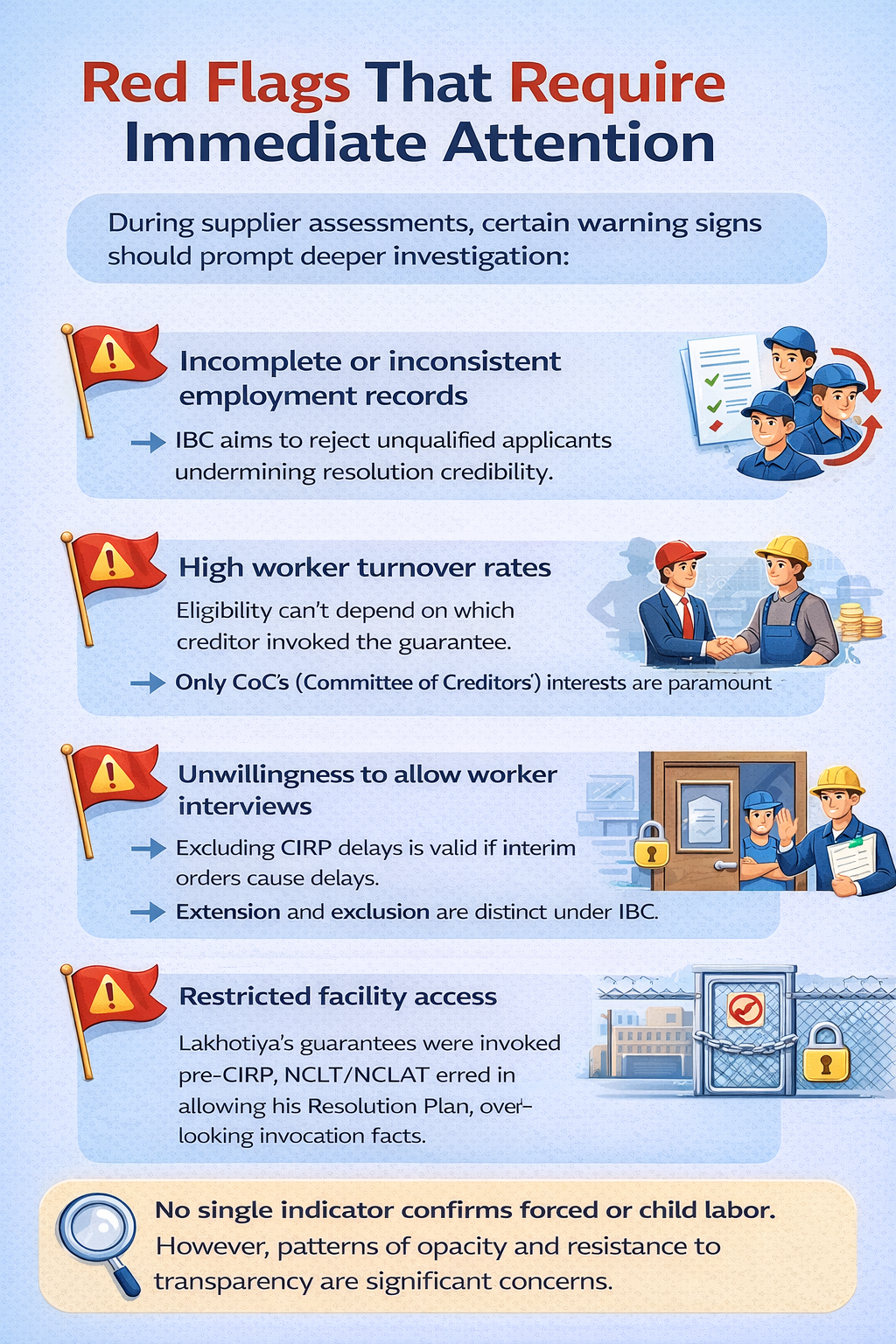
During supplier assessments, certain warning signs should prompt deeper investigation:
- Incomplete or inconsistent employment records
- High worker turnover rates
- Recruitment through informal brokers
- Unwillingness to allow worker interviews
- Restricted facility access
No single indicator confirms forced or child labor. However, patterns of opacity and resistance to transparency are significant concerns.
Building Long-Term Supplier Partnerships
Addressing slavery and child labor risks is not solely about policing suppliers. It is about building responsible partnerships.
Leading companies understand that abrupt contract termination may worsen conditions for workers. Instead, they focus on:
- Capacity building
- Clear corrective action timelines
- Ongoing monitoring
- Incentives for compliance
A collaborative approach fosters continuous improvement and strengthens trust across the supply chain.
Why Proactive Assessment Matters
The consequences of ignoring labor risks extend beyond legal penalties. Reputational damage, investor pressure, consumer backlash, and operational disruptions can severely impact a company’s future.
Ethical supply chains are increasingly linked to brand value and long-term resilience. Investors are integrating environmental, social, and governance (ESG) criteria into decision-making. Consumers are demanding transparency about how products are made.
More importantly, proactive assessment protects vulnerable workers from exploitation. Every question asked and every corrective action taken contributes to safer, fairer workplaces.
Conclusion
Slavery and child labor risks remain persistent challenges in global supply chains. However, organizations are not powerless. By asking the right questions, conducting thorough due diligence, and fostering transparent supplier relationships, companies can significantly reduce their exposure to labor abuses.
The ten questions outlined above serve as a practical framework for evaluating supplier practices. They help uncover hidden vulnerabilities, strengthen compliance systems, and promote ethical standards across all tiers of the supply chain.
In a world where corporate accountability is under increasing scrutiny, proactive engagement is no longer optional. It is a business imperative and a moral responsibility.
Responsible sourcing begins with awareness. It advances through inquiry. And it succeeds through sustained commitment.


