Litigation Checks API

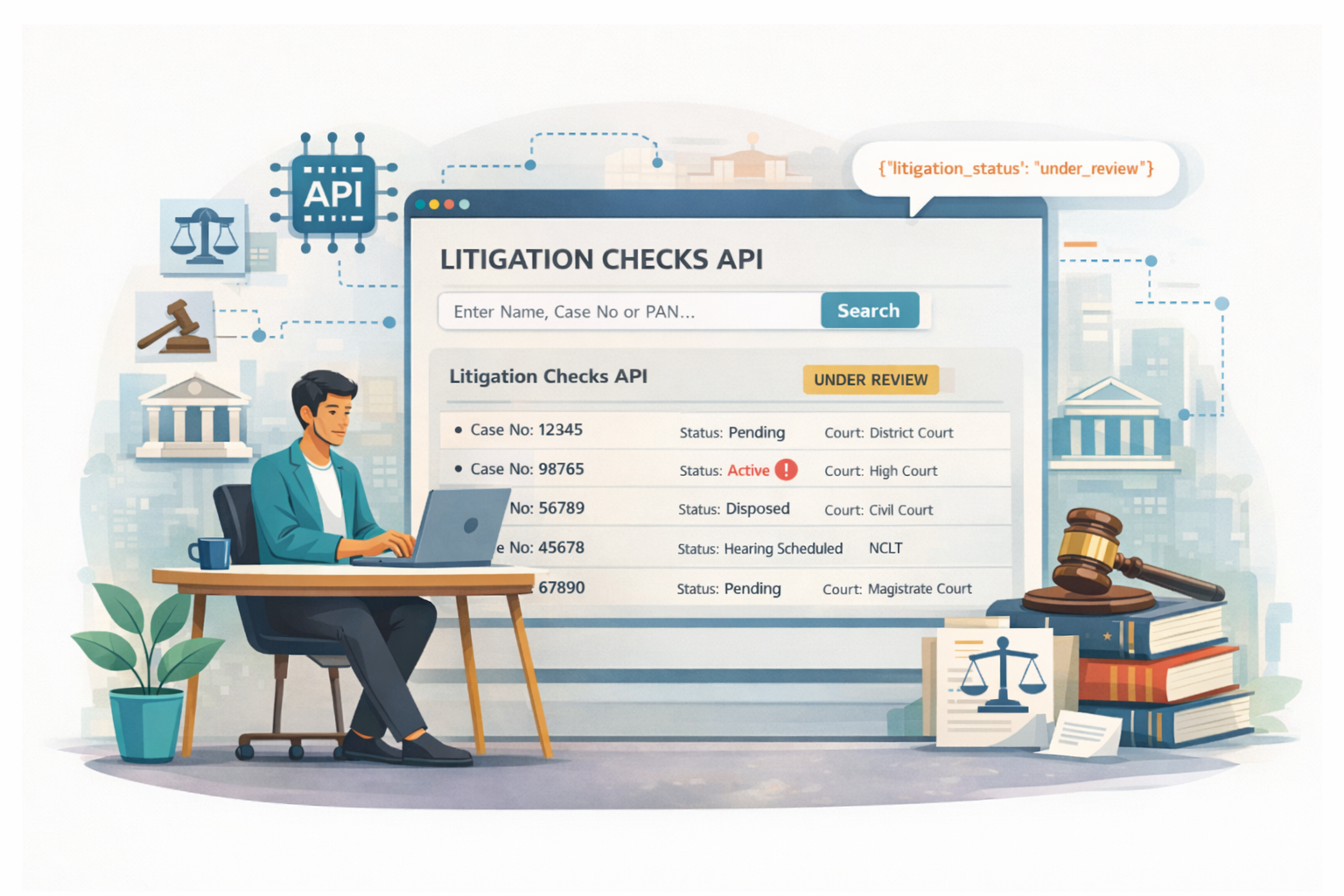
SignalX Litigation Checks API enables seamless access to structured litigation data across Indian courts and tribunals so you can embed legal risk intelligence directly into your workflows, platforms, and decision engines. Instead of manually querying multiple court portals or relying on incomplete disclosures, the API delivers consolidated, machine-readable litigation records mapped to entities, directors, and counterparties.

Litigations Checks API

How the Litigation Checks API Fits into Your Stack

Submit Entity Identifiers

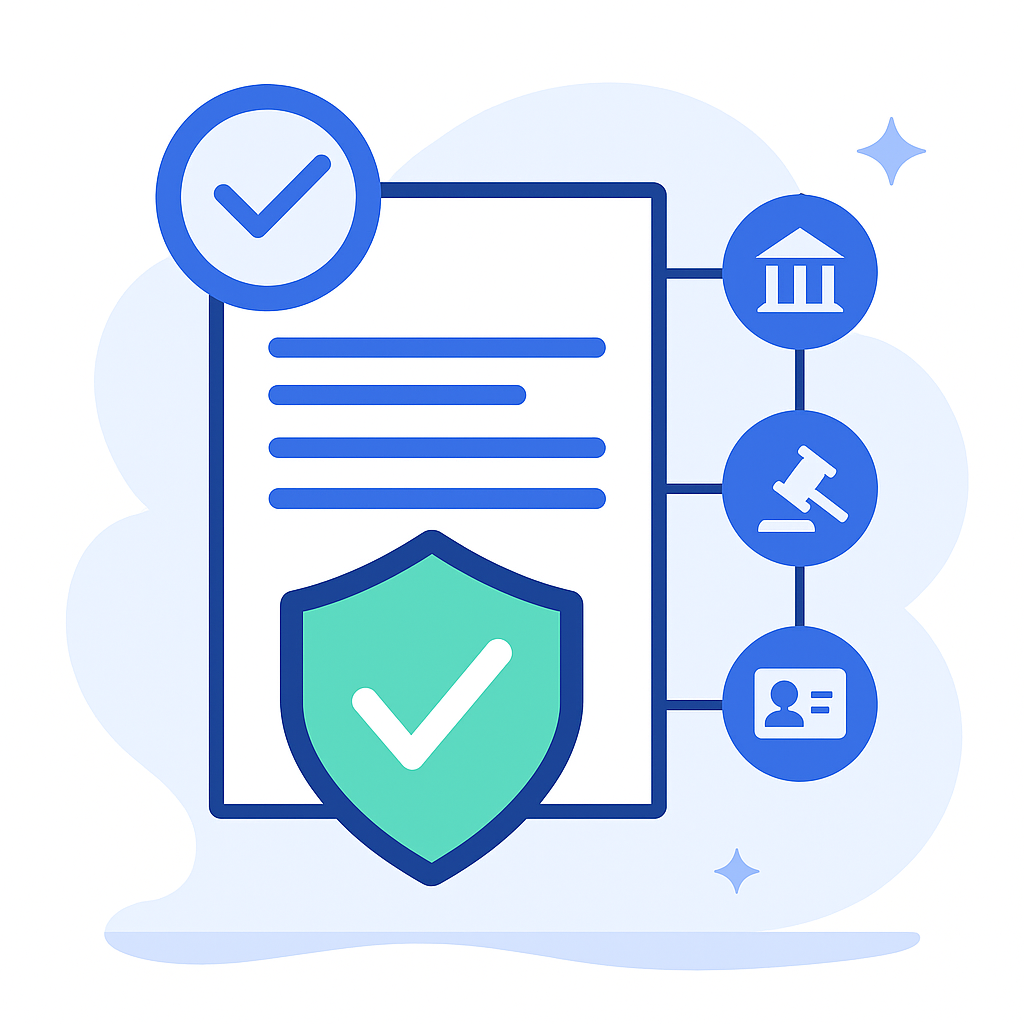
Provide key identifiers such as Company Name, CIN, PAN, Director Name, or Individual Name to initiate a litigation check across courts and tribunals.

Multi-Court Litigation Search

SignalX queries judicial and tribunal sources across the Supreme Court, High Courts, District Courts, and regulatory forums to identify relevant litigation records linked to the entity or individual.

Structured API Response

The API returns a clean, structured JSON response containing litigation details, severity signals, and financial or regulatory exposure ready for direct integration into your systems.

API Response Includes:

  • entity_match_status – Exact / Probable / No Match
  • entity_type – Company / Individual / Director / KMP
  • case_summary
  • case_type_breakup – Civil / Criminal / Regulatory / Commercial
  • court_coverage
  • nature_of_disputes – Contract / Tax / Recovery / Fraud / Labor / Property / Regulatory
  • insolvency_and_recovery_flags
  • criminal_and_governance_flags – Fraud / Cheating / Forgery / Corruption
  • data_last_updated

Use Cases

For Credit & Lending Platforms

Embed litigation intelligence directly into credit underwriting and monitoring systems. Automatically detect recovery proceedings, insolvency filings, and enforcement actions before approving loans or extending credit limits reducing default and recovery risk.

For Compliance & Risk Management Systems

Integrate litigation screening into onboarding and ongoing monitoring workflows. Flag regulatory actions, criminal cases, and high-risk disputes programmatically to strengthen governance and reduce compliance blind spots.

For Procurement & Vendor Risk Platforms

Add automated litigation checks to vendor onboarding and supplier risk engines. Identify dispute-heavy counterparties, contract breach patterns, or legal exposure before onboarding partners or signing long-term agreements.

Benefits of Using Our API

Plug and Play Integration

A REST API with predictable request/response formats and structured case-level outputs makes implementation seamless across credit, compliance, and risk systems.

Real-time Litigation Screening

Fetch litigation records instantly using company name, CIN, PAN, or director details without manual court portal searches.

Reduce Legal & Counterparty Risk

Automatically detect insolvency, recovery, criminal, and regulatory cases to flag high-risk entities early and prevent financial or compliance setbacks.
Accurate & Structured Case Intelligence

Access normalized, case-level litigation data including case number, court, filing date, status, and party details delivered in a clean, structured format to reduce ambiguity and false positives.

Built for Scale

Designed to handle both single lookups and high-volume batch screening with low latency and reliable performance, making it ideal for automated risk and compliance workflows.
Seamless Workflow Automation

Embed litigation checks directly into onboarding, KYB, credit, and vendor workflows to automate risk alerts, escalations, and approval decisions without manual intervention.
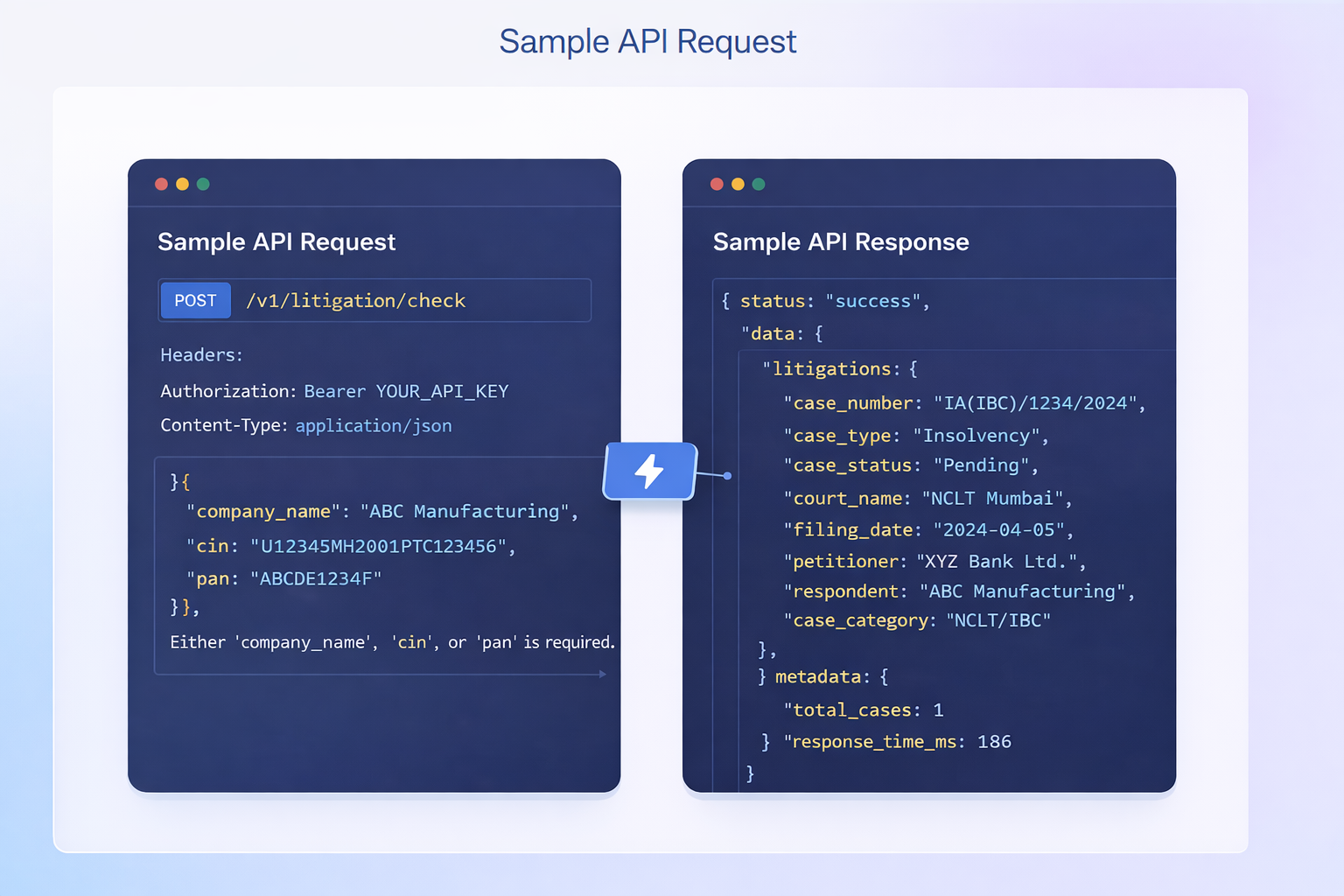

Sample API Request

Litigations Checks API

FAQs

1. What is a Litigation Checks API?

A Litigation Checks API allows businesses to programmatically retrieve court case and legal dispute records related to a company or its directors. It automates litigation verification for credit, compliance, onboarding, and due diligence workflows.

2. How can I check if a company has ongoing court cases in India?

You can check if a company has ongoing court cases by using a litigation search API that scans publicly available judicial records across courts such as NCLT, DRT, High Courts, and other tribunals, providing structured case-level data instantly.

3. Does the Litigation API cover NCLT insolvency and IBC cases?

Yes, the Litigation Checks API includes insolvency and bankruptcy matters filed under the Insolvency and Bankruptcy Code (IBC), including NCLT proceedings, helping identify companies under resolution or liquidation.

4. Can I verify director-level litigation records through an API?

Yes, the API can retrieve litigation records linked to directors, promoters, or authorized signatories, enabling enhanced governance risk assessment and background verification.

5. Is the Litigation Checks API suitable for credit risk assessment?

Absolutely. Lenders and NBFCs use litigation APIs to detect recovery cases, insolvency filings, and legal disputes before sanctioning loans or extending credit limits.

6. Can this API be used for vendor and third-party risk screening?

Yes, the API integrates into procurement and vendor onboarding workflows to automatically flag suppliers involved in legal disputes, insolvency cases, or regulatory actions.

7. Does the API provide real-time litigation status updates?

The API provides up-to-date case status information, including whether cases are active, disposed, pending, or under appeal, enabling continuous risk monitoring.

8. What courts and tribunals are covered under the Litigation Checks API?

Coverage typically includes NCLT, DRT, High Courts, District Courts, and select regulatory or quasi-judicial authorities, depending on the data scope and integration.

By replacing manual court portal searches with automated, structured data retrieval, the API reduces turnaround time, minimizes oversight risk, and improves consistency in legal due diligence checks.

10. Can the Litigation Checks API be integrated into existing compliance or KYC systems?

Yes, the API is built for seamless integration into KYC, KYB, AML, credit underwriting, and enterprise risk management systems via REST-based architecture.

Bring litigation intelligence into your decision engine.

Embed structured court case data into underwriting, KYB, and third-party risk platforms with a scalable, REST-based API.