Channel Partner Due Diligence: A Step-by-Step Guide to Mitigating Risk and Building Trust
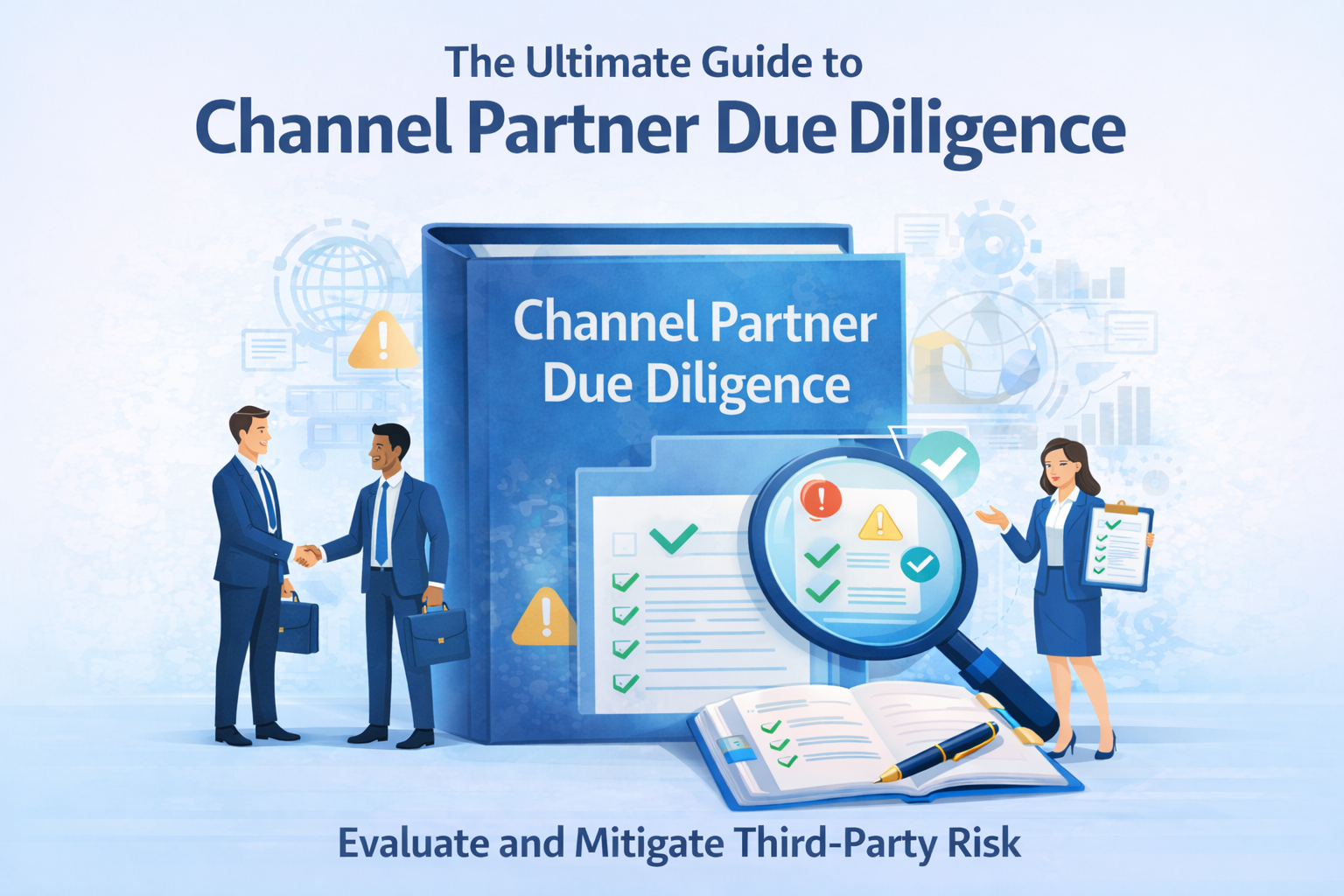





In today’s highly interconnected business landscape, organizations rarely operate in isolation. Growth often depends on third-party distributors, resellers, agents, suppliers, and strategic allies collectively known as channel partners. While these relationships unlock new markets and efficiencies, they also introduce risks that can significantly impact revenue, reputation, and regulatory standing. This is where channel partner due diligence becomes not just a best practice, but a business necessity.
Channel partner due diligence refers to the systematic process of evaluating potential and existing partners to ensure they meet legal, financial, operational, and ethical standards before and throughout the partnership lifecycle. It is a structured approach designed to uncover risks that may not be immediately visible during early discussions or negotiations.
The importance of due diligence has grown substantially as global supply chains expand, regulatory requirements become more complex, and reputational risks travel faster in the digital age. A single non-compliant or unethical partner can expose an organization to fines, legal action, operational disruption, and lasting brand damage.
The primary objective of channel partner due diligence is to build trust while minimizing uncertainty. By thoroughly assessing a partner’s background, capabilities, and compliance posture, businesses can make informed decisions, safeguard their interests, and establish partnerships that are sustainable over the long term.
Understanding Channel Partner Risks
Every channel partnership carries inherent risks, but not all risks are equal or immediately apparent. Understanding these risk categories is the foundation of an effective due diligence program.
Legal and regulatory compliance risks arise when partners fail to adhere to local or international laws, such as anti-bribery regulations, trade sanctions, data protection laws, or industry-specific requirements. Even if violations occur without the company’s direct involvement, liability can still extend to the organization.
Financial stability risks relate to a partner’s ability to meet contractual obligations and remain solvent. A financially unstable partner may default on payments, disrupt supply chains, or collapse unexpectedly, leaving the business exposed.
Reputational concerns stem from a partner’s public image, ethical behavior, and historical conduct. In an era where negative news spreads instantly, association with a partner involved in fraud, corruption, or unethical practices can severely damage brand credibility.
Operational capability risks focus on whether a partner has the infrastructure, processes, and expertise to perform as promised. Poor operational execution can lead to missed deadlines, quality issues, and dissatisfied customers.
Real-world cases demonstrate the cost of inadequate due diligence. Companies have faced regulatory penalties due to distributors engaging in bribery, lost market share due to underperforming partners, and public backlash from associations with unethical suppliers. These examples highlight that due diligence is not merely a formality, but a critical risk management function.

The Due Diligence Process: Step-by-Step
An effective due diligence process follows a structured sequence, ensuring consistency and thoroughness across all partner evaluations.
The preliminary assessment stage involves an initial screening to identify obvious red flags. This may include basic background checks, sanctions screenings, and high-level reviews of the partner’s business model and geographic exposure.
Information gathering follows, where organizations collect detailed documentation and data. This typically includes legal records, financial statements, compliance policies, ownership structures, and operational details relevant to the partnership.
Evaluation and analysis is the stage where collected information is reviewed against predefined criteria. Risks are assessed based on severity and likelihood, allowing decision-makers to distinguish between acceptable risks and deal-breaking concerns.
Risk mitigation strategies are developed to address identified issues. This may involve contractual safeguards, compliance training, enhanced monitoring, or corrective action plans agreed upon with the partner.
Decision making brings together all findings to determine whether to proceed, pause, or decline the partnership. This decision should be documented and supported by clear rationale to ensure accountability and audit readiness.
Ongoing monitoring ensures that due diligence does not end once a contract is signed. Continuous oversight helps detect changes in risk profiles, regulatory exposure, or partner behavior over time.
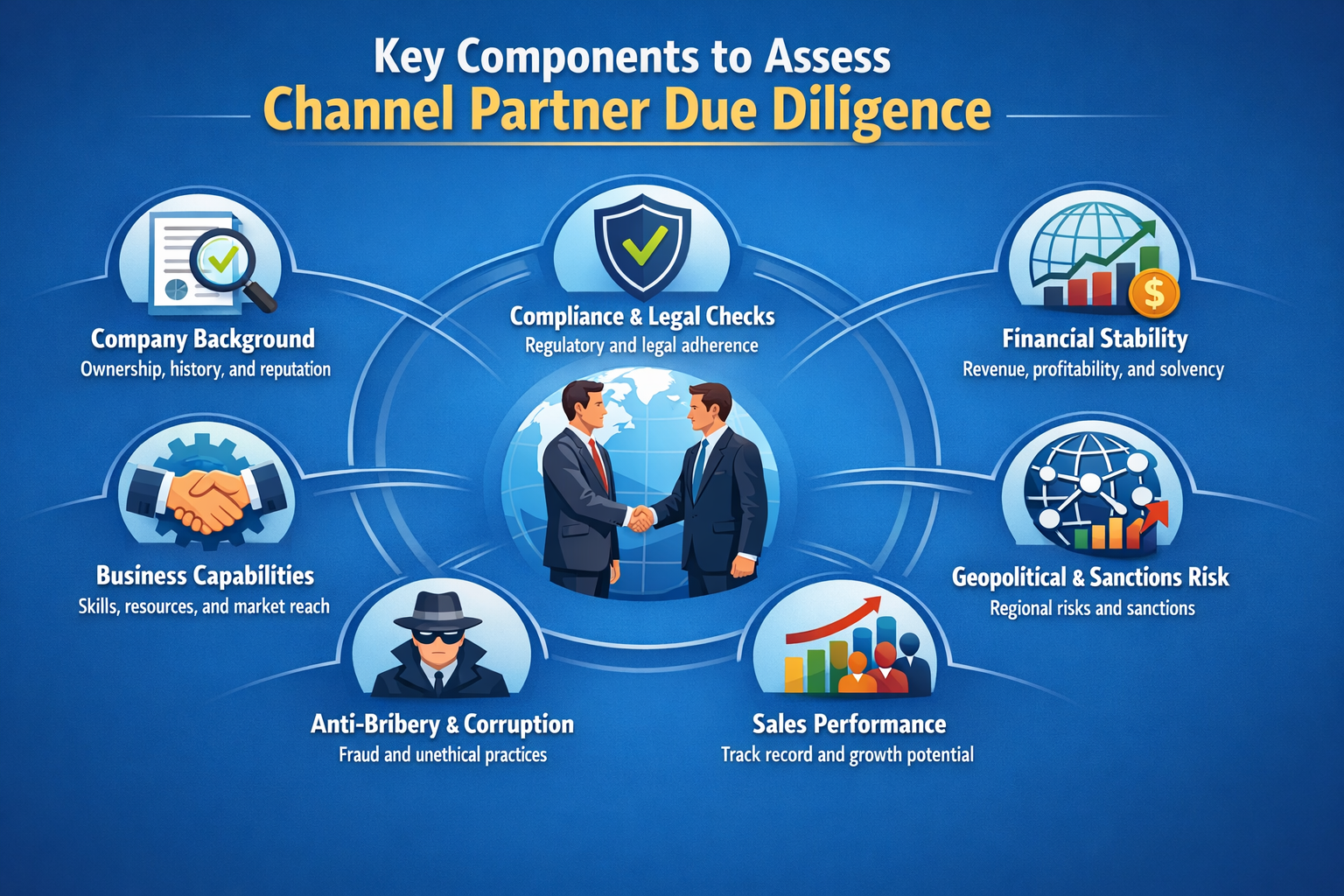
A comprehensive channel partner due diligence program evaluates several critical components to build a complete risk picture.
Legal and regulatory compliance assessment focuses on verifying licenses, certifications, and adherence to relevant laws. Reviewing past violations, litigation history, and enforcement actions helps identify patterns of non-compliance or governance weaknesses.
Financial health analysis examines creditworthiness, audited financial statements, liquidity, and debt levels. This assessment helps determine whether the partner has the financial capacity to sustain operations and honour contractual commitments.
Operational efficiency evaluation considers the partner’s internal processes, supply chain resilience, technology infrastructure, and quality controls. Strong operational capabilities are essential for delivering consistent performance and protecting customer experience.
Reputation and track record assessment looks at customer feedback, industry recognition, media coverage, and the outcomes of previous partnerships. A partner’s history often provides valuable insights into future behaviour and reliability.
Together, these components provide a balanced view of both risk and opportunity, enabling businesses to engage partners with confidence.
Tools and Technologies for Due Diligence
Modern due diligence increasingly relies on technology to improve efficiency, accuracy, and scalability.
Software solutions designed for third-party risk management help automate screenings, document collection, risk scoring, and ongoing monitoring. These platforms enable organizations to standardize processes while maintaining audit trails.
Third-party services play a critical role in conducting specialized checks, such as background investigations, financial analysis, and regulatory screenings. Leveraging external expertise enhances objectivity and depth of analysis.
Data sources such as public records, government databases, and industry reports provide valuable context and verification. When combined, these tools and resources allow organizations to conduct thorough due diligence without overburdening internal teams.
Download the SignalX Due Diligence Sample Report
Get deep insights into company risk, compliance, and financial health.
Best Practices for Effective Due Diligence
Implementing standardized procedures ensures that all partners are evaluated using consistent criteria. This reduces subjectivity and strengthens defensibility in regulatory or audit scenarios.
Cross-functional teams bring diverse perspectives to the due diligence process. Legal, finance, compliance, operations, and procurement teams each contribute unique insights that collectively improve risk identification and decision quality.
Regular updates to due diligence frameworks are essential as regulations evolve, markets change, and new risk factors emerge. A static approach can quickly become outdated, leaving organizations exposed.
By embedding these best practices into daily operations, businesses can transform due diligence from a reactive task into a strategic advantage.
Common Pitfalls and How to Avoid Them
One of the most common pitfalls is overlooking red flags due to time pressure or commercial incentives. Ignoring warning signs often leads to costly consequences that far outweigh short-term gains.
Inadequate documentation is another frequent issue. Without proper records, organizations struggle to demonstrate compliance or justify decisions during audits or investigations.
Failure to monitor continuously undermines the entire due diligence effort. Risks evolve, and partners that were once low-risk can become high-risk due to changes in ownership, financial health, or regulatory exposure.
Avoiding these pitfalls requires discipline, accountability, and a commitment to long-term risk management rather than short-term convenience.
Conclusion
Channel partner due diligence is a critical pillar of modern business strategy. It protects organizations from legal exposure, financial loss, and reputational harm while enabling stronger, more transparent partnerships.
By following a structured due diligence process, assessing key risk components, leveraging technology, and adhering to best practices, businesses can confidently expand their partner ecosystems.
Now is the time for organizations to evaluate and strengthen their channel partner due diligence programs. Investing in robust due diligence today builds the trust, resilience, and stability needed to succeed in an increasingly complex business environment.
Frequently Asked Questions (FAQs)
What is channel partner due diligence?
Channel partner due diligence is the structured process of evaluating third-party partners before and during a business relationship. It involves assessing legal compliance, financial stability, operational capability, and reputation to identify and manage potential risks. The goal is to ensure that partners align with the organization’s standards and do not expose it to regulatory, financial, or reputational harm.
Why is channel partner due diligence important?
Channel partner due diligence is important because organizations can be held accountable for the actions of their partners. Inadequate vetting can lead to compliance violations, financial losses, supply chain disruptions, and brand damage. A thorough due diligence process helps businesses make informed decisions, reduce uncertainty, and build long-term, trustworthy partnerships.
When should channel partner due diligence be conducted?
Due diligence should begin before entering into a partnership and continue throughout the relationship. Initial due diligence helps determine whether a partner is suitable, while ongoing monitoring ensures that emerging risks, regulatory changes, or shifts in partner behavior are identified and addressed in a timely manner.
What risks does channel partner due diligence help mitigate?
Channel partner due diligence helps mitigate legal and regulatory risks, financial instability, operational failures, and reputational damage. By identifying these risks early, organizations can implement safeguards, corrective actions, or decide not to proceed with a partnership that poses unacceptable exposure.
What information is typically reviewed during due diligence?
The due diligence process typically involves reviewing legal records, licenses, financial statements, ownership structures, compliance policies, operational processes, and public reputation indicators. The depth of review may vary depending on the partner’s role, geographic location, and risk profile.
Who should be involved in the channel partner due diligence process?
Effective due diligence is a cross-functional effort. Legal, compliance, finance, procurement, and operational teams each play a role in evaluating different risk areas. Involving multiple departments ensures a more comprehensive assessment and reduces the likelihood of oversight.
How does ongoing monitoring differ from initial due diligence?
Initial due diligence focuses on assessing risk before onboarding a partner, while ongoing monitoring tracks changes over time. Continuous oversight helps organizations detect new compliance issues, financial deterioration, ownership changes, or reputational concerns that may arise after the partnership has begun.
Can technology improve channel partner due diligence?
Yes, technology plays a critical role in modern due diligence programs. Automated platforms can streamline screenings, document collection, risk scoring, and monitoring, making the process more efficient and consistent. Technology also helps maintain audit trails and improves visibility across large partner networks.
What are common mistakes companies make during due diligence?
Common mistakes include overlooking warning signs, rushing evaluations to meet business timelines, failing to document findings, and neglecting ongoing monitoring. These gaps often weaken risk controls and increase exposure over time.
How often should channel partner due diligence be updated?
The frequency of updates depends on the risk level of the partner and regulatory requirements. High-risk partners may require more frequent reviews, while lower-risk partners may be reassessed periodically. Regardless of risk level, due diligence frameworks should be reviewed regularly to remain aligned with evolving regulations and business needs.