How to Perform a KYB Verification Check
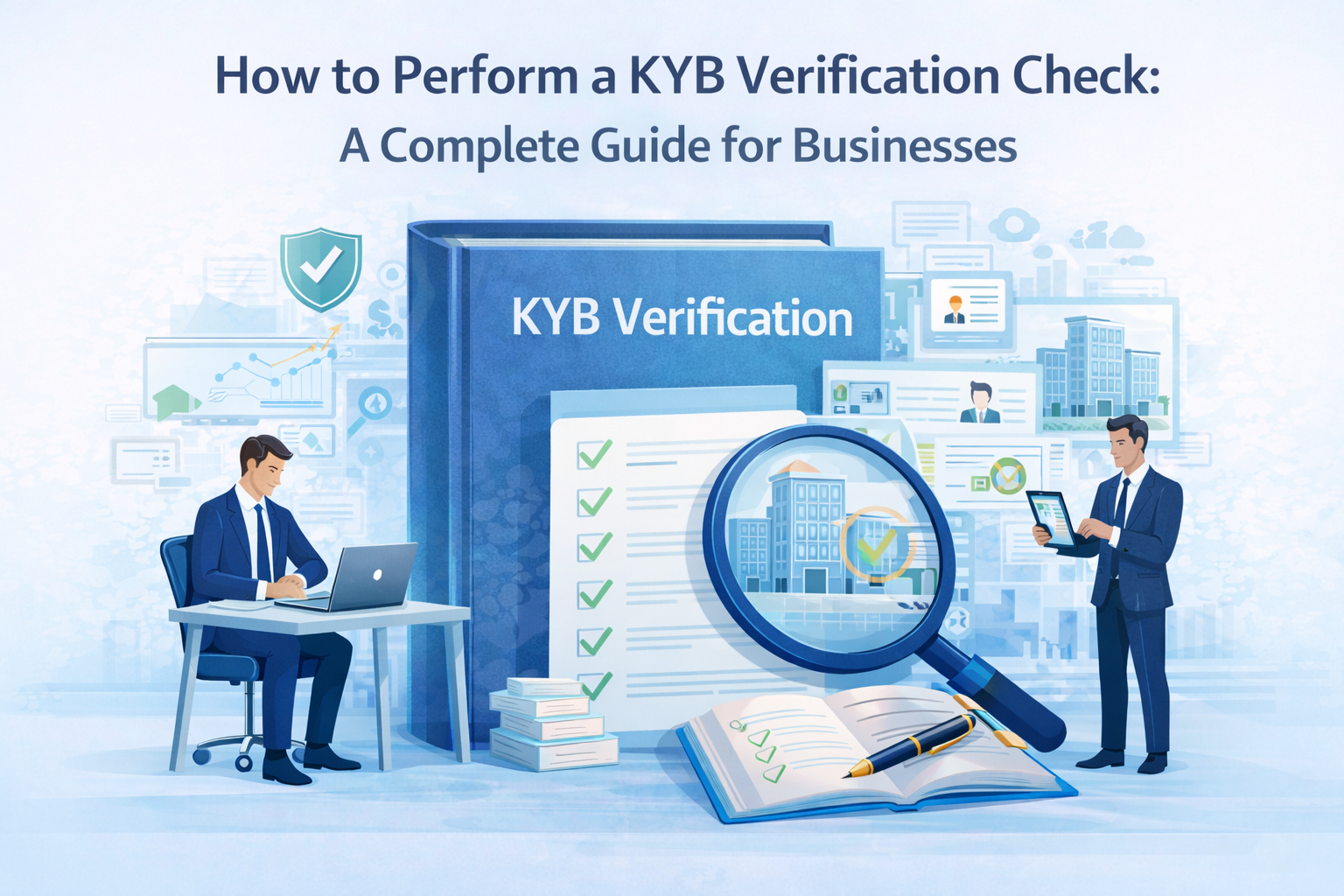





As financial crime grows more sophisticated, businesses are under increasing pressure to know exactly who they are working with. It is no longer enough to verify individual customers alone. Organizations must also ensure that the companies they onboard are legitimate, transparent, and compliant with global regulations. This is where KYB, or Know Your Business, becomes essential.
KYB Verification Check is the process of validating a business entity’s identity, ownership structure, and risk profile before establishing a commercial relationship. It plays a critical role in preventing money laundering, fraud, terrorist financing, and other forms of financial misconduct. Regulators across the world now expect financial institutions, fintech platforms, and regulated businesses to implement robust KYB controls as part of their compliance frameworks.
In this guide, we will walk through what KYB verification is, how it fits into broader compliance obligations, and how to perform a KYB verification check step by step. Whether you are onboarding merchants, corporate clients, or business partners, understanding this process is key to protecting your organization and meeting regulatory expectations.
Understanding KYB Verification Check
KYB verification focuses on validating businesses, while KYC, or Know Your Customer, applies to individuals. Although the two processes share similarities, such as identity verification and risk assessment, KYB is often more complex due to layered ownership structures, cross-border registrations, and corporate governance considerations.
Within Anti-Money Laundering (AML) and Counter-Terrorist Financing (CTF) frameworks, KYB acts as a safeguard against the misuse of legal entities. Criminals frequently use shell companies, front organizations, or opaque corporate structures to disguise illicit activities. KYB helps uncover these risks by ensuring that a business is real, lawfully registered, and not controlled by sanctioned or high-risk individuals.
Regulatory requirements for KYB vary by jurisdiction, but global standards are largely influenced by organizations such as the Financial Action Task Force (FATF). These standards emphasize transparency, identification of beneficial ownership, risk-based due diligence, and ongoing monitoring. Failing to comply with KYB obligations can lead to severe penalties, reputational damage, and loss of operating licenses, making it a non-negotiable component of modern compliance programs.
Book A Demo With SignalX For AML/KYB Verification
Step-by-Step Guide to Performing KYB Verification Check
Collecting Business Information
The KYB process begins with collecting accurate and comprehensive information about the business. This foundational step sets the tone for the entire verification workflow. Typically, businesses are required to provide their legal name, registration number, date of incorporation, registered address, and tax identification details. Additional information such as business activity, website, and operating jurisdictions is also commonly requested.
It is important to ensure that the information provided is complete and consistent. Discrepancies at this stage may indicate underlying risks or potential misrepresentation. Clear documentation requirements and standardized data collection help reduce friction while maintaining compliance standards.
Verifying Business Registration and Legal Status
Once the business information is collected, the next step is to confirm that the entity legally exists and is authorized to operate. This involves cross-checking the submitted data against official government registries, company registrars, or authorized databases in the relevant jurisdiction.
Verification at this stage confirms whether the business is active, dissolved, suspended, or undergoing liquidation. It also helps validate key details such as incorporation date and registered address. Identifying inactive or improperly registered entities early prevents exposure to fraudulent or non-compliant organizations and strengthens the integrity of the onboarding process.
Identifying and Verifying Ultimate Beneficial Owners
A critical element of KYB verification is identifying the Ultimate Beneficial Owners, commonly referred to as UBOs. UBOs are individuals who ultimately own or control a business, typically through direct or indirect ownership or voting rights above a defined threshold.
Understanding who truly controls a company is essential for detecting hidden risks. Criminals often hide behind layers of subsidiaries or nominee directors to obscure ownership. KYB verification requires businesses to map ownership structures and verify the identities of UBOs using reliable documentation and identity checks.
In addition to identity verification, background screening is often conducted to assess whether UBOs are associated with financial crime, sanctions, or other high-risk activities. This step ensures transparency and aligns with global regulatory expectations around beneficial ownership disclosure.
Conducting a Risk Assessment
Not all businesses carry the same level of risk, which is why KYB verification follows a risk-based approach. During risk assessment, the business is evaluated based on factors such as industry type, geographic location, transaction volume, and ownership complexity.
High-risk industries, such as gambling, cryptocurrency, or offshore services, may require enhanced due diligence. Similarly, businesses operating in jurisdictions with weaker regulatory oversight may warrant closer scrutiny. Assigning a risk level allows compliance teams to determine how much verification is necessary and ensures that resources are allocated effectively.
A well-designed risk assessment framework helps organizations balance compliance obligations with operational efficiency while remaining aligned with regulatory expectations.
Book A Call With Our Risk Master
Screening Against Sanctions and Watchlists
Sanctions and watchlist screening is a vital component of KYB verification. At this stage, the business entity, its directors, and its beneficial owners are screened against global sanctions lists, politically exposed person databases, and adverse media sources.
This screening helps identify whether the business or its stakeholders are linked to sanctioned countries, individuals, or criminal activities. Detecting these associations early allows organizations to avoid prohibited relationships and mitigate legal and reputational risks.
Effective screening requires access to reliable, up-to-date data sources and the ability to manage false positives without compromising accuracy.
Making Informed Onboarding Decisions
After completing verification and risk assessments, organizations must decide whether to onboard the business, reject the application, or request additional information. This decision should be based on documented findings and aligned with internal compliance policies.
Clear documentation of the decision-making process is essential for regulatory audits and internal accountability. Maintaining an audit trail demonstrates that KYB checks were performed diligently and that onboarding decisions were made in good faith based on available evidence.
This step marks the transition from due diligence to active business engagement, making accuracy and consistency particularly important.
Implementing Ongoing Monitoring
KYB verification does not end once a business is onboarded. Companies evolve over time, with changes in ownership, management, and risk exposure. Ongoing monitoring ensures that these changes are identified and assessed promptly.
Continuous monitoring may include periodic reviews, real-time alerts for ownership changes, and regular sanctions screening. Higher-risk businesses typically require more frequent reviews, while lower-risk entities may be monitored at longer intervals.
Ongoing monitoring allows organizations to remain compliant throughout the lifecycle of the business relationship and respond proactively to emerging risks.
Discover How Continuous Monitoring Protects Your Business — Book a Demo Today
Leveraging Technology for Efficient KYB Verification
As KYB requirements become more complex, technology plays an increasingly important role in enabling efficient and scalable verification processes. Manual KYB checks are often time-consuming, prone to errors, and difficult to scale, particularly for organizations onboarding large volumes of business clients.
Automated KYB solutions offer access to real-time company data, global registries, and integrated risk scoring. API-based systems allow seamless integration with onboarding workflows, reducing friction for legitimate businesses while maintaining compliance standards.
Modern KYB platforms also support continuous monitoring, automated alerts, and centralized case management. By leveraging technology, organizations can reduce operational costs, improve accuracy, and ensure consistent application of compliance rules across regions and business lines.
When evaluating KYB service providers, businesses should consider data coverage, update frequency, regulatory alignment, and the ability to adapt to evolving compliance requirements.
Common Challenges and Best Practices
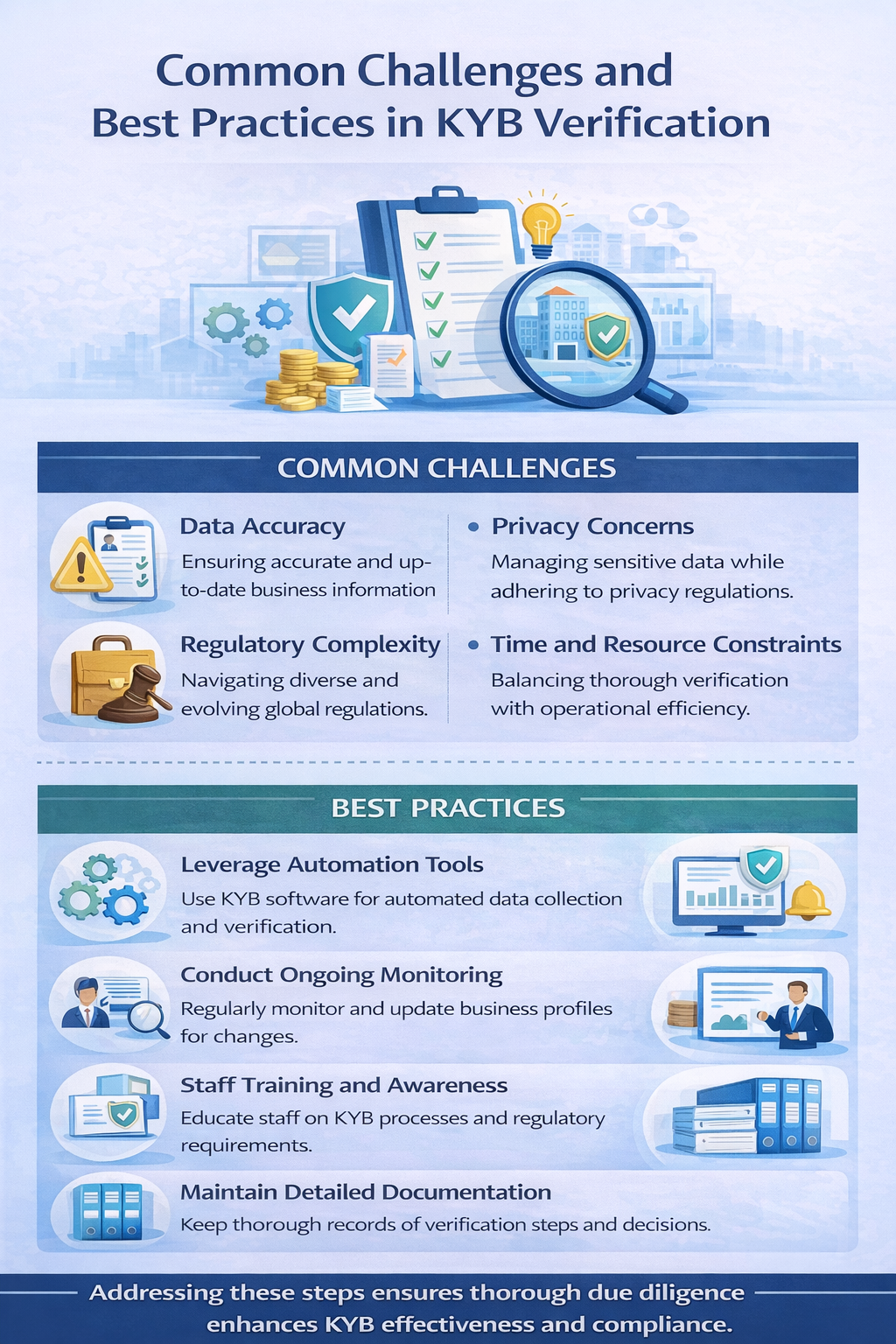
Despite its importance, KYB verification presents several challenges. Data accuracy remains a common issue, particularly when dealing with international registries or complex ownership structures. Privacy and data protection regulations also require careful handling of sensitive business and personal information.
Regulatory complexity adds another layer of difficulty, as requirements vary across jurisdictions and continue to evolve. Staying compliant requires ongoing investment in systems, training, and policy updates.
Best practices for effective KYB implementation include adopting a risk-based approach, investing in reliable technology, and ensuring that compliance teams are properly trained. Clear internal policies, regular audits, and collaboration between compliance and business teams also contribute to a stronger KYB framework.
By addressing these challenges proactively, organizations can build KYB processes that are both compliant and operationally efficient.
Conclusion
KYB verification has become a cornerstone of modern compliance and risk management. As regulators tighten oversight and financial crime grows more sophisticated, businesses must go beyond surface-level checks to truly understand who they are working with.
A thorough KYB verification process helps prevent financial crime, protects organizational reputation, and ensures alignment with global regulatory standards. By following a structured, risk-based approach and leveraging the right technology, businesses can perform KYB checks effectively without sacrificing efficiency.
In today’s interconnected business environment, robust KYB practices are not just a regulatory requirement. They are a strategic investment in trust, transparency, and long-term sustainability.
Frequently Asked Questions
What is KYB verification?
KYB (Know Your Business) verification is the process of validating a business entity’s identity, legal existence, ownership structure, and risk profile. It helps organizations ensure that the companies they work with are legitimate, transparent, and compliant with regulatory requirements.
Why is KYB verification important?
KYB verification is essential for preventing financial crimes such as money laundering, fraud, and terrorist financing. It protects organizations from regulatory penalties, reputational damage, and illegal business relationships while ensuring compliance with global AML and CTF regulations.
How is KYB different from KYC?
KYC (Know Your Customer) focuses on verifying individuals, while KYB applies to businesses. KYB is typically more complex because it involves corporate structures, beneficial ownership, cross-border registrations, and governance considerations.
Who is required to perform KYB checks?
KYB checks are required for financial institutions, fintech companies, payment service providers, regulated businesses, and any organization onboarding corporate clients, merchants, or business partners under AML regulations.
What information is collected during KYB verification?
Commonly collected information includes the business’s legal name, registration number, date of incorporation, registered address, tax identification number, business activity, operating jurisdictions, and ownership details.
How is a business’s legal status verified?
A business’s legal status is verified by cross-checking provided information against official government registries, company registrars, or authorized databases to confirm that the entity is active and legally registered.
What is a Ultimate Beneficial Owner (UBO)?
A UBO is an individual who ultimately owns or controls a business, usually through direct or indirect ownership or voting rights above a defined threshold. Identifying UBOs is a core requirement of KYB verification.
Why is identifying UBOs important?
Identifying UBOs helps uncover hidden ownership, prevent the misuse of shell companies, and ensure that no sanctioned, high-risk, or criminal individuals control the business.
What is a risk-based approach in KYB?
A risk-based approach means applying different levels of due diligence based on the business’s risk profile. Factors such as industry, geography, ownership complexity, and transaction volume determine whether standard or enhanced due diligence is required.
What industries are considered high risk for KYB?
Industries such as gambling, cryptocurrency, offshore services, and high-value financial services are often considered higher risk and may require enhanced KYB checks.