Automated Due Diligence: Transforming Risk Management in the Digital Age
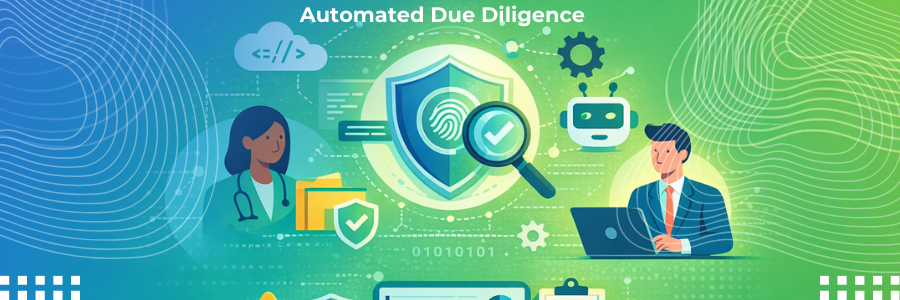





In today’s hyperconnected, data-driven economy, risk can emerge from anywhere vendors, acquisition targets, borrowers, partners, or even internal processes. Organizations are under mounting pressure to make fast decisions while ensuring regulatory compliance, financial prudence, and reputational safety. In this environment, automated due diligence has become a critical tool for modern risk management.
Automated due diligence refers to the use of advanced technologies such as artificial intelligence (AI), machine learning, and integrated data platforms to systematically collect, analyse, and monitor risk-related information about entities, transactions, or individuals. Unlike traditional due diligence, which often relies on manual research, fragmented data sources, and time-consuming reviews, automation streamlines the process and enhances accuracy.
Traditional due diligence methods, though foundational, have clear limitations. They are labor-intensive, prone to human error, and often reactive rather than proactive. Teams may spend weeks combing through financial statements, legal records, and compliance documents, only to produce static reports that quickly become outdated. In a fast-moving business landscape, such delays can mean missed opportunities or worse, overlooked risks.
Automation changes this equation. By leveraging technology to gather real-time data, apply consistent risk models, and generate actionable insights, businesses can move from periodic risk assessments to continuous risk intelligence. The result is faster decision-making, greater confidence, and stronger governance.
Make smarter vendor decisions, reduce risk, and streamline compliance with our expert-crafted checklist.
⬇ Download Your Free Checklist
Understanding Automated Due Diligence
At its core, automated due diligence is the digitization and intelligent orchestration of the traditional risk assessment process. It integrates data collection, analysis, and reporting into a unified system that reduces manual intervention while increasing reliability.
The first key component is data collection. Automated systems connect to multiple internal and external data sources through APIs, databases, regulatory repositories, news feeds, and financial records. Instead of manually retrieving documents, the platform pulls relevant information in real time, ensuring that assessments are based on current and comprehensive data.
The second component is analysis. This is where AI and machine learning algorithms play a transformative role. Automated tools evaluate financial health, legal exposure, compliance records, and reputational signals using predefined rules and adaptive models. These systems can detect anomalies, identify patterns, and flag red flags that might be missed during manual reviews.
The third component is reporting. Rather than producing static documents, automated tools generate dynamic dashboards and customizable reports. Risk scores, summaries, and alerts are presented in a clear, visual format, enabling decision-makers to quickly interpret findings and take action.
When comparing manual and automated processes, the contrast is significant. Manual due diligence often involves scattered spreadsheets, email exchanges, and subjective interpretations. Automated due diligence, by contrast, centralizes data, standardizes evaluation criteria, and ensures consistent risk scoring. While human expertise remains essential for judgment and strategic decisions, automation provides a reliable foundation of data-driven insights
Benefits of Implementing Automated Due Diligence
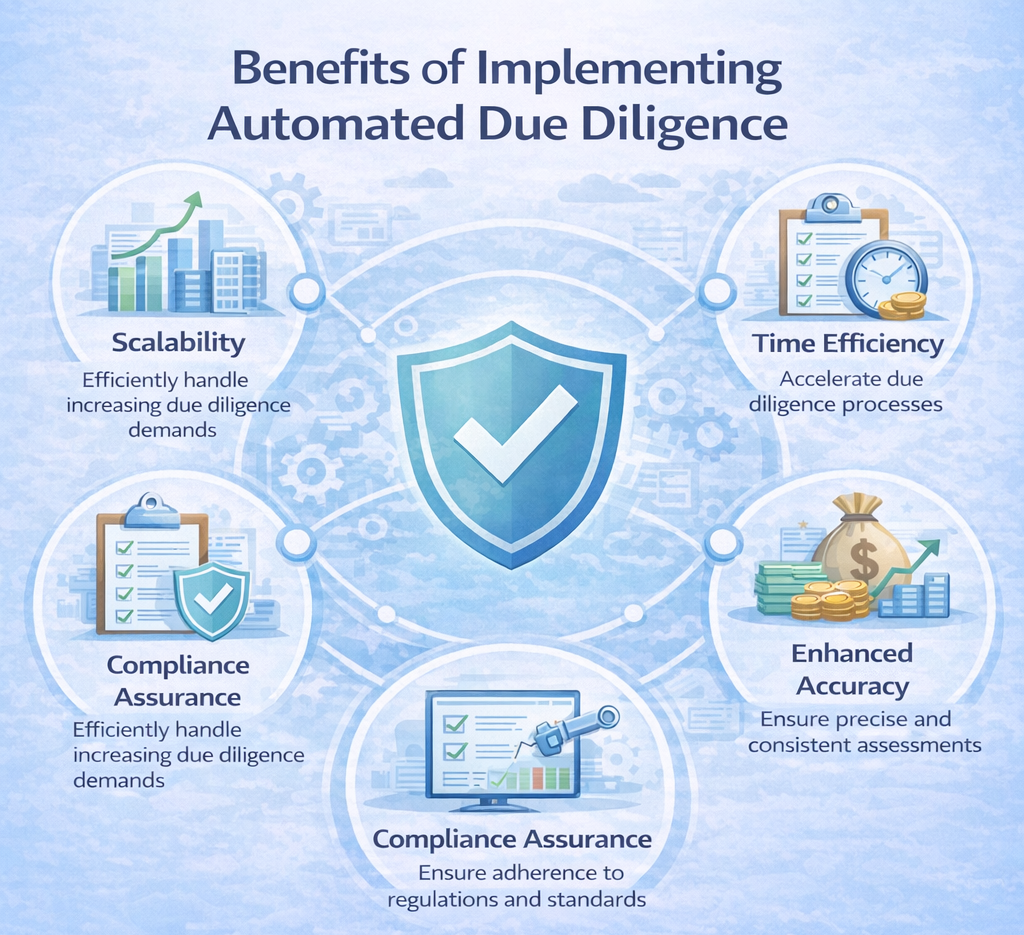 One of the most immediate benefits of automated due diligence is enhanced efficiency. Processes that once took weeks can now be completed in days or even hours. By eliminating repetitive manual tasks, teams can focus on strategic analysis rather than administrative work. Reduced turnaround times are particularly valuable in competitive scenarios such as mergers or large contract bids.
Improved accuracy and consistency are equally important. Human error, oversight, and inconsistent evaluation standards can lead to flawed conclusions. Automated systems apply uniform criteria across all assessments, minimizing bias and ensuring that every entity is evaluated against the same benchmarks.
Scalability is another significant advantage. As organizations grow, the volume of data they must assess increases exponentially. Manual methods struggle to keep pace with expanding vendor networks, cross-border transactions, or large customer bases. Automated platforms can handle vast datasets without compromising speed or quality, making them ideal for enterprises operating at scale.
Real-time risk monitoring further distinguishes automation from traditional approaches. Instead of conducting due diligence once at onboarding or before a transaction, automated systems continuously track changes in financial status, regulatory compliance, and reputational signals. Alerts notify stakeholders of emerging risks, allowing for proactive intervention rather than reactive damage control.
Cost savings also contribute to the business case for automation. While implementing automated systems requires initial investment, the long-term reduction in manpower, errors, compliance penalties, and delayed decisions often results in significant financial benefits.
Key Features of Automated Due Diligence Tools
Modern automated due diligence platforms are defined by several powerful features. Integration capabilities are fundamental. The ability to connect with diverse data sources ranging from government registries to financial databases and media monitoring platforms ensures a comprehensive view of risk.
AI and machine learning enhance the depth of analysis. These technologies can process structured and unstructured data, interpret complex relationships, and continuously refine risk models based on historical patterns. This dynamic learning capability strengthens predictive accuracy over time.
Customizable risk scoring models allow organizations to tailor assessments to their specific risk appetite and industry requirements. Not all businesses face the same threats; therefore, flexible scoring frameworks ensure relevance and precision.
User-friendly dashboards and reporting tools are essential for translating complex data into actionable insights. Decision-makers benefit from intuitive visualizations, trend analyses, and clear risk indicators that simplify interpretation.
Finally, compliance alignment is critical. Automated tools are often designed to support adherence to regulatory frameworks by maintaining audit trails, generating standardized reports, and ensuring that required checks are consistently performed. This reduces the burden on compliance teams and strengthens regulatory confidence.

Applications Across Different Business Scenarios
a. Mergers and Acquisitions (M&A)
In M&A transactions, due diligence determines whether a deal creates value or introduces hidden liabilities. Automated tools streamline the evaluation of target companies by analyzing financial statements, legal records, operational data, and reputational factors in a consolidated environment.
By identifying potential liabilities such as pending litigation, compliance breaches, or financial irregularities automation helps acquirers make informed decisions. Faster assessments also enable companies to remain competitive in time-sensitive negotiations.
b. Vendor and Third-Party Risk Management
Organizations increasingly rely on complex networks of suppliers and service providers. Each third-party relationship introduces potential operational, financial, and reputational risks. Automated due diligence platforms assess supplier reliability, compliance history, and financial stability before onboarding.
Beyond initial evaluation, ongoing monitoring ensures that third parties remain compliant and financially sound throughout the relationship. Real-time alerts about legal issues or negative media coverage allow organizations to act swiftly to mitigate risk.
c. Financial Institutions and Lending
For banks and lenders, evaluating borrower creditworthiness is a critical function. Automated systems analyze financial data, transaction histories, and external risk indicators to generate objective credit assessments.
In addition to underwriting, these tools monitor for fraud, unusual transactions, or deteriorating financial conditions. Continuous oversight enhances portfolio quality and reduces default risk.

d. Regulatory Compliance
Regulatory environments are becoming more complex across industries. Automated due diligence systems help organizations ensure adherence to applicable laws by systematically performing required checks and maintaining documentation.
Automated reporting capabilities simplify audits and inspections. By providing structured, easily accessible records, organizations can demonstrate compliance with greater confidence and efficiency.
Challenges and Considerations
Despite its advantages, automated due diligence is not without challenges. Data privacy and security remain paramount concerns. Organizations must ensure that sensitive information is protected through encryption, secure access controls, and robust cybersecurity measures.
Data quality and integrity also influence outcomes. Automated systems are only as reliable as the data they process. Inaccurate or outdated information can distort risk assessments, highlighting the need for trusted data sources and validation mechanisms.
Integration with existing systems can pose technical hurdles. Legacy infrastructure may require upgrades or customization to seamlessly connect with automated platforms. Strategic planning and phased implementation can mitigate disruption.
Finally, training and change management are essential. Employees must understand how to interpret automated insights and integrate them into decision-making processes. Clear communication and ongoing support help foster adoption and maximize return on investment.
Future Trends in Automated Due Diligence
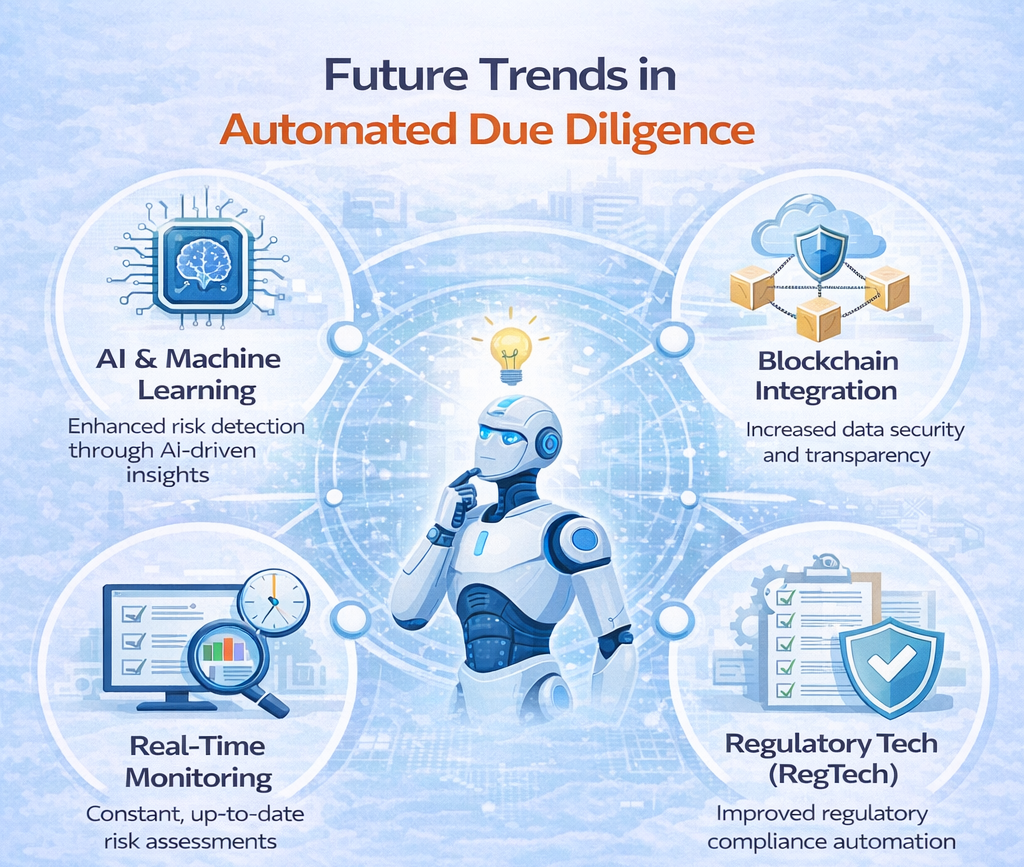 The future of automated due diligence will be shaped by continued advancements in AI and predictive analytics. More sophisticated algorithms will not only assess current risk but also forecast potential vulnerabilities based on evolving trends and behavioral patterns.
Blockchain technology is expected to play a growing role in data verification. By providing immutable records and transparent audit trails, blockchain can enhance trust and reduce the risk of data manipulation.
Environmental, Social, and Governance (ESG) considerations are becoming central to risk assessment. Automated tools are increasingly incorporating ESG metrics to evaluate sustainability practices, ethical conduct, and social impact alongside financial and legal factors.
Industry-specific solutions are also emerging. Tailored platforms designed for sectors such as healthcare, fintech, manufacturing, or logistics will address unique regulatory requirements and risk profiles, further enhancing precision.
How SignalX Enhances Automated Due Diligence
SignalX exemplifies the power of automation in transforming due diligence. The platform performs over 200 automated checks across financial, legal, and compliance domains, delivering actionable insights within 48 hours. This rapid turnaround enables organizations to make timely and informed decisions without compromising thoroughness.
A standout feature is its 26-parameter risk scorecard, which evaluates factors such as financial stability, promoter background, reputational signals, compliance discipline, and legal exposure. By consolidating these dimensions into a structured framework, SignalX provides a holistic view of risk.
SignalX also offers AI-powered tools like Risk Master for continuous risk monitoring and customizable reporting. This ensures that due diligence is not a one-time exercise but an ongoing process supported by real-time alerts and tailored insights.
Whether used for vendor assessments or pre-deal evaluations, SignalX delivers comprehensive reports that facilitate faster, data-driven decision-making. By combining automation with intelligent analytics, it strengthens organizational resilience and confidence.
Conclusion
Automated due diligence represents a fundamental shift in how organizations approach risk management. By replacing fragmented, manual processes with integrated, technology-driven systems, businesses can achieve greater efficiency, accuracy, and scalability.
In an era defined by rapid change and increasing regulatory scrutiny, continuous risk monitoring is no longer optional it is essential. Automation empowers organizations to move beyond reactive assessments and embrace proactive, real-time risk intelligence.
As businesses seek to strengthen governance and accelerate growth, exploring automated solutions like SignalX can provide a decisive advantage. The future of due diligence is digital, intelligent, and continuous.
Frequently Asked Questions (FAQs)
What distinguishes automated due diligence from traditional methods?
Automated due diligence uses technology to collect, analyze, and monitor data in real time, ensuring consistency and speed. Traditional methods rely heavily on manual research and static reports, which can be slower and more prone to error.
How does AI enhance the due diligence process?
AI processes large volumes of structured and unstructured data, identifies patterns, detects anomalies, and refines risk models over time. This improves accuracy and enables predictive insights.
Is automated due diligence suitable for small businesses?
Yes. While often associated with large enterprises, scalable solutions make automated due diligence accessible to small and medium-sized businesses seeking efficient and cost-effective risk management.
How do automated tools ensure compliance with regulations?
Automated tools perform standardized checks, maintain audit trails, generate compliance reports, and continuously monitor for regulatory updates, helping organizations meet legal requirements.
What are the initial steps to implement automated due diligence in an organization?
Organizations should assess their risk management needs, evaluate available platforms, ensure data integration capabilities, establish clear risk criteria, and provide training to staff for effective adoption.