What Are the Steps of Risk Management: Complete Guide
Risk management steps are a critical aspect of running any successful business. It involves identifying potential risks, assessing their impact, and developing strategies to minimise or eliminate those risks. Without a proper risk management process, businesses can face unexpected setbacks that can harm their reputation, finances, or operations.
To effectively handle risk, businesses often turn to digital platforms, such as SignalX, which streamline and automate much of the process. In this blog, we’ll explore the key steps of risk management and how tools like SignalX can help businesses manage risks with greater efficiency and precision.
What Is Risk Management?
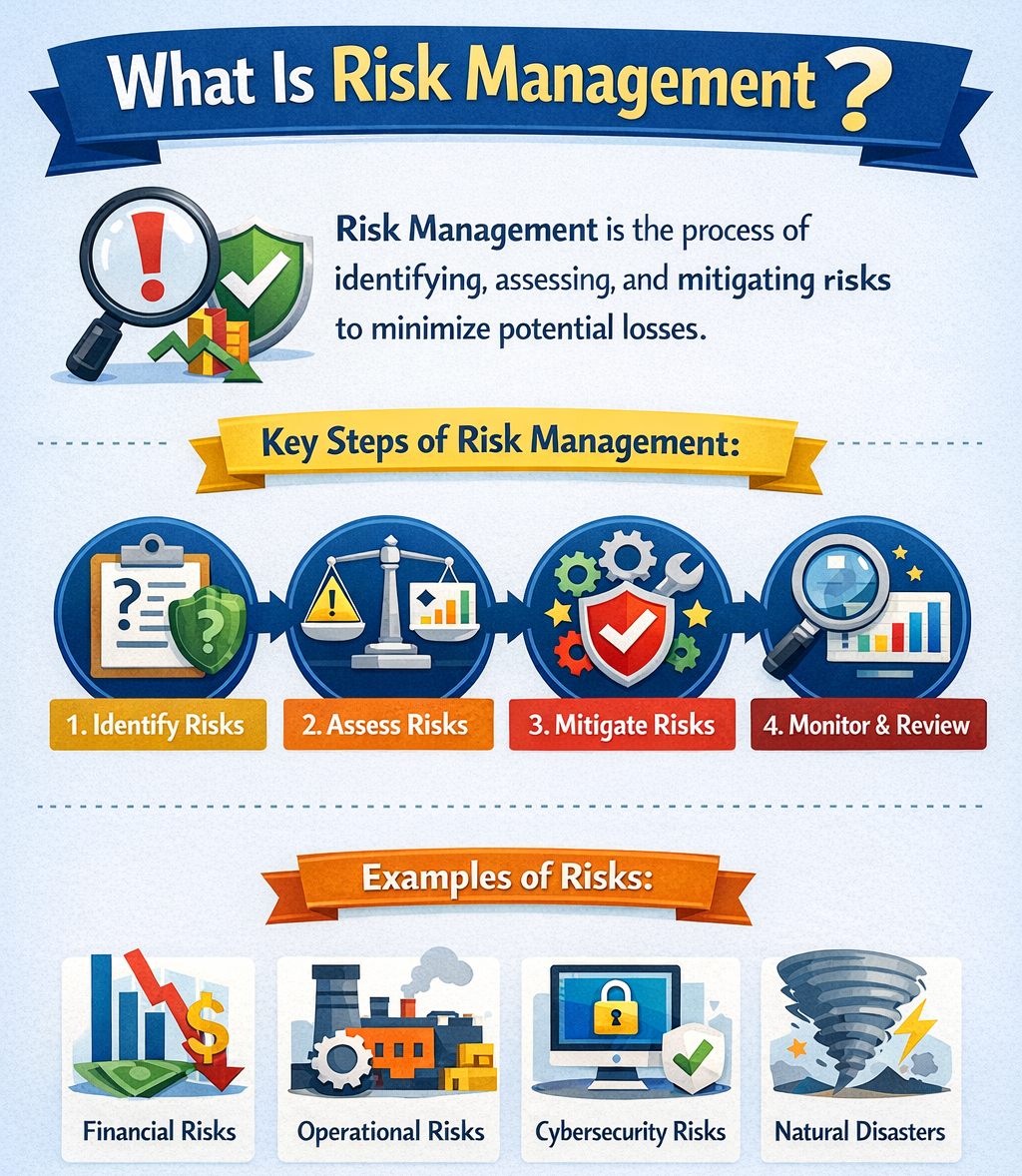
Risk management involves the systematic approach of identifying, evaluating, and prioritising risks, followed by the implementation of strategies to minimise, monitor, and control the potential impact of adverse events. Companies face a broad spectrum of risks, ranging from financial and operational to compliance and strategic challenges. By establishing a structured risk management framework, businesses can proactively identify emerging threats, plan effective countermeasures, and significantly reduce the likelihood of these risks escalating into major issues.
Overview of the Risk Management Process
Risk management is a systematic approach that organizations use to recognize potential threats and handle them effectively before they cause serious damage. It is not a one-time activity but a continuous cycle that helps businesses remain stable, competitive, and prepared for uncertainty.
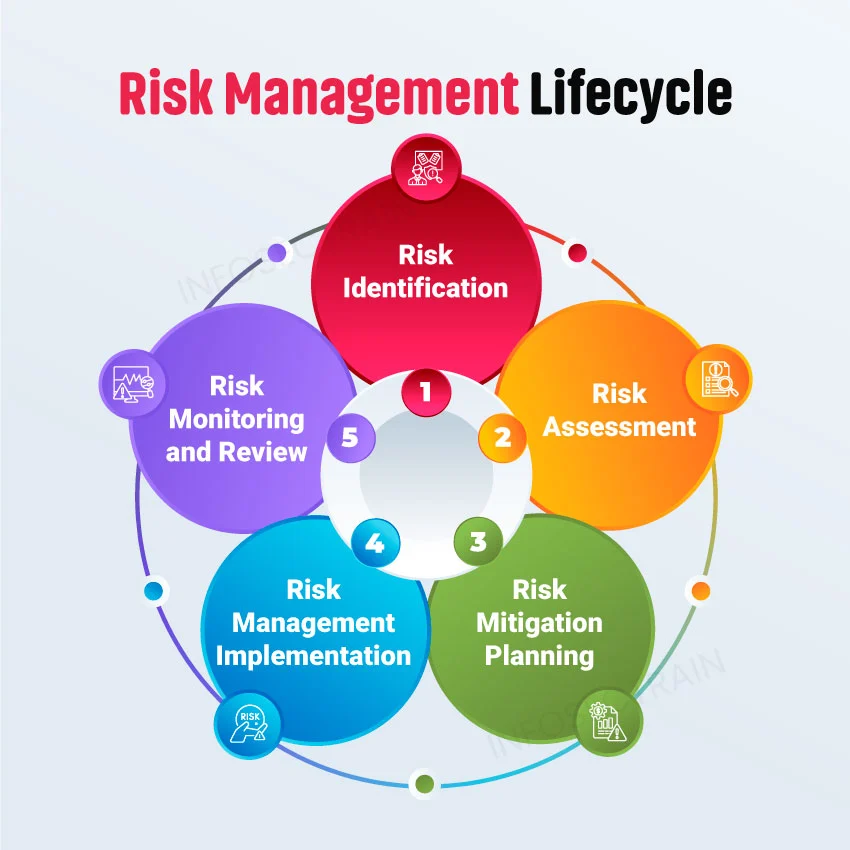
The risk management process typically follows these five steps:
1. Risk Identification
The first step involves identifying all possible risks that could affect an organization’s objectives. These risks may arise from internal sources such as operational inefficiencies, employee errors, or system failures, as well as external factors like economic changes, natural disasters, market competition, or regulatory shifts. At this stage, organizations gather information through brainstorming sessions, expert consultations, historical data review, and risk assessments to create a comprehensive list of potential threats.
2. Risk Analysis
Once risks are identified, the next step is to examine each risk carefully to understand its nature and potential consequences. Risk analysis focuses on determining how likely a risk is to occur and how severe its impact could be if it happens. This step may involve qualitative methods (such as rating risks as low, medium, or high) or quantitative techniques (such as calculating financial impact or probability percentages). The goal is to gain a deeper understanding of each risk’s significance.
3. Risk Evaluation and Prioritization
After analyzing the risks, organizations compare them to determine which ones require immediate attention. Since resources are often limited, not all risks can be addressed at once. In this stage, risks are ranked based on their likelihood and potential impact. High-priority risks those that pose serious threats to organizational goals are addressed first, while lower-priority risks may be monitored or managed later.
4. Risk Mitigation
Risk mitigation involves developing and implementing strategies to reduce the likelihood of risks occurring or to minimize their impact if they do occur. Organizations may choose to avoid the risk, reduce it through preventive measures, transfer it (such as through insurance or outsourcing), or accept it if it falls within an acceptable level. Effective mitigation planning ensures that appropriate controls and safeguards are in place.
5. Risk Monitoring and Review
Risk management is an ongoing process. Once mitigation strategies are implemented, organizations must continuously monitor risks and review their effectiveness. New risks may emerge, and existing risks may change over time. Regular evaluations, audits, and updates to risk management plans help ensure that the organization remains prepared and adaptable in a constantly changing environment.
Description of Risk Management Steps
Step 1: Risk Identification
Risk identification is the first step of the risk management process. This involves identifying both internal and external risks that could affect the business. Internal risks might include operational failures, while external risks might involve market shifts or regulatory changes.
To successfully identify risks, businesses typically use risk registers, conduct audits, and perform assessments.
How SignalX Supports Risk Identification
SignalX helps businesses identify risks by offering centralised data collection, allowing risk managers to track all potential threats in one place. The platform uses automated systems to pinpoint operational, financial, and compliance risks, creating structured risk registers and categorising risks for better management.
Step 2: Risk Analysis
Once risks have been identified, the next step is analyzing them to determine the likelihood of their occurrence and the potential impact on the business. This analysis can be qualitative, involving expert judgment, or quantitative, using data to calculate risk probabilities and consequences.
How SignalX Supports Risk Analysis
SignalX enhances risk analysis by providing data-driven insights through its dashboards. The platform uses risk scoring models to assess both the probability and impact of each risk, enabling businesses to understand the scale of each threat and make informed decisions.
Step 3: Risk Evaluation & Prioritization
After analyzing risks, businesses must evaluate and prioritize them based on their severity and likelihood. This step helps to determine which risks require immediate attention and which can be addressed later. Prioritization often aligns with the company’s risk appetite, or the amount of risk the organization is willing to accept.
How SignalX Supports Risk Evaluation
SignalX makes risk evaluation easier with its automated prioritization tools. The platform uses visual risk heat maps, helping risk managers quickly assess which risks pose the greatest threats. SignalX also aligns these evaluations with business risk thresholds, ensuring that resources are focused on the most critical issues.
Step 4: Risk Mitigation & Treatment
Risk mitigation involves developing strategies to minimize the impact or likelihood of risks. This might include risk avoidance, reduction, transfer, or acceptance. Action plans are created, and controls are put in place to handle identified risks effectively.
How SignalX Supports Risk Mitigation
SignalX supports risk mitigation by assigning risk owners and tracking mitigation actions in real time. The platform helps businesses monitor the effectiveness of their mitigation strategies and ensures that policies, controls, and compliance measures are properly mapped and implemented.
Step 5: Risk Monitoring & Review
Risk management is not a one-time process. It requires continuous monitoring and periodic reviews to ensure that risks are being effectively managed over time. Regular assessments allow businesses to adapt to new risks, regulatory changes, or shifting market conditions.
Upgrade Your Risk Management with SignalX
Smarter automation. Clear insights. Better decisions.
How SignalX Supports Risk Monitoring
SignalX offers real-time risk monitoring, allowing businesses to stay updated on any new or evolving risks. The platform provides alerts and notifications, so businesses can quickly respond to emerging threats. Additionally, SignalX helps with compliance tracking and generates audit-ready reports, ensuring that businesses are always prepared for reviews.
How SignalX Enables End-to-End Risk Management
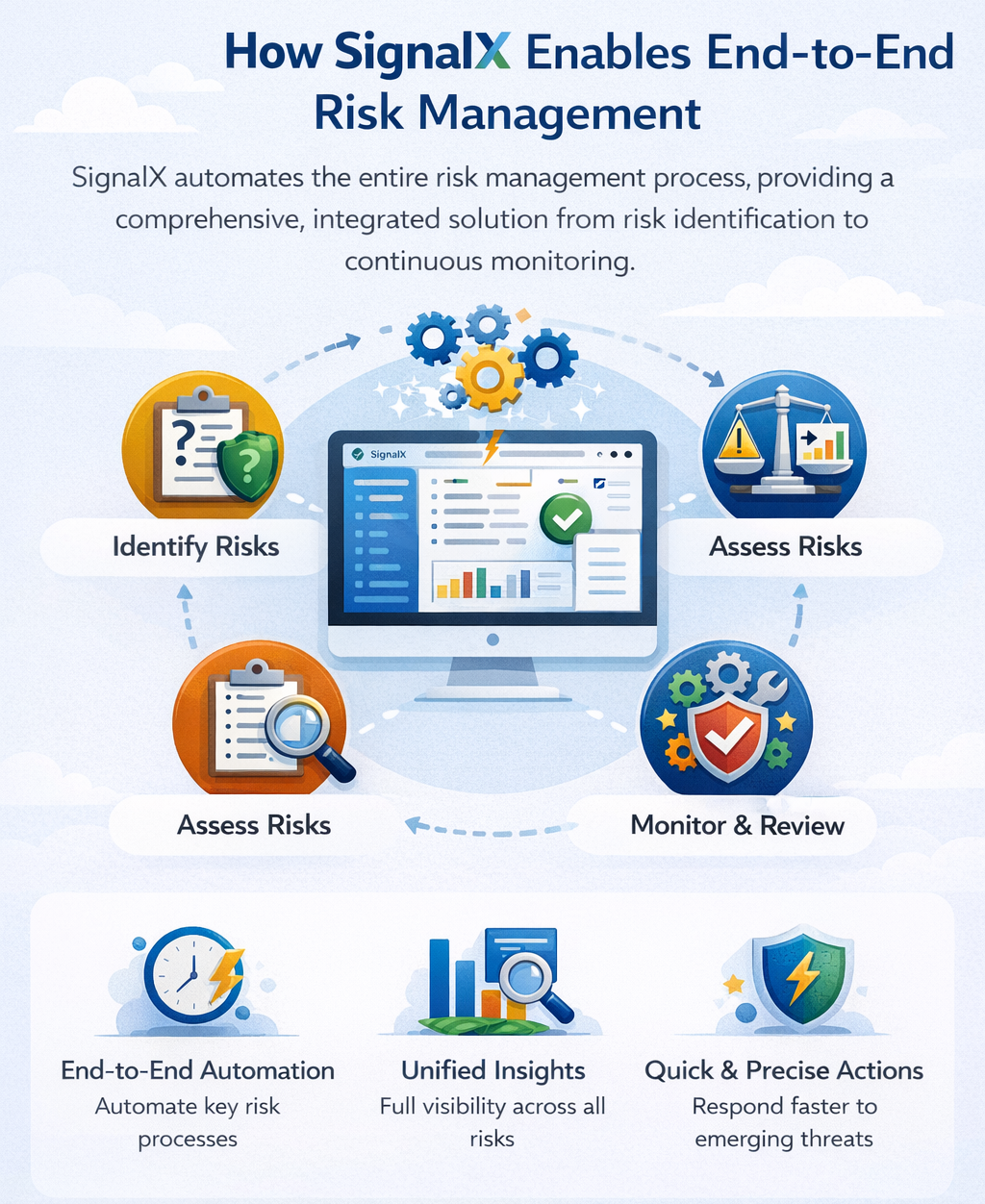
SignalX offers a single platform solution that integrates all the key steps of the risk management process, from risk identification to continuous monitoring. By automating many aspects of risk management, SignalX helps businesses respond faster and more effectively to risks. The platform provides comprehensive visibility across all risk management stages, empowering decision-makers to manage risks with greater precision and efficiency.
Use Cases
Enterprise Risk Management: SignalX provides an integrated solution for managing complex risks across large organisations.
Financial and Operational Risk Control: The platform helps businesses monitor financial risks and operational failures, minimising potential losses.
Compliance and Regulatory Readiness: SignalX ensures businesses stay compliant with evolving regulations, avoiding costly penalties.
Common Risk Management Mistakes
Effective risk management is crucial, but many businesses make common mistakes that can undermine their efforts. These mistakes include:
Manual Risk Tracking: Relying on outdated methods like spreadsheets can lead to errors and inefficiencies.
Siloed Risk Data: Without centralised risk data, companies may miss important connections between risks.
No Real-Time Monitoring: Without real-time risk tracking, businesses may not notice emerging threats quickly enough.
Lack of Accountability: Failing to assign clear ownership of risks can lead to confusion and delays in mitigation.
SignalX helps avoid these mistakes by centralizing risk data, providing real-time updates, and assigning clear accountability to risk owners.
Frequently Asked Questions
1. What are the main steps of risk management?
The key steps of risk management are: Risk Identification, Risk Analysis, Risk Evaluation & Prioritisation, Risk Mitigation, and Risk Monitoring & Review.
2. How does SignalX support the risk management process?
SignalX integrates all aspects of risk management, offering tools for risk identification, analysis, evaluation, mitigation, and monitoring in a single platform.
3. Can risk management be automated?
Yes, platforms like SignalX automate many aspects of risk management, including risk identification, prioritisation, and monitoring.
4. Which businesses should use risk management software?
Any business that wants to better manage its risks, improve compliance, and make more informed decisions can benefit from risk management software like SignalX.
Conclusion
Risk management is a vital process for businesses to thrive in today’s unpredictable environment. By following a structured approach to identifying, analysing, mitigating, and monitoring risks, organisations can protect themselves from potential threats. Platforms like SignalX offer an effective solution for streamlining this process, providing businesses with the tools they need to manage risk efficiently and make more informed decisions.


Samruddhi Kulkarni
Samruddhi is a marketing professional who creates content that simplifies complex topics such as third-party risk management, compliance, and vendor governance. By combining market research, insights, and domain understanding, she develops blogs, e-books, and best-practice guides that help organizations strengthen their risk posture and build long-term resilience.
