Corporate Governance Best Practices for Stronger Organizations
In today’s fast-paced business world, success depends not just on profits but on how responsibly a company operates. This is where corporate governance becomes crucial. It ensures accountability, transparency, and ethical management, helping businesses thrive sustainably.
Corporate governance refers to the framework through which companies are managed, directed, and controlled. It outlines the processes, roles, and responsibilities necessary to ensure that an organization operates ethically, sustainably, and transparently. By maintaining a structured approach to decision-making and establishing systems of accountability, corporate governance helps organizations foster responsible behaviour, manage risks effectively, and create lasting value for all stakeholders.
The Pillars of Corporate Governance
It to the system through which companies are directed, managed, and monitored to ensure they operate responsibly and transparently. It establishes a framework that balances the interests of all stakeholders, such as shareholders, employees, customers, suppliers, and the wider community, while promoting ethical decision-making and long-term growth.
Key aspects which include: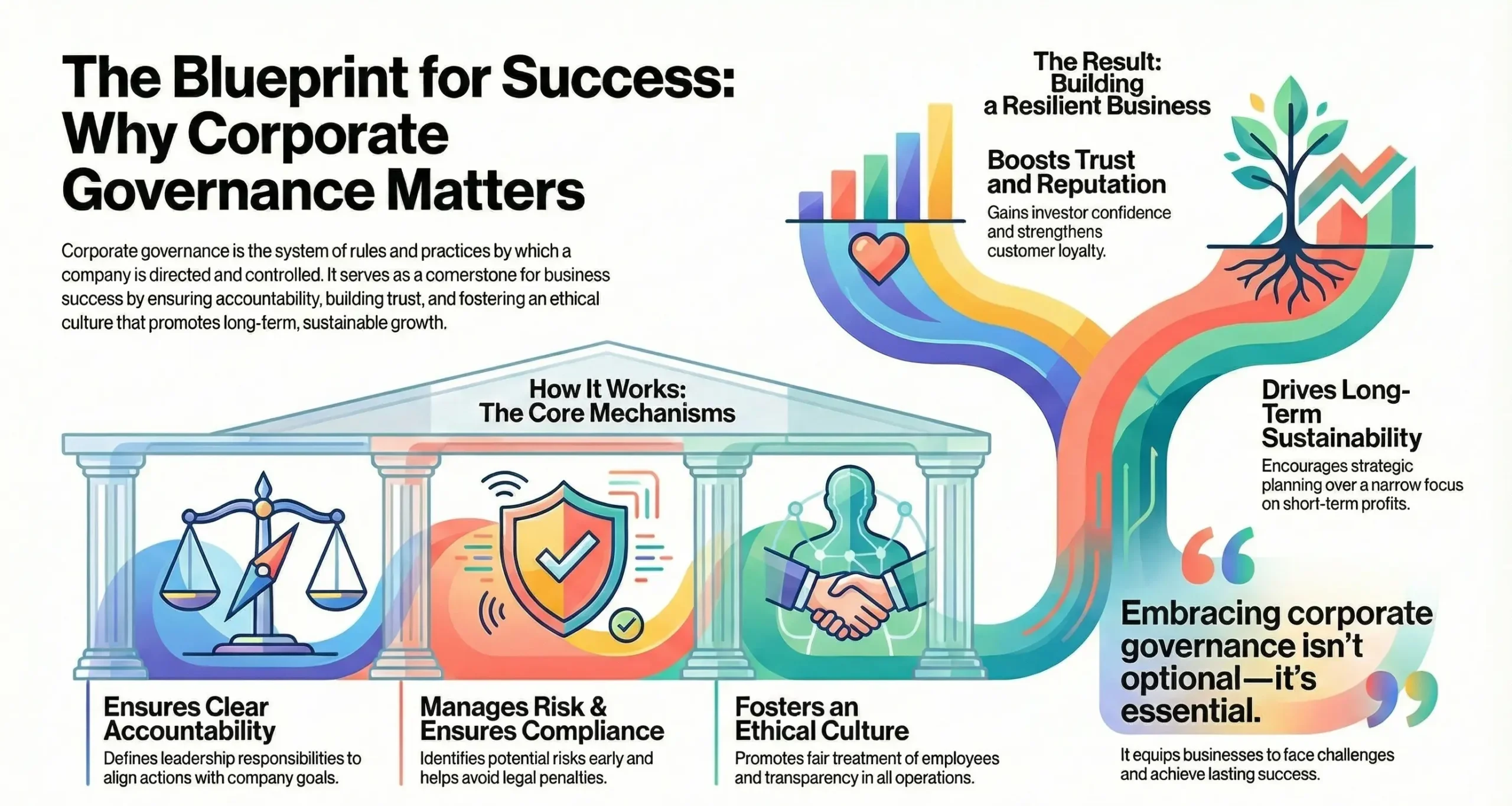
At the heart of corporate governance is the need for clear roles and responsibilities. Effective governance systems ensure that everyone in the organization understands their duties and obligations, from board members to senior executives and employees. This clarity reduces the risk of conflicts of interest and enhances the efficiency of decision-making. When there is a clear understanding of roles, the decision-making process becomes more transparent, and the organization can avoid situations where the lines between management and ownership are blurred.
Transparency and accountability are equally critical. A company that practices strong corporate governance ensures that it provides accurate and timely financial reports, openly communicates with shareholders and other stakeholders, and discloses all material information. This transparency fosters trust among investors, employees, and customers, as they know that the business is being managed in a way that aligns with their interests. Moreover, accountability mechanisms ensure that leaders are held responsible for their decisions, particularly when those decisions affect stakeholders’ wellbeing.
Another pillar of corporate governance is the promotion of ethical business practices. Businesses are increasingly expected to conduct themselves with integrity, honesty, and fairness. A robust governance framework establishes clear guidelines for ethical behavior, creates codes of conduct for employees, and reinforces the importance of compliance with laws and regulations. By prioritizing ethics, companies can prevent unethical practices such as fraud or corruption, which can tarnish their reputation and harm their long-term prospects.
Finally, effective corporate governance includes a risk management system that allows companies to identify, assess, and mitigate potential risks. Whether these risks are financial, operational, or legal, governance frameworks ensure that the business stays compliant with regulations, reduces the likelihood of legal or reputational damage, and remains resilient in the face of challenges.
Why Corporate Governance Matters
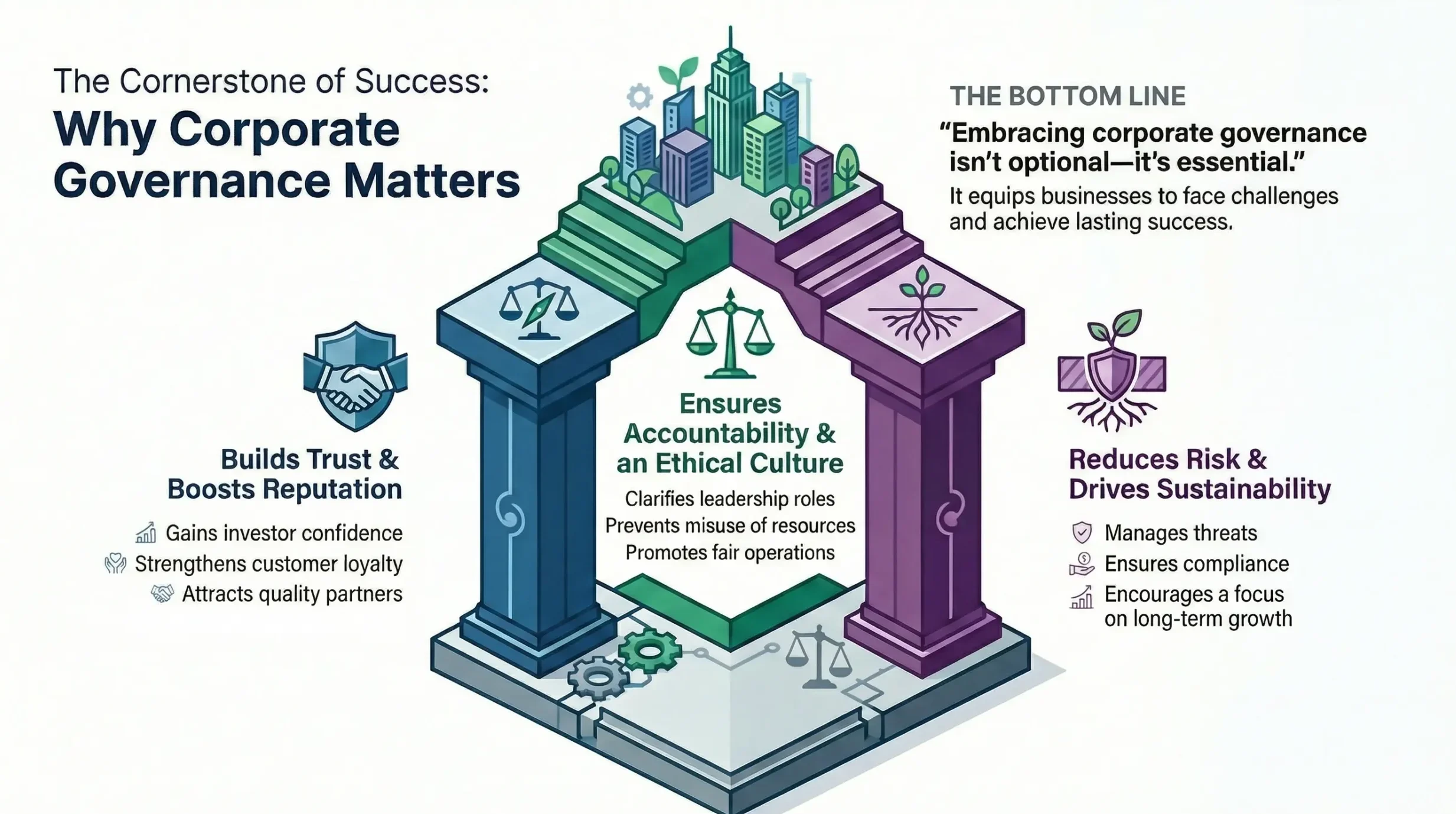
The importance of corporate governance cannot be overstated. A strong governance structure ensures accountability throughout the organization. By defining clear responsibilities and obligations for both the board and management, it prevents the misuse of company resources and ensures that decisions align with the company’s strategic goals. This alignment between governance and organizational goals helps foster ethical decision-making and ensures that all stakeholders are treated fairly.
Corporate governance is also fundamental in building trust and reputation. Trust is the cornerstone of any successful business relationship, whether with investors, customers, or employees. By adhering to strong governance practices, companies can gain investor confidence, strengthen customer loyalty, and build a solid reputation for ethical business practices. When investors see that a company has clear governance policies in place, they are more likely to invest, knowing that their money is being managed responsibly. Similarly, customers and business partners prefer working with companies they can trust to make decisions that align with their values.
Furthermore, effective corporate governance helps businesses identify and manage risks early, reducing the potential for financial or legal problems down the road. Organizations face a variety of risks whether economic, operational, or legal that can affect their ability to succeed in the marketplace. By continuously assessing and addressing these risks, corporate governance systems protect the company from unforeseen challenges and minimize the potential for legal penalties or financial loss.
Importantly, strong corporate governance encourages a focus on long-term sustainability rather than short-term profit maximization. In today’s world, businesses must plan for the future. This includes managing resources responsibly, preparing for future challenges, and maintaining a competitive edge in a constantly evolving market. A focus on sustainability ensures that companies do not just succeed for a few years but thrive for generations to come.
Finally, a company’s corporate governance structure plays a significant role in fostering an ethical corporate culture. It establishes a foundation for how the organization interacts with its employees, suppliers, and customers. By promoting fairness, equity, and transparency at the top levels of leadership, businesses set the tone for an ethical workplace. When employees see that the leadership values integrity and ethical conduct, they are more likely to embrace those values in their own work.
Download the Comprehensive Corporate Due Diligence Checklist – SignalX
Benefits of Strong Corporate Governance(CG)
The benefits of robust corporate governance are undeniable. First and foremost, it leads to clear roles and responsibilities within the organization, ensuring that everyone understands their part in achieving the company’s goals. This clarity helps streamline decision-making, improves organizational efficiency, and minimizes internal conflicts.
A well-structured governance system also leads to increased investor confidence. Investors are more likely to put their money into businesses that demonstrate a commitment to transparency, accountability, and ethical practices. When shareholders know that their interests are protected and that the company is being run responsibly, they are more likely to invest for the long term.
The ability to manage risks effectively is another major benefit. A company with strong governance structures is better equipped to identify and address potential risks before they turn into serious problems. This proactive approach to risk management helps minimize legal issues, operational inefficiencies, and financial losses.
In addition, companies that prioritize corporate governance tend to have an improved corporate reputation. This positive reputation, built on transparency, ethical behavior, and long-term sustainability, attracts customers, employees, investors, and business partners. Organizations that focus on these areas are seen as trustworthy, dependable, and resilient, which makes them more competitive in the marketplace.
Lastly, corporate governance contributes to sustainable long-term growth. By prioritizing ethical decision-making, risk management, and transparency, businesses are more likely to weather market fluctuations, adapt to new trends, and remain profitable in the long run. This focus on sustainability ensures that a company’s growth is not only measured in terms of revenue but also in terms of the positive impact it has on society, the environment, and its stakeholders.
Conclusion
Corporate governance(CG) is more than a compliance requirement it is a cornerstone of business success. By ensuring accountability, building trust, managing risks, promoting sustainability, and fostering an ethical culture, organizations create a strong foundation for long-term growth.
Businesses that priorities corporate governance are better equipped to face challenges, attract investments, and achieve lasting success. In today’s competitive market, embracing corporate governance isn’t optional; it’s essential.
Frequently Asked Questions
1. What is corporate governance?
A system that directs and controls a company to ensure ethical, transparent, and responsible operations.
2. Why is corporate governance important?
It ensures accountability, builds trust, manages risks, promotes sustainability, and fosters an ethical culture.
3. Who are the key stakeholders?
Shareholders, board members, employees, customers, suppliers, investors, and the community.
4. How does it promote accountability?
By defining roles, responsibilities, and transparent reporting for leadership.
5. What role does it play in risk management?
It identifies, monitors, and mitigates financial, operational, and legal risks.
6. Can it improve a company’s reputation?
Yes, by earning trust from investors, clients, and partners.
7. Is it only for large companies?
No, organizations of all sizes benefit from corporate governance.
8. How does it foster an ethical culture?
By promoting fairness, integrity, and transparency throughout the organization.
9. What are the main benefits?
Clear roles, investor confidence, risk management, better reputation, sustainable growth, and ethical culture.
10. How can organizations implement it?
Set clear governance frameworks, define roles, ensure transparency, promote ethics, and monitor risks.


Samruddhi Kulkarni
Samruddhi is a marketing professional who creates content that simplifies complex topics such as third-party risk management, compliance, and vendor governance. By combining market research, insights, and domain understanding, she develops blogs, e-books, and best-practice guides that help organizations strengthen their risk posture and build long-term resilience.
