Due Diligence Checklist for Raising Funds: A Comprehensive Guide
When raising funds for your start-up, it’s not just about pitching an exciting idea or showcasing a compelling vision. In reality, securing investment is a rigorous process where investors need to feel confident that your business is a sound financial opportunity with manageable risks. This is where due diligence plays a critical role. It’s the process by which investors scrutinize your business, assessing everything from financial health to legal standing, to ensure they are making an informed decision. Having a thorough due diligence checklist in place not only speeds up this process but also demonstrates to potential investors that your company is organized, transparent, and ready for growth.
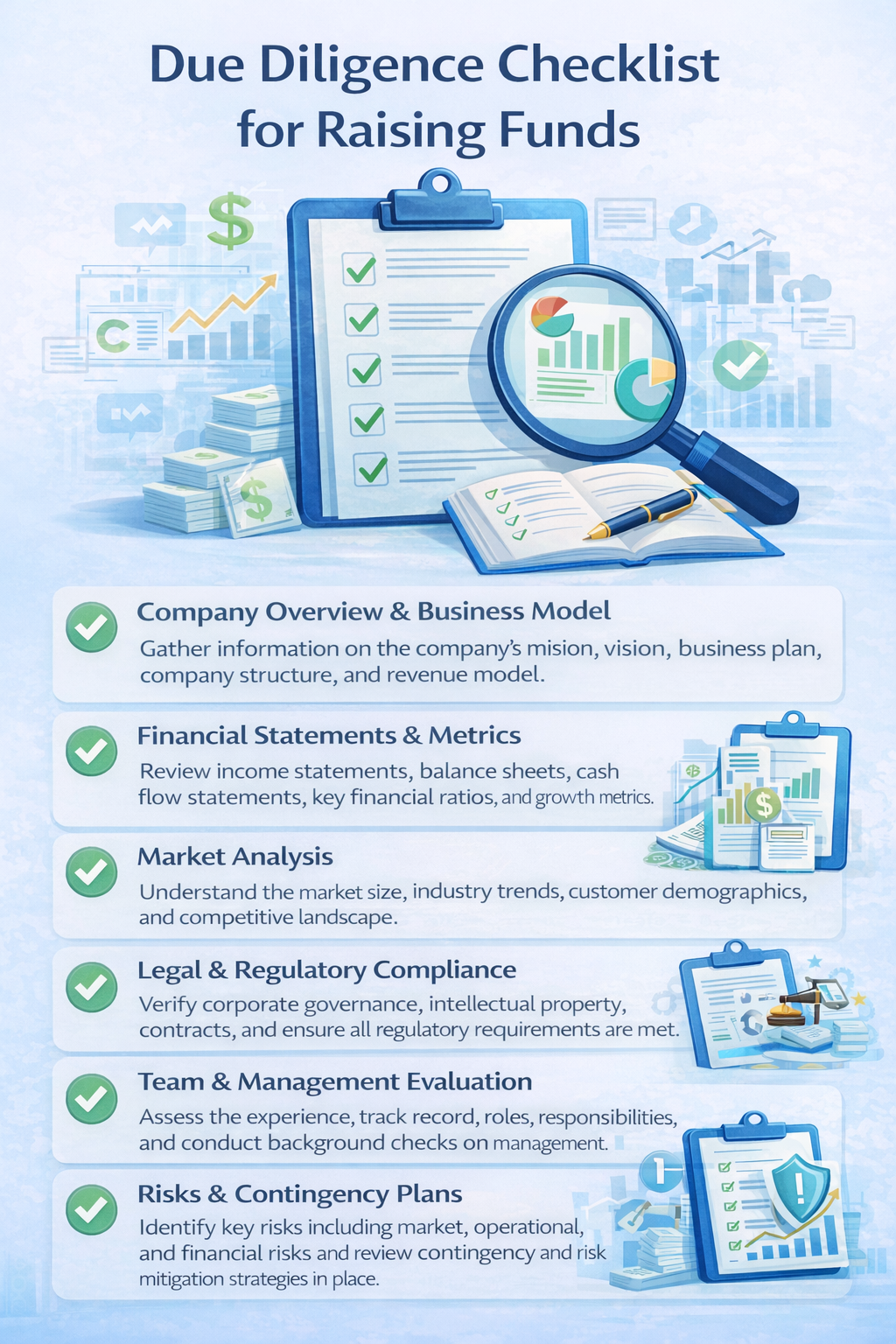
The due diligence process in fundraising is crucial for both start-ups and established companies looking to attract investors. It is essentially a deep dive into the business’s operations, finances, legal structure, and market position. Investors use due diligence to identify potential risks and validate the claims made by the business, which helps them determine whether to invest.
A well-prepared due diligence checklist helps in two ways: first, it helps you, the entrepreneur, by organizing essential information and second, it builds investor trust by making it easier for them to assess the company. The more thoroughly prepared you are, the more likely investors are to move quickly and confidently. A checklist ensures that you have covered all necessary aspects and haven’t overlooked any critical details that might raise red flags during the investment review process.
What Is Fundraising Due Diligence?
Due diligence is the process of investigating and verifying the details of a business to determine its viability and investment potential. It covers all facets of the business, from financial health to market positioning, legal standing, and even team dynamics. The purpose of due diligence is to ensure that everything is in order and that no material risks are hidden from investors. It also enables investors to make informed decisions based on the actual facts and not just the promises of the business owner.

While audits focus on historical data to check for compliance and accuracy, due diligence is much broader. It is a proactive evaluation of a company’s current and future potential. It also varies significantly depending on the stage of funding. Early-stage due diligence (Seed or Series A) tends to focus more on the vision, the potential of the market, and the track record of the founders. As the company matures and enters Series B and beyond, investors dive deeper into financials, scalability, and detailed performance metrics.
Key Components of a Due Diligence Checklist
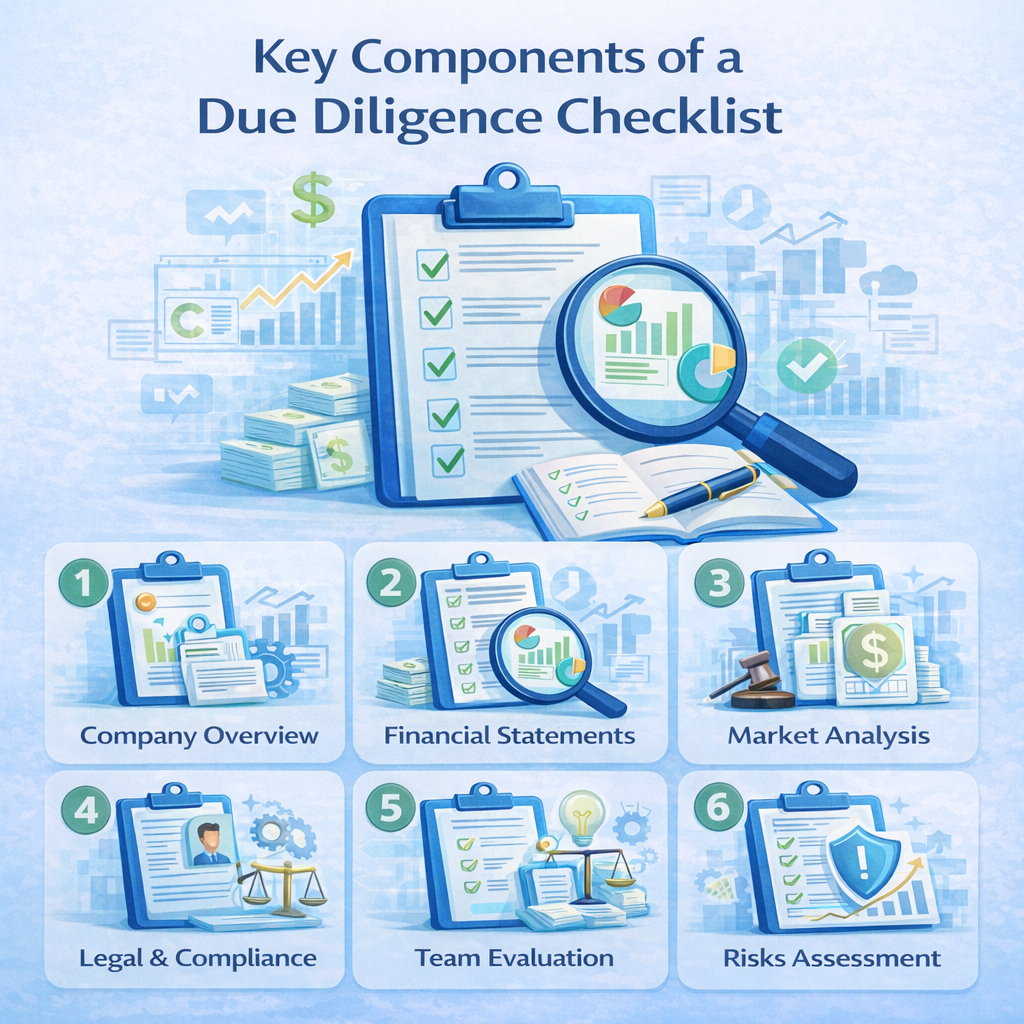
For investors, due diligence is about verifying that the company can deliver on its promises and understanding where risks may exist. Here are the key components that should be on your checklist:
Financial Due Diligence
Financial due diligence is one of the most crucial areas investors will examine. A startup’s financial health is the backbone of its ability to scale and sustain operations.
Audited Financial Statements: Your financial statements profit and loss statement, balance sheet, and cash flow statement must be clear, accurate, and up to date. Investors often prefer audited financials, as they carry more credibility. Having these professionally prepared by an accountant reassures investors that the numbers are legitimate and reliable.
Revenue Quality, Burn Rate, and Runway: Beyond just looking at revenue figures, investors want to understand the quality of those revenues. Are you retaining customers, or is your revenue coming from a one-time sale or a small group of customers? Similarly, they will look at your burn rate (how fast you are spending money) and runway (how long you can continue operating with your current cash flow).
Cap Table and Equity Distribution: The capitalization table (cap table) shows the ownership structure of the company, including shares, stock options, and investor holdings. A clean, well-structured cap table is essential. Investors want to know how much equity they’re acquiring and who controls the business.
Financial Projections and Scenario Modeling: You will need to show that your business has a clear path to profitability. Provide projections for future revenue, profit margins, and expenses. These should be based on reasonable assumptions and include different scenarios to demonstrate your ability to navigate uncertainties.

Legal Due Diligence
Legal due diligence ensures that your company is operating within the law and that there are no hidden liabilities that could harm the business or the investor.
Company Incorporation Documents: Investors need to verify that your company is legally incorporated and compliant with applicable laws. Ensure your incorporation documents, such as the articles of incorporation and bylaws, are up to date and available.
Shareholder Agreements and Board Minutes: Shareholder agreements define the rights and responsibilities of investors and owners. Board minutes provide insight into the company’s decision-making process, governance structure, and any potential conflicts or liabilities that could arise.
Intellectual Property (IP) Ownership and Protection: For many startups, especially in tech or innovation-driven industries, intellectual property is a critical asset. You must demonstrate clear ownership of all IP, including patents, trademarks, copyrights, and trade secrets. If IP is not adequately protected, it can be a major risk for investors.
Pending or Past Litigation: Any legal disputes whether ongoing or settled must be disclosed. Investors need to understand the potential risks associated with litigation and whether past lawsuits could affect the company’s future operations or reputation.
Operational Due Diligence
Operational due diligence evaluates how effectively the company is run on a day-to-day basis.
Business Model and Revenue Streams: Investors want clarity on how your business generates revenue and whether that model is scalable. Whether your business is based on recurring subscriptions, one-time product sales, or a hybrid model, you need to present a compelling case for how it works.
Customer Concentration and Churn Rates: If your business relies heavily on a small number of customers, it may pose a risk to investors. Similarly, if you have high churn rates, it could indicate problems with product-market fit. A diversified customer base and low churn are indicators of a healthy business.
Supply Chain and Vendor Dependencies: If your business depends heavily on specific vendors or suppliers, it can expose you to risks if there are disruptions in the supply chain. You need to assess the stability of your suppliers and ensure there are contingency plans in place.
Download The Supply Chain Due Diligence Checklist
Technology Stack and Scalability: For tech companies, your technology infrastructure is key to future growth. Investors want to understand whether your current systems can scale efficiently as your customer base and operations grow. Outdated or overly complex systems could become obstacles.
Human Resources (HR) and Team Assessment
The people behind the business are often just as important as the business itself. Investors are keen to understand the capabilities of your leadership team and workforce.
Founders’ Backgrounds and Track Records: Investors want to know the history and experience of the founders and key team members. Have they built successful companies before? Do they have a deep understanding of the industry? Strong founding teams with proven track records can inspire confidence in investors.
Employee Contracts and Retention Strategies: Talent retention is critical for a startup’s success. Investors want to know that key employees are locked in with solid contracts and that you have strategies in place to retain and motivate them.
ESOP (Employee Stock Ownership Plan): An ESOP is an effective way to align employee interests with the long-term success of the company. Investors want to see that the team is incentivized to work toward the company’s growth and success.
Market and Commercial Due Diligence
Market and commercial due diligence examines the potential size of your market and your position within it.
Total Addressable Market (TAM) and Segmentation: Investors want to know the potential size of the market you are targeting. A large and growing market is attractive to investors because it offers opportunities for scalability and future growth.
Competitive Landscape: Investors need to understand the competitive landscape. Who are your competitors, and what differentiates your product or service? If you don’t have a unique value proposition, it may be difficult to sustain long-term growth.
Customer Acquisition Cost (CAC) and Lifetime Value (LTV): These metrics help investors understand the efficiency of your business model. If it costs more to acquire a customer than you earn over the customer’s lifetime, it may not be a sustainable model. A low CAC and high LTV are indicators of a healthy business.
Go-to-Market Strategy: Your strategy for acquiring customers and scaling your business should be well-defined. Whether it’s through digital marketing, partnerships, or direct sales, investors want to know how you plan to attract and retain customers.

Compliance and Regulatory Checks
Compliance and regulatory due diligence ensures that your business is adhering to legal requirements.
Licenses, Permits, and Regulatory Filings: Depending on your industry, you may need specific licenses or permits to operate legally. Investors will want to ensure you have these in place and are compliant with all relevant regulations.
Data Privacy and Cybersecurity: With growing concerns around data breaches and privacy issues, investors want to know how you are protecting sensitive customer data. Compliance with data privacy regulations (e.g., GDPR, CCPA) is critical.
Industry-Specific Compliance: If your business operates in a highly regulated industry (like healthcare or finance), investors will want to know that you are meeting all industry-specific requirements.
Preparing for Due Diligence: Best Practices
To ensure you are fully prepared for due diligence, start by organizing all relevant documents in a secure virtual data room. This allows potential investors to access the information they need in a safe and efficient manner.
It is also helpful to conduct mock due diligence internally. This gives you a chance to identify any areas where your documentation may be lacking or where explanations may be required. You may also want to engage
third-party experts, such as accountants or legal consultants, to review your materials and offer unbiased feedback.
Finally, keep your financial statements and projections up to date, as investors will want to see the latest information.
Common Red Flags and How to Address Them
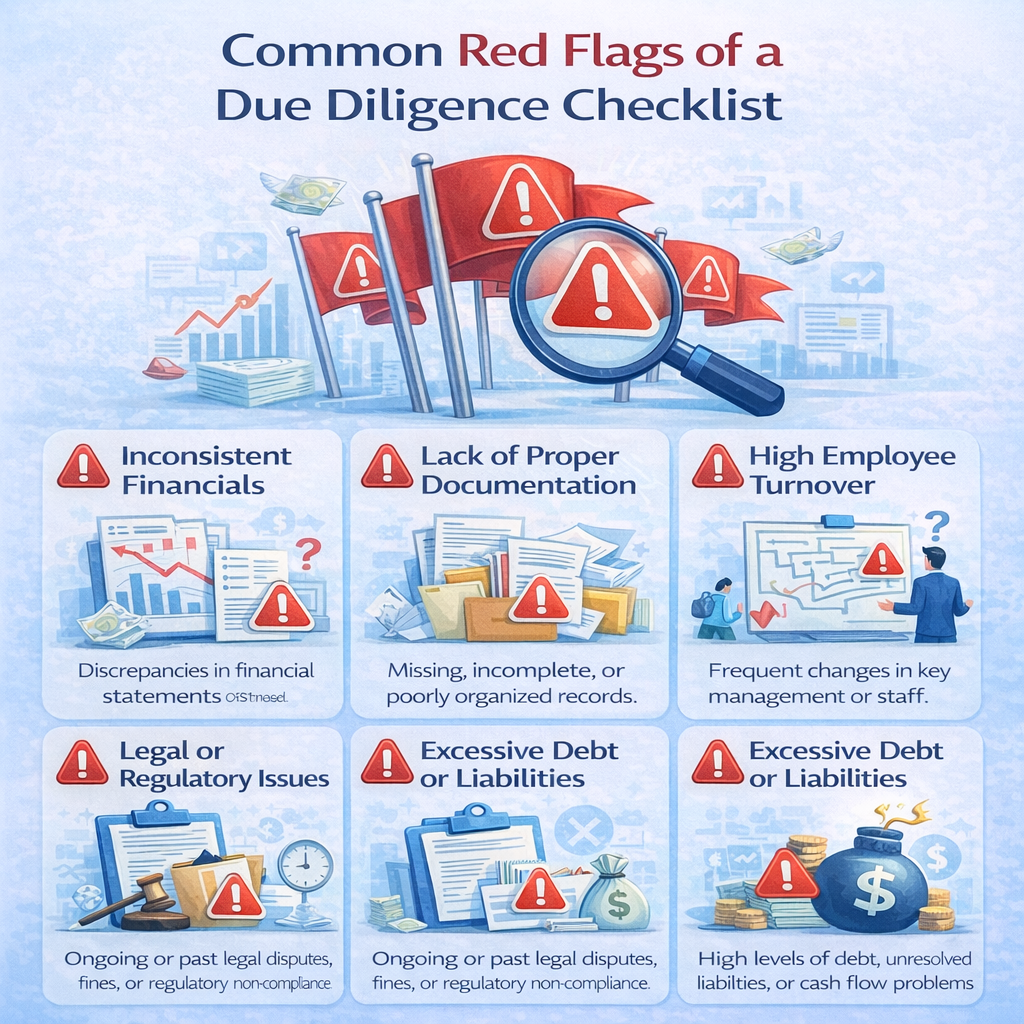
Due diligence often uncovers issues that could jeopardize the fundraising process. Common red flags include:
Inconsistent Financial Records: Outdated or incomplete financial records are a major concern for investors. Ensure your financial statements are accurate and professionally prepared.
Unclear Ownership or Equity Structures: Ambiguity about who owns what and how equity is distributed can raise questions about governance and control.
Lack of IP Protection: If your business depends on intellectual property, ensure that all patents, trademarks, and copyrights are clearly documented and protected.
Overreliance on a Single Customer: If one customer contributes disproportionately to your revenue, it poses a significant risk. Diversify your customer base and demonstrate that you are working on broadening your market.
Leveraging Technology in the Due Diligence Process
Technology can significantly streamline the due diligence process. AI-powered platforms can quickly analyze data, providing investors with fast and accurate insights. Additionally, using secure document-sharing platforms helps ensure that sensitive information is protected, while also providing investors with easy access to the necessary documents. Automation tools for compliance and regulatory tracking can also save time and reduce human error.
Tailoring Due Diligence to Different Funding Stages
Due diligence requirements differ depending on the funding stage of your company. Early-stage investors (Seed and Series A) will focus on things like market potential, the founder’s vision, and product development, while later-stage investors (Series B and beyond) will demand a more comprehensive analysis, including detailed financials, growth metrics, and operational scalability.
How SignalX Enhances the Due Diligence Process
SignalX is an AI-powered risk intelligence suite that automates regulatory, financial, and operational due diligence, enabling faster, data-driven decision-making.
a. Comprehensive Risk Assessment with Risk360
SignalX’s Risk360 platform offers a unified solution for due diligence, risk intelligence, and continuous vendor monitoring. It aggregates verified data sources, automated reporting, and real-time alerts into a single workflow, allowing teams to act with confidence.
b. Automated Compliance and Regulatory Checks
SignalX automates compliance checks with instant red-flag alerts, providing a single source of truth for all audit and KYC data. This streamlines the compliance process, ensuring adherence to regulatory standards effortlessly.
c. Enhanced Transparency and Investor Confidence
By leveraging SignalX’s tools, start-ups can present a transparent and organized profile to potential investors. The platform’s audit-ready reports and centralized data enhance credibility and trustworthiness.
d. Continuous Monitoring and Real-Time Alerts
SignalX enables continuous tracking of vendor performance and sanctions, providing early warnings for potential legal, regulatory, or financial issues. This proactive approach helps in maintaining compliance and mitigating risks effectively.
Conclusion
In conclusion, due diligence is an essential part of the fundraising process. By being prepared, transparent, and thorough, you will be able to build investor confidence and increase your chances of securing the funding you need. A well-structured due diligence checklist helps ensure that every aspect of your business is ready for inspection and demonstrates that you are committed to building a sustainable, profitable business.
By following these steps and organizing your business meticulously, you can navigate the fundraising process with confidence and increase your chances of attracting the right investors to take your business to the next level.


Samruddhi Kulkarni
Samruddhi is a marketing professional who creates content that simplifies complex topics such as third-party risk management, compliance, and vendor governance. By combining market research, insights, and domain understanding, she develops blogs, e-books, and best-practice guides that help organizations strengthen their risk posture and build long-term resilience.
