How to Verify a Company in India: Protect Yourself from Scams
In the rapidly expanding business landscape of India, scams and fraudulent companies are unfortunately common. Whether you’re entering into a partnership, investing in a company, or simply making a purchase, ensuring that you are dealing with a legitimate business is crucial. In this blog, we will guide you on how to verify a company in India and protect yourself from falling victim to scams.
Why is it Important to Verify a Company in India?
The rise of online platforms and the ease of starting a business have also led to an increase in fraudulent activities. Scammers often pose as legitimate companies, making it difficult for the untrained eye to detect a scam. To protect your investments, personal data, and finances, verifying the legitimacy of a company is not just advisable but essential.
Here’s why it matters:
Avoid Financial Losses: Scammers might lure you with attractive offers, leading to financial loss once you make the payment.
Ensure Legal Compliance: Verifying helps ensure that the company is legally registered and follows regulations.
Protect Personal Information: Fraudulent companies often steal personal and financial data, leaving you vulnerable to identity theft or other security risks.
Make Informed Decisions: Whether you’re investing or partnering with a company, verifying its credentials allows you to make a well-informed decision.
Free GST Number Verification With SignalX
How to Verify a Company in India: Step-by-Step Guide
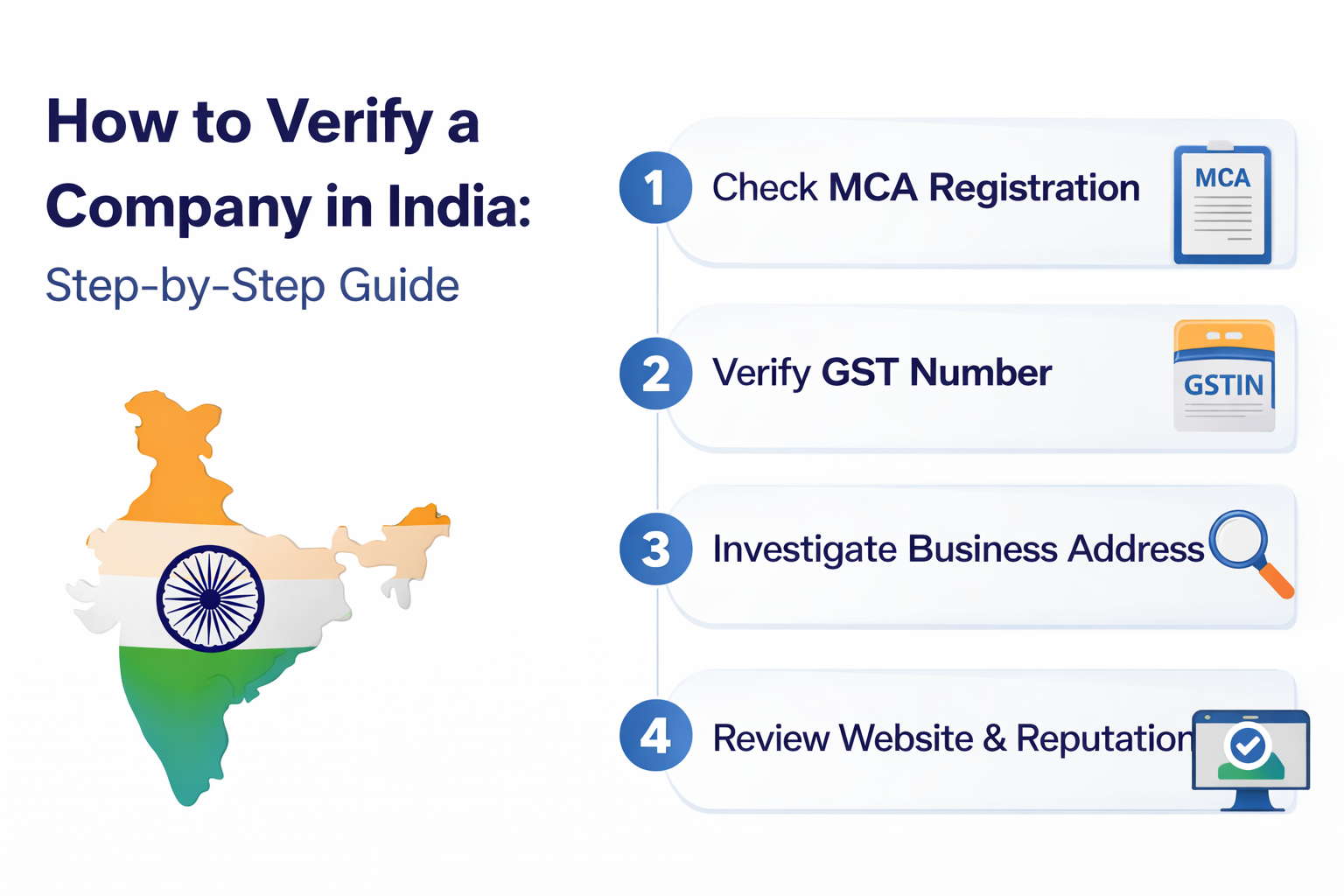
Verifying a company involves several checks to confirm its authenticity. By following these steps, you can be more confident in your dealings and avoid falling prey to scams.
Step 1: Verify a Company in India by Checking its Registration Status with the Ministry of Corporate Affairs (MCA)
Every legitimate company in India is required to register with the Ministry of Corporate Affairs (MCA). The MCA has a publicly accessible database where you can verify company information.
How to Check:
Visit the MCA Portal: Go to the official Ministry of Corporate Affairs website.
Search for the Company Name or CIN: Use the “Check Company Name” feature on the MCA services page. Input the company’s name, or if you have it, the Corporate Identification Number (CIN).
Review the Company Details: Ensure that the CIN and company name match. The portal will also provide details on whether the company is active, its registration status, and its legal standing.
Red Flags to Look Out For:
Invalid or Missing CIN: A missing or incorrect CIN can be a red flag.
Inactive Status: If the company is marked as inactive or dissolved, it’s best to avoid further interaction.
Step 2: Verify a Company in India by Checking its GST Registration
In India, businesses with a turnover exceeding the specified threshold are required to register for Goods and Services Tax (GST). A company’s GST registration number (GSTIN) is an essential factor for verifying its authenticity.
How to Check:
Navigate to the official website for GST services: Go to the official GST Portal.
Use the GSTIN Search Tool: Enter the company’s GSTIN to confirm their registration status.
Cross-check Company Details: Ensure that the details on the GST portal match those provided by the company.
Why GST Verification Matters:
Legal Taxpayer Status: A registered GSTIN indicates that the company is recognized by the Indian government as a tax-compliant entity.
Avoid Fake Invoices: Scammers often provide fake invoices without GST registration. Verifying GST helps you avoid falling victim to such frauds.
Step 3: Investigate the Company’s Business Address to Verify a Company in India
A genuine business will have a physical address that can be confirmed or located. This is crucial because many fraudulent companies operate from virtual addresses or P.O. Boxes, making them hard to trace.
How to Check:
Check the Address on Google Maps: Search the company’s address on Google Maps. If the address doesn’t exist or leads to a residential area or a P.O. Box, it may be a scam.
Verify via Website or Contact Information: Look for a clear physical address listed on the company’s official website, along with a valid contact number.
Red Flags:
Vague or Non-specific Addresses: If the company provides a general address (e.g., “Business Park, Delhi”) or if the address leads to a non-commercial area, it’s a potential red flag.
No Address Listed: If the website lacks a physical address, it might be operating in bad faith.
Step 4: Review the Company’s Website and Online Presence to Verify a Company in India
A legitimate business should have a professional, transparent, and well-maintained website. Fraudulent companies often have poorly designed websites that lack clear contact information or business details.
How to Check:
Look for Legal Information: A genuine company will include details like terms of service, privacy policy, and company registration number on its website.
Check for SSL Certification: The website should have an SSL certificate (HTTPS), which is crucial for protecting your data while browsing or making purchases.
Look for Independent Reviews: Search for reviews about the company on third-party websites like Google Reviews, Trustpilot, or social media platforms.
Red Flags to Watch Out For:
Outdated or Suspicious Website: If the website looks poorly designed or lacks basic business information, it’s often a scam.
Fake Testimonials: Be cautious if all the testimonials appear too perfect, especially if they lack specific details about the experience.
Step 5:Check the Company’s Financial History and Reputation to Verify a Company in India
A legitimate company often has a track record of business transactions, financial reports, and may even have an established reputation.
How to Check:
Search for Public Financial Records: Publicly traded companies must provide annual reports. For private companies, you can request reports or check their website.
Check Business Credit Ratings: Websites like CIBIL or Experian offer business credit scores that help assess a company’s financial health.
Red Flags:
Lack of Financial Transparency: If the company refuses to share basic financial details or reports, it could indicate poor business practices or fraud.
Negative Credit Ratings: Companies with poor credit scores are often at risk of being fraudulent.
Step 6: Check for Legal Issues and Complaints to Verify a Company in India
Researching whether a company has faced legal action or has complaints filed against it can provide crucial insight into its reputation and business practices.
How to Check:
Look for Legal Cases: Search for any legal disputes involving the company. You can do this by checking the eCourts portal or legal databases.
Search Consumer Forums: Platforms like Consumer Complaints and Complaint Board often highlight customer complaints and issues related to the company.
Step 7: Verify the Company’s Directors and Owners to Verify a Company in India
Knowing who runs the company is crucial to verifying its legitimacy. A legitimate company will have clearly identifiable directors and owners, who should have a solid professional background.
How to Check:
Check the MCA Website: The Ministry of Corporate Affairs provides details about a company’s directors and key stakeholders.
Look for LinkedIn Profiles: Many directors and business owners have LinkedIn profiles. Verifying their professional credentials can add another layer of legitimacy.
Step 8: Trust Your Gut and Stay Cautious
If you still have doubts or something feels off, it’s always safer to walk away. Fraudulent companies frequently try to pressure you into making quick decisions by creating an urgent situation. Always take your time to verify details thoroughly.
How to Report a Fraudulent Company in India?
If you suspect that a company is fraudulent, it’s essential to report it to the relevant authorities immediately. This helps prevent others from becoming victims of scams.
Ministry of Corporate Affairs (MCA): File a complaint on the official MCA website.
Consumer Protection: Use the Consumer Affairs Helpline to report fraudulent activities.
Police Department: If you’ve suffered financial loss, report the fraud to the local police station for investigation.
How SignalX Helps You Verify Companies
SignalX simplifies the process of verifying a company’s legitimacy by offering comprehensive, real-time data on business registrations, financial status, and more. With tools that pull information from trusted sources like the Ministry of Corporate Affairs (MCA) and the GST Portal, SignalX helps you assess potential risks and avoid scams before you engage with any company.
Why Choose SignalX?
- Real-Time, Reliable Data: Get up-to-date company information.
- Comprehensive Profiles: Access company registration, directors, and financial history.
- Easy to Use: Verify a company’s legitimacy in just a few clicks.
Start Verifying with SignalX Today!
Don’t let scammers take advantage of you. Use SignalX to quickly verify companies and make confident business decisions.
FAQs: How to Verify a Company in India
1. How can I verify if a company is legally registered in India?
Check the Ministry of Corporate Affairs (MCA) website by searching for the company’s Corporate Identification Number (CIN) or company name.
2. What are the benefits of GST registration?
GST registration ensures that the company is compliant with Indian tax laws and is a legitimate business. It also allows the company to collect taxes on behalf of the government.
3. How can I verify a company’s physical address?
Use Google Maps to check the company’s address. A trustworthy business will always provide a physical address that can be independently confirmed.
4. How can I identify a fake website?
Check for SSL certification (look for HTTPS in the website URL), verify company information on the website, and search for independent reviews on third-party platforms.
5. What is the importance of financial transparency?
Financial transparency helps you assess the credibility of the company. Lack of financial reports or transparency can signal potential fraud.
6. How do I find legal issues related to a company?
You can search for any legal disputes or complaints against the company through the eCourts portal or consumer complaint websites.


Samruddhi Kulkarni
Samruddhi is a marketing professional who creates content that simplifies complex topics such as third-party risk management, compliance, and vendor governance. By combining market research, insights, and domain understanding, she develops blogs, e-books, and best-practice guides that help organizations strengthen their risk posture and build long-term resilience.
