Due Diligence on a Private Company: A Practical Guide





Investing in or acquiring a private company can offer high growth potential, strategic advantages, and long-term value creation. However, private companies operate with limited public disclosure, informal systems, and promoter-centric control. This makes due diligence on a private company a non-negotiable exercise before any investment or acquisition decision.
What Is Due Diligence on a Private Company?
It is a systematic review of a business to verify facts, identify risks, and evaluate the true condition of the company before entering into a financial or strategic transaction.
Since private companies are not required to publish detailed information like listed entities, due diligence becomes the primary tool for understanding business reality rather than relying on presentations or assurances.
Why Due Diligence on a Private Company Is Important
Private companies often differ significantly from what is reflected in summary financials or pitch decks. Conducting due diligence helps decision-makers avoid costly mistakes. Importance for conducting due diligence on a private company
- Limited transparency: Financial and operational details are not publicly available.
- Promoter dependence: Business continuity may rely heavily on one or two individuals.
- Weak compliance culture: Statutory and tax compliance may be inconsistent.
- Informal operations: Processes may not be documented or standardized.
- Hidden liabilities: Legal, tax, or contractual risks may not be disclosed upfront.
Through due diligence on a private company, these uncertainties are identified and assessed before capital is committed.
Goals of Due Diligence on a Private Company
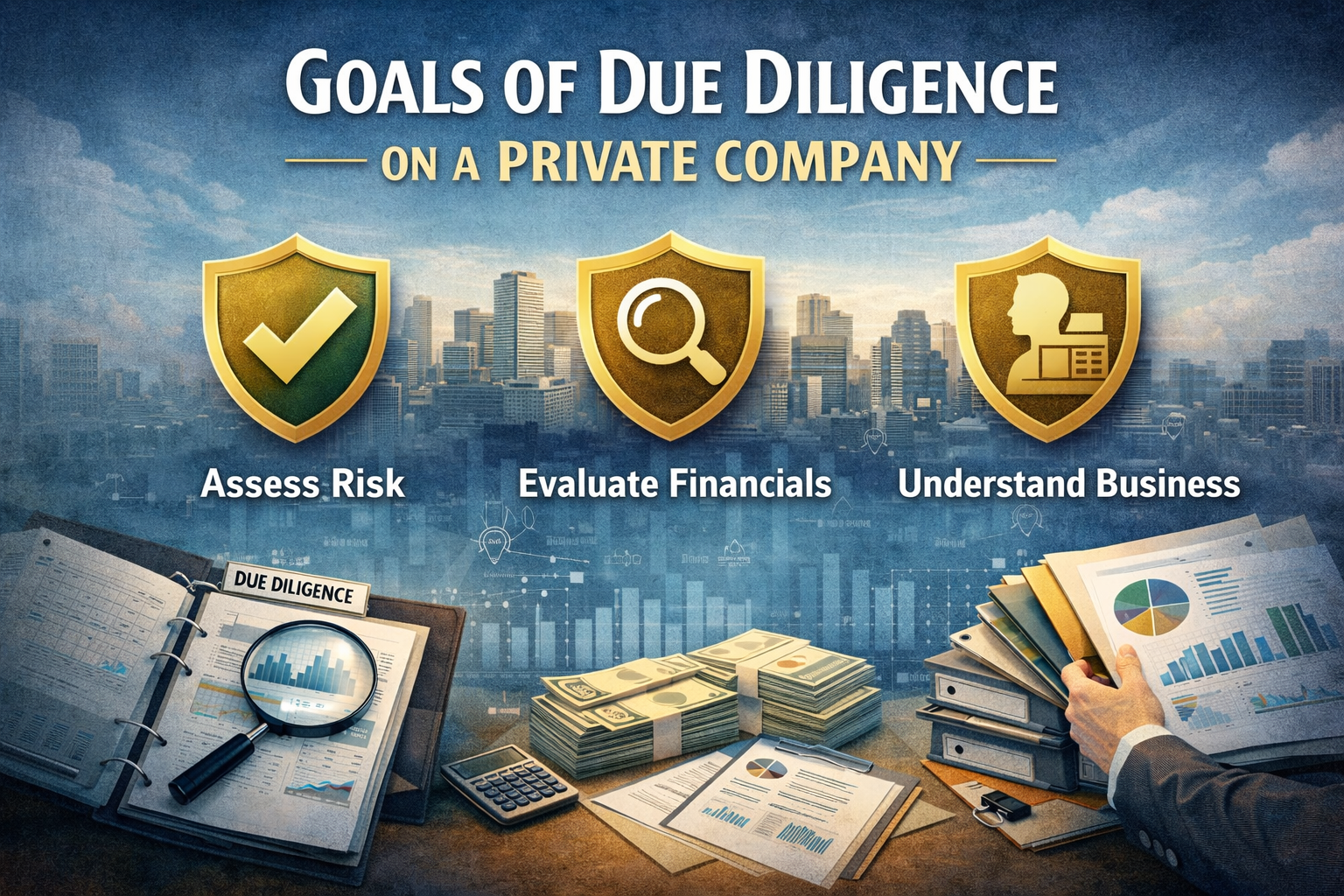
The primary objective of due diligence is informed decision-making.
Specifically, it aims to:
- Verify financial accuracy and sustainability
- Identify legal, tax, and regulatory risks
- Assess operational efficiency and scalability
- Evaluate management capability and governance quality
- Support fair valuation and deal structuring
A structured due diligence on a private company converts assumptions into verified insights.
Financial Due Diligence on a Private Company
Financial due diligence focuses on understanding how the company earns, spends, and retains money.
Key areas reviewed during financial due diligence
Revenue quality: Confirms whether revenue is recurring and genuinely earned.
Profitability: Assesses whether profits are operational or one-time in nature.
Cash flows: Evaluates the company’s ability to generate actual cash.
Working capital: Reviews receivables, payables, and inventory efficiency.
Debt and liabilities: Identifies borrowings and off-balance-sheet obligations. Financial due diligence ensures that reported numbers reflect economic reality, not accounting adjustments.
Legal Due Diligence on a Private Company
Legal due diligence checks whether the company is legally compliant and structurally sound.
What legal typically Covers due diligence
Corporate records: Confirms valid incorporation and statutory filings.
Ownership structure: Verifies shareholding and control rights.
Asset ownership: Ensures the company legally owns its assets.
Contracts: Reviews agreements with customers, vendors, and lenders.
Litigation: Identifies pending or potential legal disputes.
Legal risks identified during due diligence on a private company often influence deal terms and protective clauses.
Tax Due Diligence on a Private Company
Tax due diligence evaluates past compliance and future exposure.
Key tax aspects reviewed
Income tax filings: Checks accuracy and consistency of returns.
GST compliance: Reviews filings, reconciliations, and credits.
Tax demands: Identifies outstanding or disputed liabilities.
Tax practices: Assesses aggressive or risky tax positions.
Tax-related issues can directly impact cash flows after acquisition, making this a vital part of due diligence on a private company.
Operational Due Diligence on a Private Company
Operational due diligence examines how the business functions on a day-to-day basis.
Key operational areas assessed
Business processes: Evaluates efficiency and process clarity.
Supply chain: Assesses stability and dependency risks.
Customer base: Reviews concentration and retention levels.
Technology: Examines systems, data reliability, and automation.
Scalability: Determines readiness for growth without disruption.
Operational diligence reveals whether the company can sustain performance beyond current levels.
Management and Governance Due Diligence on a Private Company
In private companies, management quality is often the most critical success factor.
Key governance and management checks
Promoter background: Reviews credibility and track record.
Decision-making structure: Assesses clarity of authority and roles.
Succession planning: Evaluates leadership continuity risks.
Governance practices: Reviews transparency and ethical standards. Weak governance structures are one of the most common risks uncovered during due diligence on a private company.
Commercial Due Diligence on a Private Company
Commercial due diligence evaluates the company’s position in the market.
Key commercial factors reviewed
Industry outlook: Assesses growth potential and competitive pressure.
Market positioning: Evaluates differentiation and pricing power.
Customer demand: Reviews sustainability of demand.
External risks: Identifies regulatory or technological disruptions. This ensures the business is viable not only internally but also within its external environment.
Common Red Flags in Due Diligence on a Private Company
Certain warning signs repeatedly emerge across transactions.
Financial red flags
- Unusual revenue growth without operational support
- High receivables with poor recovery
- Frequent cash-based transactions
Legal and compliance red flags
- Missing statutory records
- Verbal agreements instead of formal contracts
- Significant unresolved litigation
Operational red flags
- Dependence on a single client or supplier
- Lack of documented processes
- Outdated systems and controls
- Identifying red flags early allows stakeholders to renegotiate, restructure, or withdraw.
Who Should Conduct Due Diligence on a Private Company?
Depending on transaction size and complexity, due diligence may be conducted by:
- Chartered Accountants
- Legal professionals
- Management consultants
- Industry specialists
- Internal strategy or investment teams
For MSME buyers and first-time investors, professional assistance ensures depth and objectivity in due diligence on a private company.
A Practical Process for Due Diligence on a Private Company
- A simplified due diligence process includes:
- Defining scope and objectives
- Collecting relevant information and documents
- Reviewing financial, legal, and operational data
- Conducting management discussions
- Identifying risks and value drivers
- Preparing a structured due diligence report
This approach ensures due diligence results in actionable insights, not just documentation.
Role of Due Diligence on a Private Company in Valuation
Due diligence findings directly affect:
- Business valuation
- Negotiation leverage
- Deal structure
- Risk allocation clauses
- Post-acquisition strategy
Thus, due diligence on a private company is both a risk management and value optimization tool.
Conclusion
Due diligence is not about finding a perfect business. It is about understanding reality, risks, and long-term sustainability. A well-executed due diligence on a private company empowers investors, MSME buyers, consultants, and professionals to make informed, confident, and defensible decisions.
In an increasingly complex business environment, due diligence remains the foundation of responsible investment and acquisition
Book a Demo
FAQ
Below are some frequently asked questions related to due diligence on a private company to help investors and professionals understand the process better.
1.What is due diligence on a private company?
Due diligence on a private company is a detailed review of its financial, legal, operational, and management aspects before making an investment or acquisition decision. It helps verify information and identify risks.
2.Why is due diligence on a private company important for investors?
Due diligence on a private company is important because private businesses do not disclose information publicly. It protects investors from hidden liabilities, weak governance, and financial misrepresentation.
3.What are the main types of due diligence on a private company?
The main types of due diligence on a private company include:
- Financial due diligence
- Legal due diligence
- Tax due diligence
- Operational due diligence
- Management and governance due diligence
Each type focuses on a different risk area.
4.Who should conduct due diligence on a private company?
Due diligence on a private company is usually conducted by Chartered Accountants, legal advisors, management consultants, or specialized due diligence firms, depending on the transaction size and complexity.
5.How long does due diligence on a private company take?
The duration of due diligence on a private company typically ranges from 2 to 6 weeks, depending on data availability, business size, and depth of review required.
6.What documents are required for due diligence on a private company?
Common documents include:
- Financial statements and tax returns
- Statutory and corporate records
- Contracts and agreements
- Bank statements
- Compliance filings
These documents form the backbone of due diligence on a private company.
7.Can due diligence on a private company affect valuation?
Yes. Findings from due diligence on a private company directly impact valuation, deal structure, payment terms, and risk allocation between buyer and seller.
8.What are common red flags in due diligence on a private company?
Common red flags include inconsistent financials, poor compliance records, high customer concentration, pending litigation, and excessive promoter dependence.