Regulatory Compliance Playbook (2026): A Step-by-Step Guide for Modern Businesses
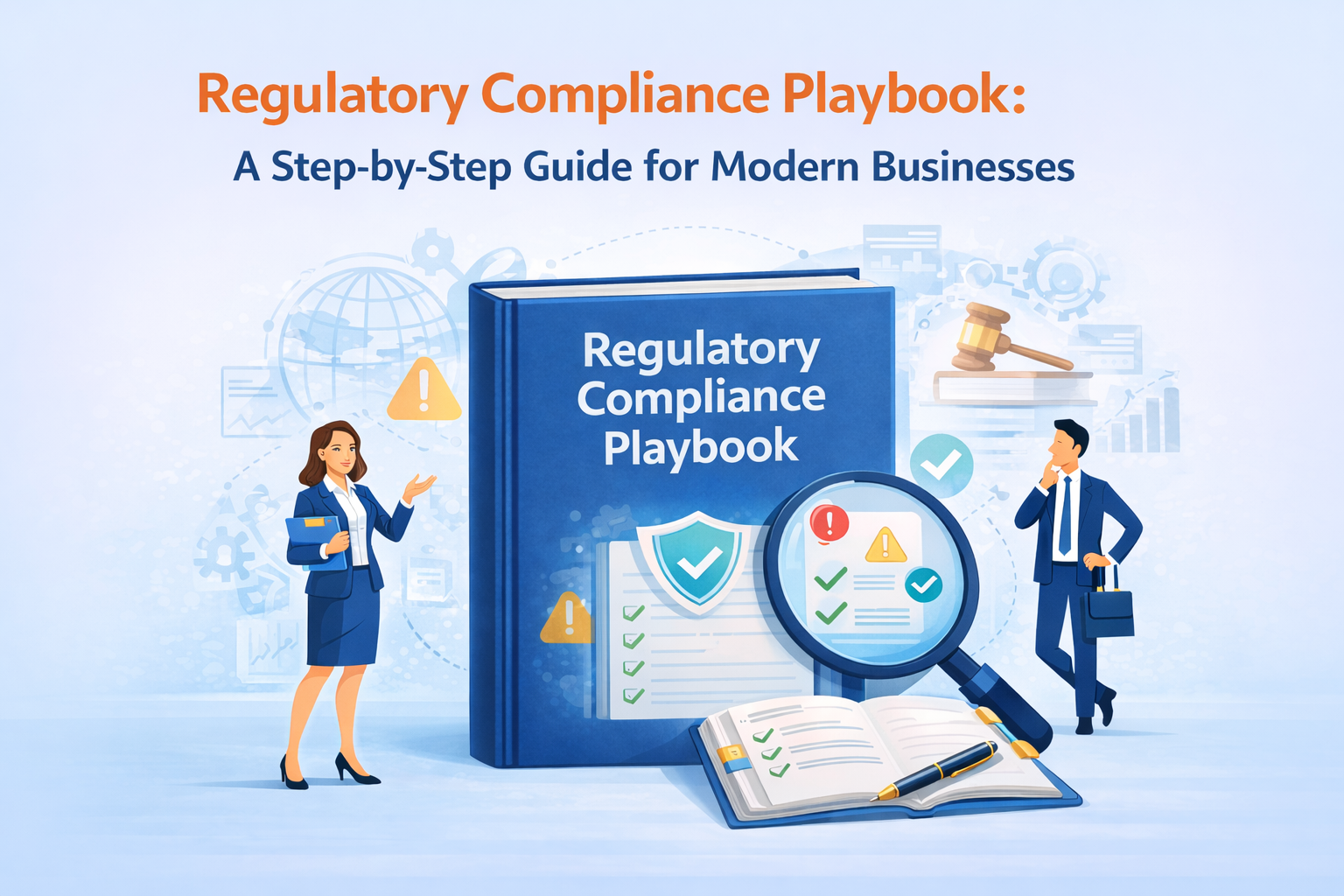





Regulatory compliance in 2026 is no longer a back-office function or a once-a-year checklist exercise. It is a living, operational discipline that directly affects growth, customer trust, and long-term survival. As regulations expand across borders and enforcement becomes more data-driven, businesses must move from reactive compliance to structured, proactive execution. This playbook walks through regulatory compliance step by step, with practical depth designed for modern, regulated organizations.
What Is Regulatory Compliance?
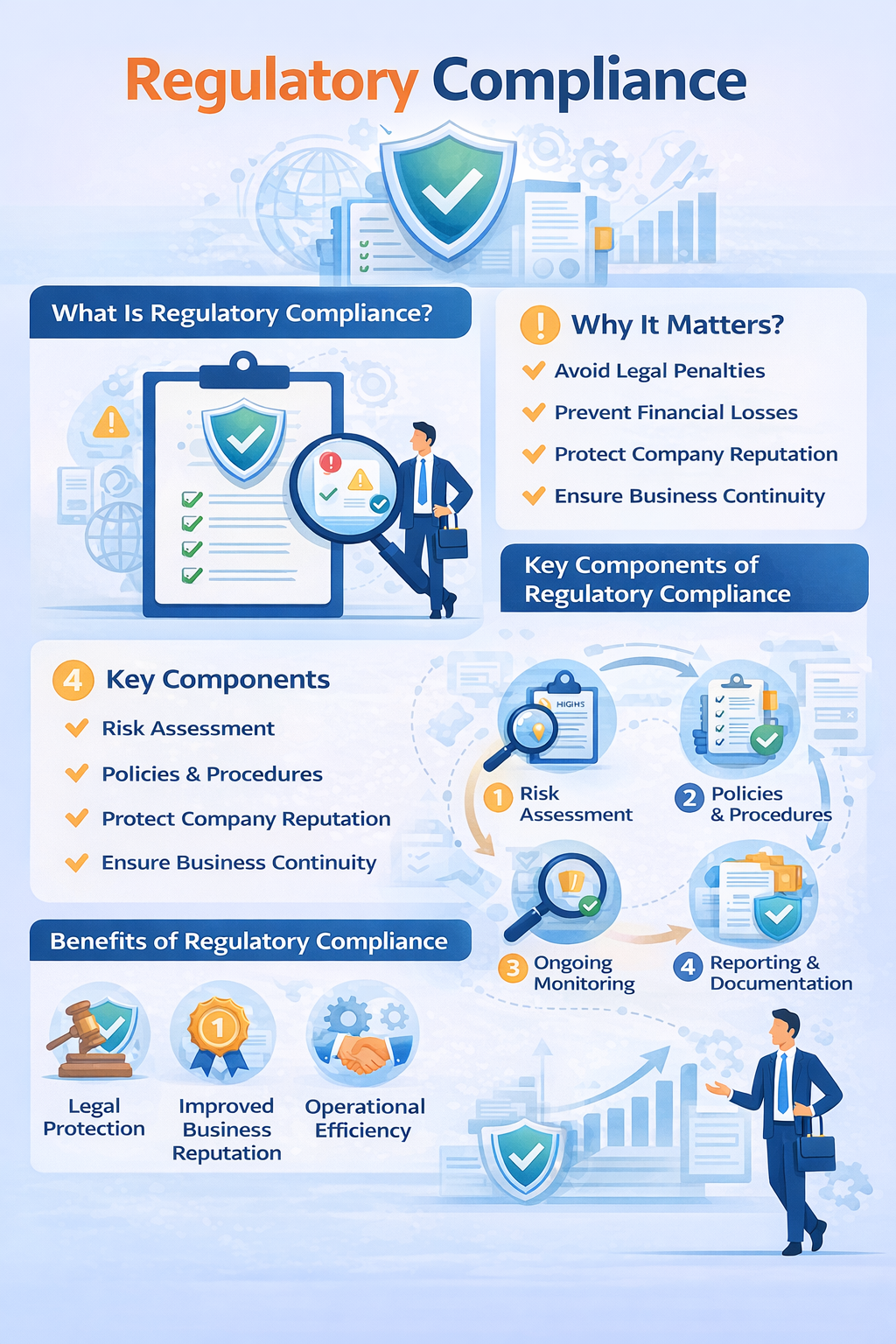
Regulatory compliance refers to a company’s obligation to understand, implement, and continuously follow laws, regulations, and supervisory expectations that govern its operations. These rules may be issued by governments, regulators, or industry bodies and often change over time.
Compliance applies across all regulated industries because risk does not stay contained within a single sector. Financial crime, data misuse, fraud, and governance failures can impact consumers, markets, and national security. As a result, regulators hold businesses accountable regardless of size or maturity.
Common compliance failures usually stem from weak onboarding controls, outdated policies, poor documentation, or lack of ongoing monitoring. In many enforcement cases, the issue is not intentional misconduct but the absence of structured compliance processes.
Why Regulatory Compliance Matters in 2026
The cost of non-compliance has increased sharply in recent years. Financial penalties can reach millions, but the hidden costs are often worse. Reputational damage, loss of customer confidence, restricted market access, and regulatory remediation programs can stall growth for years.
In 2026, regulatory scrutiny is more coordinated and global. Regulators share intelligence, leverage automation, and expect companies to demonstrate real-time control over risks. Businesses are no longer judged solely on written policies but on how effectively those policies operate in practice.
Strong compliance has also become a competitive advantage. Organizations with mature compliance programs onboard customers faster, enter new markets with confidence, and build stronger relationships with banks, partners, and investors.
Who This Guide Is For
This guide is designed for professionals who are directly or indirectly responsible for regulatory outcomes. It is relevant for compliance officers managing day-to-day obligations, legal teams interpreting regulatory requirements, and risk or audit professionals assessing control effectiveness. It also applies to fintechs, banks, enterprises, and SMEs that operate in regulated environments or plan to scale across jurisdictions.
Core Areas of Regulatory Compliance
At the heart of regulatory compliance are several interconnected domains. Anti-money laundering and know-your-customer controls focus on preventing financial crime and ensuring customer legitimacy. Sanctions and watchlist screening protect businesses from engaging with restricted individuals or entities.
Data protection and privacy regulations govern how personal and sensitive information is collected, stored, and processed. Industry-specific regulations add additional obligations depending on whether a business operates in payments, lending, healthcare, crypto, or other regulated sectors. Internal governance and regulatory reporting ensure accountability, transparency, and effective oversight.
Regulatory Compliance Framework Explained
A regulatory compliance framework provides structure and consistency. It begins with clearly defined policies that outline regulatory expectations, supported by procedures that explain how those expectations are met in practice. Controls ensure policies are actually followed.
Roles and responsibilities must be clearly assigned using a structured ownership model so accountability is never unclear. A risk-based approach ensures resources are focused on the highest-risk customers, products, and geographies rather than applied uniformly.
Documentation ties everything together. Regulators expect businesses to demonstrate not only what they do, but how, when, and why decisions are made.
How to Conduct a Regulatory Compliance Gap Analysis
A compliance gap analysis starts by identifying all applicable regulations across jurisdictions and business lines. Each regulatory requirement should then be mapped to an existing policy, process, or system.
Gaps emerge where controls are missing, outdated, or ineffective. These gaps must be assessed based on potential regulatory, financial, and reputational impact. High-risk gaps should be prioritized for remediation, with clear owners and timelines assigned.
The process does not end after remediation. Regular reassessment is essential, especially when regulations change or the business expands into new markets.
Regulatory Screening and Continuous Monitoring
Screening is a foundational compliance activity that begins at onboarding but must continue throughout the customer lifecycle. Customers, beneficial owners, and counterparties should be assessed against sanctions lists, politically exposed person databases, and adverse media sources.
One-time screening is no longer sufficient in a dynamic risk environment. Continuous monitoring allows businesses to detect changes in risk profiles and respond promptly. Effective programs balance thorough coverage with intelligent alert management to minimize unnecessary false positives.
Book a Demo with Risk Master
Unified Risk Management Made Simple
AML and KYC Compliance Checklist
A strong AML and KYC program starts with collecting and verifying customer identity information during onboarding. Customers are then risk-scored based on factors such as geography, industry, and expected activity.
Ongoing transaction monitoring helps identify unusual patterns that may indicate money laundering or fraud. When suspicious activity is detected, it must be investigated and reported within regulatory timelines. All related records must be retained in accordance with legal requirements to support audits and investigations.
Third-Party and Vendor Compliance Management
Third-party risk is an extension of your own compliance exposure. Vendors with access to funds, data, or critical systems can introduce significant regulatory risk if not properly managed.
Effective programs categorize vendors based on risk, conduct due diligence before onboarding, and perform ongoing reviews throughout the relationship. Clear documentation ensures accountability and provides evidence during audits or regulatory reviews.

Using Technology to Simplify Regulatory Compliance
Technology plays a critical role in scaling compliance efficiently. Many processes, including identity verification, screening, transaction monitoring, and reporting, can be partially automated.
RegTech solutions reduce manual effort, improve accuracy, and enhance audit readiness. The most effective tools integrate seamlessly with existing workflows, provide clear audit trails, and adapt quickly to regulatory updates.
Regulatory Compliance by Region (Quick Overview)
In the United States, compliance focuses heavily on FinCEN requirements, AML programs, and suspicious activity reporting. The European Union emphasizes AML directives alongside strict data protection obligations under GDPR.
India’s regulatory landscape is shaped by RBI, SEBI, and PMLA requirements, with increasing emphasis on digital compliance. Businesses operating across borders must harmonize global standards while addressing local regulatory nuances.
Common Compliance Audit Questions (and How to Prepare)
Auditors typically assess whether policies are current, controls are effective, and staff are adequately trained. They expect clear evidence, including KYC records, risk assessments, alerts, reports, and remediation logs.
Common mistakes include outdated documentation, inconsistent execution, and poor recordkeeping. Preparation is less stressful when compliance activities are embedded into daily operations rather than treated as periodic events.
Key Compliance Metrics and KPIs to Track
Metrics turn compliance into something measurable. Tracking onboarding completion rates, alert resolution timelines, false positive trends, and audit remediation progress provides visibility into program effectiveness and helps identify areas for improvement.
Regulatory Compliance Best Practices
High-performing organizations embed compliance into company culture rather than isolating it within a single team. Regular training keeps staff aware of evolving risks and expectations.
Periodic internal reviews and independent audits help catch issues early. Assigning ownership for monitoring regulatory changes ensures the organization stays ahead rather than reacting late.
Frequently Asked Questions (FAQ) About Regulatory Compliance
What is regulatory compliance?
Regulatory compliance is the process by which a business ensures it follows all laws, regulations, guidelines, and supervisory requirements that apply to its operations. This includes financial crime prevention, data protection, reporting obligations, and industry-specific rules. Compliance is not a one-time activity but an ongoing responsibility that evolves as regulations and business models change.
Why is regulatory compliance important for businesses?
Regulatory compliance protects businesses from legal penalties, financial losses, and reputational damage. Beyond risk avoidance, strong compliance programs build trust with customers, regulators, partners, and investors. In highly regulated industries, compliance is often a prerequisite for operating, scaling, or entering new markets.
Which businesses need to follow regulatory compliance requirements?
Any business operating in a regulated industry must comply with relevant regulations. This includes banks, fintechs, payment providers, insurers, healthcare organizations, SaaS platforms handling sensitive data, and even SMEs that process customer information or financial transactions. Company size does not remove regulatory responsibility.
How often should regulatory compliance checks be performed?
Compliance checks should be continuous. Customer monitoring, transaction reviews, and risk assessments are expected to happen on an ongoing basis. Formal compliance reviews, audits, and policy updates are typically conducted annually or whenever there is a significant regulatory change or business expansion.
What happens if a company is non-compliant?
Non-compliance can result in fines, enforcement actions, license restrictions, mandatory remediation programs, and long-term reputational harm. In severe cases, regulators may suspend operations or revoke licenses. Even minor compliance failures can trigger costly audits and increased regulatory scrutiny.
Can regulatory compliance be fully automated?
Regulatory compliance cannot be fully automated, but many processes can be significantly enhanced through technology. Automation can support identity verification, screening, transaction monitoring, reporting, and recordkeeping. Human oversight remains essential for decision-making, investigations, and regulatory judgment.
What is a risk-based approach to regulatory compliance?
A risk-based approach means focusing compliance efforts on areas with the highest potential impact. Customers, products, transactions, and regions are assessed for risk, and controls are applied proportionally. Regulators expect businesses to demonstrate that resources are allocated based on risk rather than applied uniformly.
How long should compliance records be retained?
Record retention periods vary by regulation and jurisdiction, but most AML and KYC frameworks require records to be retained for several years after the end of a customer relationship. Maintaining complete and accessible records is critical for audits, investigations, and regulatory reviews.
Regulatory Compliance Roadmap: Next Steps
In the first 30 days, businesses should identify key regulatory obligations, review existing controls, and address critical gaps. Over the next 90 days, controls can be strengthened, technology implemented, and teams trained.
Long-term success comes from building a mature compliance program that evolves with the business, leverages automation wisely, and treats regulatory compliance as a strategic asset rather than a cost center.
Conclusion: Turning Regulatory Compliance Into a Strategic Advantage
Regulatory compliance in 2026 is no longer about simply avoiding penalties it is about building a business that is resilient, trusted, and ready to scale. Organizations that invest in structured frameworks, continuous monitoring, and risk-based decision-making are better equipped to adapt to regulatory change and market pressure.
When compliance is embedded into daily operations, supported by the right technology, and reinforced through culture and training, it becomes a driver of efficiency rather than a bottleneck. The most successful businesses treat compliance as an ongoing journey, not a one-time project.