Due Diligence When Buying a Business: A Complete Guide to Evaluate Before You Invest
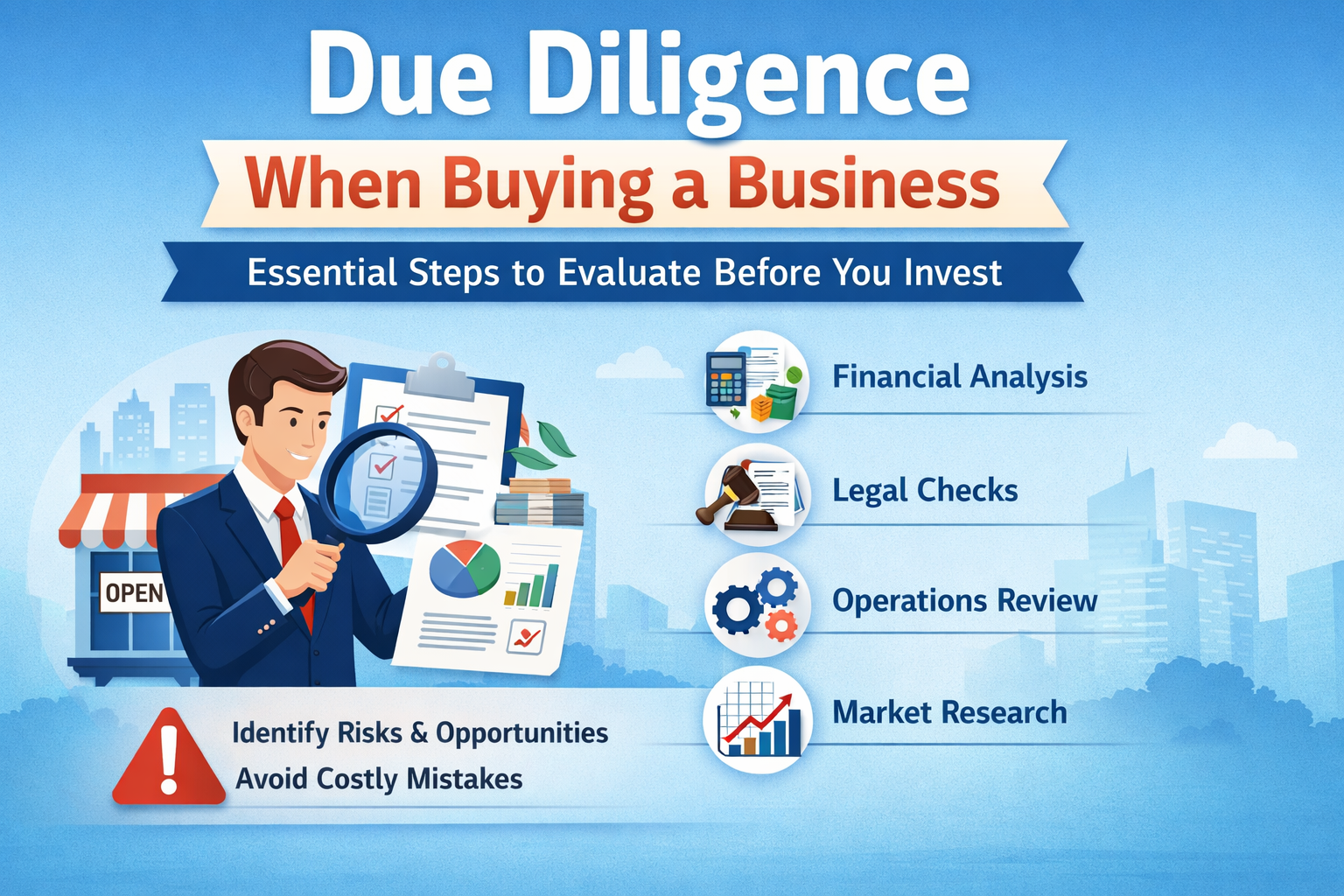
Buying an established business can be a powerful way to enter entrepreneurship, scale faster, or diversify your investment portfolio. Unlike starting from scratch, an existing business already has customers, revenue streams, and operational systems in place. However, these advantages come with risks many of which are invisible at first glance. This is where due diligence when buying a business becomes critical. Due diligence is the process that separates a well-informed investment from a costly mistake. It allows you to verify claims, uncover hidden risks, and understand whether the business can truly deliver long-term value under new ownership.
What Is Due Diligence When Buying a Business?
Due diligence when buying a business refers to a structured and detailed investigation of all key aspects of a company before completing the acquisition. It goes far beyond reviewing basic financial statements and focuses on understanding the business as a whole.
The purpose of due diligence is to:
- Identify financial, legal, and operational risks
- Assess sustainability and growth potential
- Determine whether the asking price is justified
In simple terms, due diligence helps you answer one fundamental question:
Is this business worth buying at this price, under these conditions?

Why Due Diligence When Buying a Business Is Non-Negotiable
Many business acquisitions fail not because the business was bad, but because buyers misunderstood what they were purchasing. Proper due diligence when buying a business reduces uncertainty and protects your capital.
Key reasons why due diligence is essential:
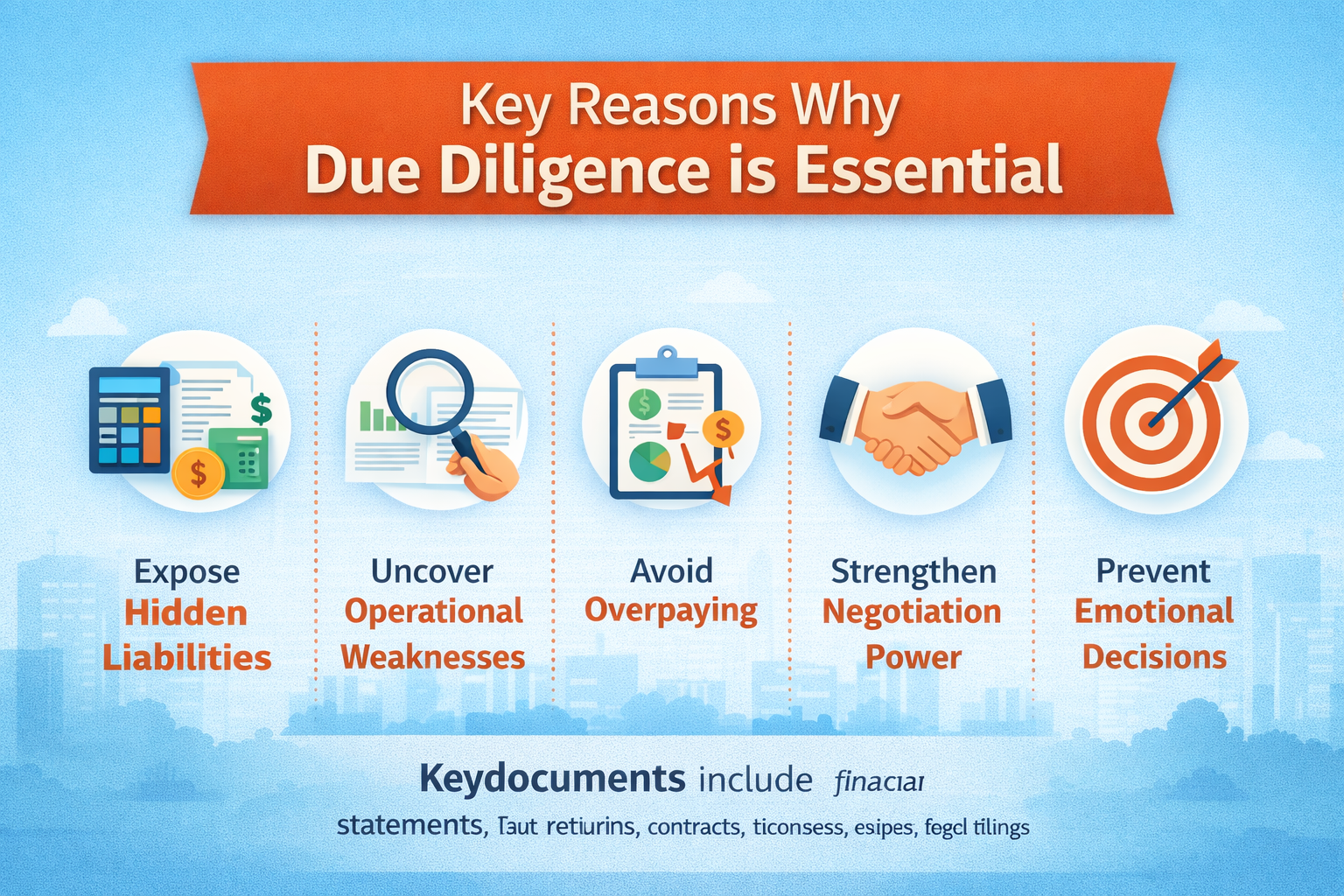
- It exposes hidden liabilities such as unpaid taxes or legal disputes
- It reveals operational weaknesses masked by short-term profits
- It helps you plan for post-acquisition challenges
- It strengthens your negotiation leverage
- It prevents emotional or rushed decision-making
- Skipping due diligence is essentially investing blind.
Step-by-Step Process for Due Diligence When Buying a Business
1. Financial Due Diligence When Buying a Business
Financial analysis is the backbone of due diligence when buying a business. It helps you understand whether the business generates sustainable profits and healthy cash flow.
Documents to review:
- Profit and Loss statements (3–5 years)
- Balance sheets
- Cash flow statements
- Tax filings and assessments
- Details of loans, credit lines, and liabilities
What to analyse deeply:
- Revenue consistency and seasonality
- Gross and net profit margins
- Cost structure and expense trends
- Owner-specific expenses that may not continue
- Cash flow reliability versus accounting profits
A business that looks profitable on paper but struggles with cash flow may require additional working capital after acquisition.
2. Legal Due Diligence When Buying a Business
Legal due diligence protects you from inheriting problems that could surface only after the deal is closed.
Key areas to examine:
- Business registration, licenses, and permits
- Ownership structure and shareholder agreements
- Customer and vendor contracts
- Lease agreements and property documents
- Pending or historical litigation
- Compliance with local regulations
- Intellectual property ownership
Ignoring legal due diligence when buying a business can result in unexpected fines, lawsuits, or loss of critical assets.
3. Operational Due Diligence When Buying a Business
Operational due diligence focuses on how the business functions day to day.
Operational due diligence is an essential part of purchasing a business because it helps buyers understand how the company operates on a daily basis. Rather than focusing only on financial records, this process examines the systems, workflows, and resources that support consistent performance. By reviewing these operational elements, potential buyers can identify risks, uncover inefficiencies, and determine whether the business is capable of maintaining stability and growth after the ownership transition.
When conducting operational due diligence, it is important to closely analyze the organization’s core business processes to ensure they are structured, repeatable, and scalable. Examining supply chain reliability is equally important, as dependable vendors and diversified sourcing help prevent disruptions that could affect production or service delivery. Buyers should also assess the effectiveness of inventory management practices to confirm that stock levels are properly controlled and aligned with demand, which supports healthier cash flow and minimizes losses.
4. Market and Industry Due Diligence When Buying a Business
Even a well-run business can struggle if the industry itself is declining. Market analysis ensures long-term relevance.
Areas to analyze:
- Industry growth trends
- Competitive positioning
- Market share and differentiation
- Customer demand shifts
- Regulatory or technological disruptions
Market and industry due diligence when buying a business helps you evaluate future risk, not just past performance.
5. Customer Due Diligence When Buying a Business
Customers are the primary drivers of revenue stability.
Review customer-related data such as:
- Customer concentration risk
- Retention and churn rates
- Repeat purchase behaviour
- Sales pipeline and contracts
- Online reviews and brand reputation
A business that depends heavily on a small number of customers carries higher risk.
6. Employee and Management Due Diligence When Buying a Business
Employees often determine whether a business thrives or struggles after acquisition.
Key aspects to assess:
- Employee contracts and compensation structures
- Key personnel dependencies
- Turnover rates and morale
- Compliance with labour laws
- Training and knowledge transfer requirements
Human capital is frequently undervalued during due diligence when buying a business, yet it plays a critical role in continuity.
7. Asset and Technology Due Diligence When Buying a Business
Assets and technology directly impact operational efficiency and future costs.
Verify the following:
- Physical assets and their condition
- Inventory accuracy and valuation
- Software licenses and subscriptions
- IT systems and data security
- Maintenance and upgrade requirements
Outdated technology or poorly maintained assets can significantly increase post-acquisition expenses.
Common Red Flags During Due Diligence When Buying a Business
🚩 Inconsistent or incomplete financial records
🚩 Seller resistance to transparency
🚩 Active legal disputes or compliance issues
🚩 High employee or customer churn
🚩 Excessive reliance on the owner
The presence of multiple red flags should prompt deeper investigation or deal renegotiation.
Creating a Comprehensive Due Diligence Checklist When Buying a Business
A structured checklist ensures every critical area is reviewed systematically.
🔍 Don’t Miss Hidden Risks in Your Next Acquisition
Buying a business involves more than reviewing numbers. Signalx.ai helps investors and founders
uncover financial, legal, and operational risks with structured, expert-led due diligence.
Your checklist should include:
Financial verification: Review financial statements, cash flow, debts, and revenue trends to confirm the business is financially stable and accurately valued.
Legal and regulatory compliance: Ensure the business follows all applicable laws, holds the necessary licenses, and has no ongoing legal disputes that could create future liabilities.
Operational stability: Evaluate whether daily operations are efficient, well-documented, and capable of continuing smoothly after the ownership transition.
Market and industry sustainability: Analyze industry trends, competition, and market demand to determine if the business is positioned for long-term growth.
Customer and employee retention: Assess the loyalty of key customers and the stability of the workforce, as both are critical for maintaining business continuity.
Asset and technology validation: Verify the condition, ownership, and functionality of physical assets and technology to ensure they support current and future operations.
FAQ
1. What is due diligence when buying a business?
Due diligence is a detailed evaluation of a business’s financial, legal, operational, and market conditions before purchase. It helps investors verify information, uncover hidden risks, and confirm the true value of the business.
2. Why is due diligence important before investing in a business?
Due diligence protects buyers from financial losses, legal liabilities, and operational issues. It ensures you understand what you are purchasing and whether the business can sustain profitability after acquisition.
3. How long does business due diligence usually take?
The due diligence process typically takes between 30 to 90 days, depending on the size, complexity, and availability of business records.
4. What documents are required for business due diligence?
Key documents include financial statements, tax returns, contracts, licenses, employee agreements, customer records, asset lists, and legal filings.
5. Can I conduct due diligence without professional help?
Basic due diligence can be done independently, but engaging financial advisors, legal experts, and industry specialists is strongly recommended for complex transactions.
6. What are the biggest red flags during due diligence?
Major red flags include inconsistent financial data, unresolved legal disputes, heavy owner dependency, declining customer base, and lack of documentation.
7. How does due diligence affect business valuation?
Findings from due diligence often lead to valuation adjustments, renegotiation of terms, or deal restructuring to reflect actual risks and opportunities.
8. What happens after due diligence is completed?
After completion, buyers either proceed with the purchase, renegotiate terms, or walk away from the deal if risks outweigh benefits.


Samruddhi Kulkarni
Samruddhi is a marketing professional who creates content that simplifies complex topics such as third-party risk management, compliance, and vendor governance. By combining market research, insights, and domain understanding, she develops blogs, e-books, and best-practice guides that help organizations strengthen their risk posture and build long-term resilience.
