KYC and Compliance: Practical Guide for Modern Business Teams
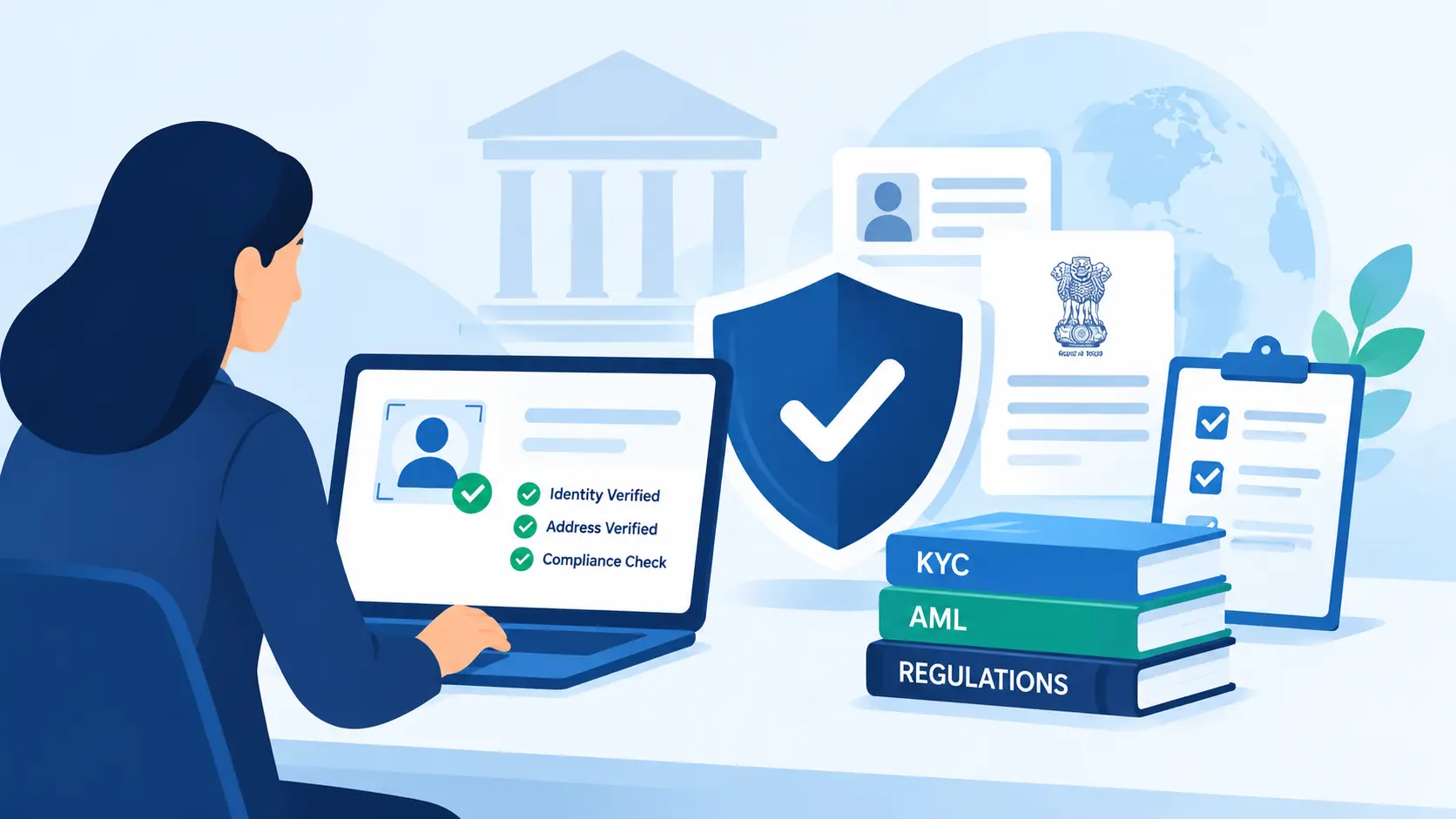





KYC and compliance used to mean collecting documents, ticking a checklist, and filing the folder. That no longer works. Regulators expect evidence and customers expect fast onboarding. Fraudsters have also learned that a one-time check is easy to pass.
For finance, risk, procurement and legal teams the challenge is clear: verify every counter-party properly without slowing the business down. This guide explains what modern KYC and compliance involve where traditional processes break and how a continuous entity-level approach like the one behind SignalX closes the gaps.
What Is KYC and Compliance?
Know Your Customer (KYC) is the process of verifying who you are doing business with and assessing the risk they bring. Compliance is the discipline of proving you followed the rules: anti-money laundering (AML) obligations, sanctions regimes, sector regulations and data protection laws.
In practice the two overlap heavily. A strong KYC and compliance program usually covers:
- Identity and entity verification: confirming the person or company is registered and active
- Ownership checks: understanding who ultimately owns or controls a business
- Sanctions, PEP, and adverse media screening: checking against watchlists and negative news
- Financial and legal health checks: looking at filings, litigation, and regulatory actions
- Risk scoring: deciding how much scrutiny each relationship needs
- Ongoing monitoring: catching changes after onboarding
- Audit-ready documentation: being able to show what you checked when and why
KYC vs KYB: Why Business Teams Need Both
Most online content about KYC focuses on individuals: selfies, ID documents and liveliness checks. That matters for onboarding.. If you sell to buy from lend to or invest in companies the harder question is about the business entity.
This is where Know Your Business (KYB) comes in. KYB verifies the existence, ownership structure, financial standing and compliance record of a company and it is a core part of KYC and compliance for B2B teams.
Questions KYB answers:
- Is this company registered and active or struck off?
- Who are the directors and beneficial owners, and do they appear on any watchlist?
- Is the company facing litigation or regulatory action?
- Do its financials support the credit terms or contract value being discussed?
- Are its tax registrations, such as GST, consistent?
SignalX is built around this entity-level view. Its AML & KYB Verification API brings entity verification. Screening into your onboarding flow.
Why Traditional KYC and Compliance Processes Struggle
Most organizations know what good looks like. The problem is how the work gets done. Four patterns come up repeatedly.
Fragmented data. Registry data, court records, regulatory notices, financial statements, sanction lists, and news sit in places. Analysts open a dozen tabs to build one picture.
Manual investigation. Gathering and validating information by hand is slow. The quality depends on who does it. Two analysts can reach conclusions on the same company.
Point-in-time checks. A vendor that is clean at onboarding can face a lawsuit, a regulatory penalty, or a sanctions listing six months later. If you only check once, you find out late.
Poor portfolio visibility. Leadership asks, “How exposed are we?”. The honest answer is a spreadsheet that was last updated last quarter.
These are not just efficiency problems. They are compliance problems because regulators and auditors increasingly ask for evidence of due diligence, not a one-off file.
The Shift to KYC and Compliance
The most important change in the field is the move from periodic review to continuous monitoring.
Instead of rechecks on a fixed calendar, continuous compliance monitoring watches for changes and alerts your team when something relevant happens: a new litigation record, an action, a change in company status, or a shift in financial indicators.
The benefits are
- Earlier warning: you act before a problem becomes an incident.
- Better use of analyst time: people focus on flagged risks, not routine rechecks.
- Stronger audit trail: every change and every decision is logged
- Proportionate effort: high-risk relationships get more attention than low-risk ones less
This is the idea behind SignalX Risk Master, which lets teams monitor, assess and manage risk across vendors, customers and partners from a single platform instead of stitching the picture together manually.
Building a Modern KYC and Compliance Workflow: 6 Steps
Whatever tools you use a solid programme follows a structure.
Step 1: Define risk tiers before you collect data
Not every counter-party deserves the scrutiny. A small low-value supplier and a strategic distributor with credit exposure shouldn’t go through the same process. Set criteria such as contract value, geography, sector and the nature of the relationship. Tie each tier to a defined depth of checks.
Step 2: Verify the entity
Confirm existence, registration status, directors and key identifiers. For counterparties this often includes validating GST status and checking whether a company has been struck off. SignalX offers APIs such as the GST Verification API, plus free tools like the Free Risk Score Check so teams can get a first read before going deeper.
Step 3: Screen for AML, sanctions, and regulatory risk
Check the entity and its key people against sanctions lists, exposed person data and adverse media. Add litigation checks because enforcement actions and court cases are some of the strongest early signals of trouble. The Regulatory Checks API and Litigation Checks API support this step.
Step 4: Assess financial health
Compliance isn’t about legality. A counter-party that is legally clean but financially distressed is still a risk to your business. Reviewing company financials, ratios and trends helps you set credit limits and payment terms. The Company Financials API helps bring this into the workflow.
Step 5: Score, decide and document
Combine the findings into a risk view your team can act on and record the reasoning. SignalX evaluates entities across 25+ risk intelligence parameters so teams get a comparable picture instead of ad hoc judgment. For cases Risk360 provides comprehensive due diligence intelligence reports.
Step 6: Monitor continuously
Once the relationship is live keep watching. Set up alerts for material changes. Review high-risk entities more often. This step turns KYC and compliance from an onboarding task into a lasting control.
Want a head start? Don’t build your process from scratch. Grab our free Third Party Risk Assessment Checklist and use them to run your own checks, or look at a sample due diligence report to see what a finished review looks like.
Where AI Fits In (. Where It Doesn’t)
Providers market “AI-powered KYC” and the claim covers a lot of ground. For entity-level compliance AI is most useful for three jobs:
- Reading and structuring information, such as court orders, filings and news
- Surfacing the signals that matter from large volumes of data
- Making research faster so analysts spend time on judgment not searching
AI shouldn’t replace accountable decision-making. Compliance teams need explainable outputs they can defend to an auditor or regulator. That is why platforms should show the sources and evidence behind a risk flag, not a score.
SignalX applies AI to speed up research and analysis while keeping the underlying evidence visible. RiskGPT offers a way to query risk information and support due diligence so teams can ask questions in plain language instead of building manual searches. For analysts who prefer a workspace Risk Terminal provides a single place to run continuous risk intelligence operations.
KYC and Compliance Across Different Use Cases
The same principles apply across a business. The emphasis shifts by team.
Customer due diligence. Before onboarding a business customer verify the entity screen it and understand its risk profile. This supports informed customer acceptance. Reduces exposure to fraud and money laundering.
Supplier onboarding. Procurement teams face financial and compliance risk from every new supplier. Automating checks makes onboarding faster and safer. See how vendor due diligence automation works or explore Know Your Vendor for assessing stability, compliance and operational credibility before engagement.
Channel. Distributors. Partners represent your brand. Often handle your products and payments. Know Your Channel Partner helps verify legitimacy, compliance and reputation before you sign.
Lending and credit decisions. Credit teams need legal and compliance indicators in one view to support confident decisions.
Portfolio monitoring. Investors need to know not whether a company was clean at the time of investment but whether that has changed since. Continuous portfolio compliance monitoring supports governance.
Regulatory eligibility checks. Some situations need verification. For example IBC Section 29(A) eligibility checks help streamline diligence for resolution applicants.
Common. Compliance Mistakes to Avoid
Treating onboarding as the finish line. Risk changes over time. A programme without monitoring leaves a long blind spot.
Applying one process to everyone. Uniform checks waste effort on low-risk entities and under-examine high-risk ones. Risk-based tiers fix both problems.
Relying on a data source. No single registry or database tells the story. Combine registry, legal, regulatory and reputational data.
Ignoring documentation. If you can’t show what you checked and why you made a decision the check is hard to defend in an audit.
Letting speed and safety compete. Slow compliance pushes business teams to work around it. The goal is to make the compliant route the fast route. SignalX reports a verification turnaround of, under 48 hours which shows what automated due diligence can look like in practice.
How to Choose a KYC and Compliance Platform
When evaluating tools ask:
- Does it verify entities or only individuals? If your counterparties are companies you need KYB depth.
- Does it monitor continuously? One-time checks aren’t enough.
- Is the data broad enough? Look for registry, financial, litigation, regulatory and AML coverage in one place.
- Is it explainable? You should see the evidence behind every flag.
- Does it integrate with your workflow? APIs and a unified workspace reduce handoffs.
- Does it meet security expectations? Look for certifications and data protection alignment. SignalX displays ISO 27001:2022, DPDP Act and VAPT credentials on its site.
Frequently Asked Questions
What is the difference between KYC and AML?
KYC verifies who your customer or counter-party is and assesses their risk. AML is the set of controls and regulations designed to detect and prevent money laundering. KYC is a part of an AML programme.
What is KYB. Why does it matter?
KYB (Know Your Business) verifies the existence, ownership, financial standing and compliance record of a company. It matters whenever you work with business entities, which’s most B2B situations.
How often should KYC checks be refreshed?
Frequency depends on risk. High-risk relationships need frequent review. Continuous monitoring is increasingly preferred because it flags changes as they happen of waiting for a scheduled review.
Can KYC and compliance be automated?
Much of the data gathering, screening and monitoring can be automated. Final risk decisions still need judgment supported by clear evidence.
Is there a way to check a company’s risk?
Yes. SignalX offers a free risk score check for a view of a company’s profile before you decide how deep to go.
Final Thoughts
Good KYC and compliance programmes share three traits: they look at the entity, not the paperwork; they keep watching after onboarding; and they give teams evidence they can stand behind. As counterparties multiply and regulatory expectations rise, manual, point-, in-time checks stop scaling.
SignalX brings investigation, monitoring, scoring and portfolio-wide visibility into one risk infrastructure so your team can onboard faster spot problems earlier and stay audit-ready.
Ready to see it in action?Book a demo. Try the free risk score check to see how SignalX handles KYC and compliance for business entities.