OSINT Framework: A Practical Guide for Due Diligence Teams
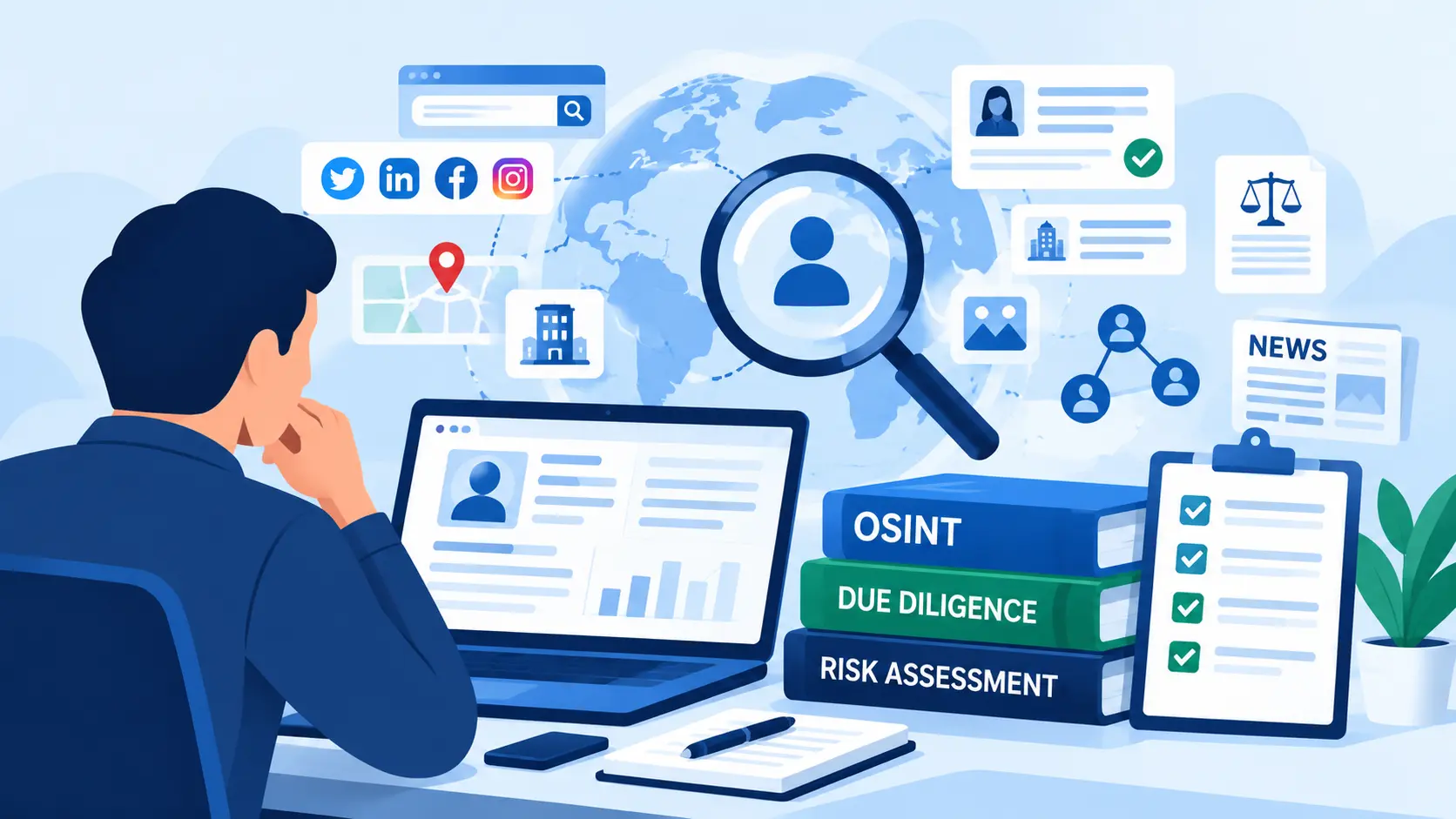





Most teams hear “OSINT framework”. Think of a long list of free tools. That list is helpful. It is not a framework. A real OSINT framework is a way to take public information and turn it into a decision that you can defend.
For diligence compliance and risk teams that difference is very important. Checking a vendor, a customer, or a deal target is not about finding data. It is about finding the data making sure it is true and doing it the same way every time. This guide goes through an OSINT framework for business entities and shows where SignalX fits into each step.
What Is an OSINT Framework?
Open-source intelligence (OSINT) is the practice of collecting and analyzing information that anyone can legally access: registries, court records, regulatory notices, company filings, news and more. An OSINT framework is the structure you put around that work.
The term gets used in two ways. It helps to separate them:
- A directory of tools. Some known “OSINT frameworks” are web pages that sort free tools into categories so an investigator can quickly find a lookup tool for a domain, an email or a username. They work like a map.
- A repeatable process. This is the version business teams need. It defines what you are trying to find out where you will look how you will verify results and how you will record the outcome.
A directory tells you where the tools are. A process tells you what to do with them. If you are running third-party checks or onboarding business customers the process is the part that protects you.
Why OSINT Matters for Business Risk and Due Diligence
Most of what you need to know about a company is already public. The trouble is that it is scattered. A single entity can leave traces in places:
- Registry data: incorporation details, status, directors and filing history
- Court and litigation records: pending cases, judgments and disputes
- Regulatory sources: enforcement actions, penalties and notices
- Financial filings: statements, ratios and trends over time
- Tax and statutory data: GST status, MSME registration and similar records
- Sanctions and watchlists: lists that flag restricted entities and people
- News and media: adverse coverage, controversies and reputation signals
Each source tells part of the story. Read together they show whether a counter-party is real, stable and trustworthy. Read alone they can mislead you. That is why a framework is needed.
A Practical OSINT Framework in 6 Steps
Whatever tools you use a solid OSINT framework for diligence follows the same flow.
Step 1: Set the objective and scope
Start with the question, not the data. Are you onboarding a vendor approving a credit limit screening a distributor or evaluating an acquisition? The answer decides how deep you go. A small supplier does not need the review as a strategic partner so define risk tiers up front and match the depth of research to each one.
Step 2: Map your sources
List the sources that answer your question and rank them by reliability. Official registries and regulator records sit at the top. News and secondary sources sit lower. Need more checking. Writing this down once saves your team from reinventing the search every time.
Step 3: Collect the data
This is where most manual effort goes. Analysts search registries, read court orders download filings and scan news across a dozen tabs. SignalX automates parts of it. APIs such as the Litigation Checks API, Regulatory Checks API and Company Financials API pull data straight into your workflow while the GST Verification API handles tax registration checks. For a first look the Free Risk Score Check gives you a starting view of any company.
Step 4: Verify and clean
Public data is not automatically accurate. Names are spelled differently records are out of date. Two companies can look alike. Cross-check important facts against a source match entities carefully and note anything that does not add up. A finding you cannot verify should be flagged as unconfirmed not treated as fact.
Step 5: Analyze and score
findings only become useful when they are turned into a judgment. Group them by risk type weigh what matters most. Reach a clear view. SignalX evaluates entities across 25+ risk intelligence parameters so every review is scored the way. For cases Risk360 delivers comprehensive due diligence intelligence reports that bring the evidence together in one place.
Step 6: Report and monitor
Record what you checked what you found and why you decided as you did. Then keep watching. A company that looks clean today can face a lawsuit or a regulatory action next quarter. SignalX Risk Master lets teams monitor, assess and manage risk across vendors and partners continuously so you hear about changes when they happen of at the next annual review.
Want a made starting point? You don’t have to design every checklist yourself. Browse our vendor due diligence checklist to structure your own checks or open a sample due diligence report to see what a finished review looks like
Where DIY OSINT Frameworks Break Down
Plenty of teams build their process with spreadsheets, bookmarks, and a handful of free tools. It works at first. Over time four problems show up.
It does not scale. One analyst can check a company’s a week. Hundreds of vendors and customers need an approach.
Quality varies. Without a fixed method two people reach conclusions about the same company. That makes audits and handovers painful.
The data goes stale. A one-time check is a snapshot. Risk changes and a snapshot cannot tell you when.
Evidence is hard to trace. If you cannot show where a finding came from it is hard to defend to a manager, an auditor or a regulator.
None of this means free tools are useless. They are great for exploration. The point is that a business-grade OSINT framework needs consistency, evidence and continuity on top of them.
Where AI Helps (and Where It Doesn’t)
AI is most useful in the repetitive parts of OSINT: reading long documents pulling out the details that matter and surfacing patterns across large volumes of information. It speeds up research without changing who is responsible for the conclusion.
What AI should not do is replace judgment. A risk call still needs a person who can weigh context. Any flag should come with the evidence behind it. SignalX follows that idea. RiskGPT lets teams ask risk and due diligence questions in language and Risk Terminal gives analysts one workspace for continuous risk intelligence so the sources stay visible at every step.
OSINT Framework Use Cases for Business Teams
The same six steps apply across the business. What changes is the question you are asking.
Supplier onboarding. Check stability, compliance history and reputation before you sign. See how vendor due diligence automation works or use Know Your Vendor to assess a supplier before engagement.
Customer onboarding. Verify the business screen it for AML and sanctions risk. Record your reasoning. The AML & KYB Verification API brings entity verification into your onboarding flow.
Channel. Startups. Distributors carry your brand and startups carry unknowns. Know Your Channel Partner. Know Your Startup help you verify legitimacy, compliance and financial strength first.
Transactions. Before an acquisition or investment public records can reveal liabilities that never made it into the pitch. Our pre-deal due diligence solution is built for this stage.
Regulatory eligibility. Some checks are specific. IBC Section 29(A) eligibility checks help streamline diligence for resolution applicants.
Ethics, Legality, and Data Handling
OSINT is only as good as the way it is practised. A sound framework sticks to publicly available sources and never tries to get around access controls. It also respects privacy: collect what the decision needs keep it only as long as you need it and protect it properly.
For teams in India data protection law matters here too. When you choose a platform look at how it handles security and personal data. SignalX displays ISO 27001:2022, DPDP Act and VAPT credentials on its site.
Common OSINT Framework Mistakes to Avoid
Collecting before planning. Gathering everything you can find creates noise. Decide the question first.
Trusting a source. One registry or one news story rarely tells the story. Corroborate what matters.
Treating the check as a one-off. Risk moves. A framework without monitoring leaves you blind after day one.
Skipping documentation. If your reasoning is not written down the next person starts from zero.
Making speed and rigor compete. Slow reviews push teams to cut corners. The aim is a process that’s fast because it is structured. SignalX reports a verification turnaround of under 48 hours.
How to Choose an OSINT Framework and Platform for Due Diligence
If you are comparing options ask these questions:
- Is it built for business entities? Many OSINT tools focus on individuals or cyber threats. If your counterparties are companies look for registry, financial, litigation and regulatory depth.
- Does it combine sources in one place? Fewer tabs means missed signals.
- Can you see the evidence? Every score or flag should trace back to a source.
- Does it monitor continuously? One-time reports are not enough.
- Does it fit your workflow? APIs and a shared workspace cut handoffs.
- Is it secure and compliant? Check certifications. How personal data is handled.
Frequently Asked Questions
What is an OSINT framework?
An OSINT framework is an approach, to collecting, verifying and analyzing publicly available information. The term can also refer to directories that organize OSINT tools by category.
Is OSINT legal?
Yes, when it relies on information that’s lawfully and publicly available. It becomes a problem when someone bypasses access controls or misuses data. Always follow the laws and platform rules that apply to you.
How is OSINT used in diligence?
Teams use it to verify that a company exists, review its legal standing check for regulatory or sanctions issues and read media coverage. Together these checks support decisions on vendors, customers, partners and deals.
Can OSINT checks be automated?
Much of the collection, matching and monitoring can be automated. Judgment and final decisions should stay with people who can review the evidence.
Is there a way to start?
Yes. SignalX offers a free risk score check that gives you a view of a company before you decide how deep to go.
Final Thoughts
A good OSINT framework is not a tool list. It is a question, trusted sources, careful verification, consistent scoring and ongoing monitoring. When those pieces work together public information turns into decisions your team can stand behind.
SignalX brings investigation, scoring and continuous monitoring into one risk infrastructure so your team can move faster and stay audit-ready.
Ready to see it in action?Book a demo. Try the free risk score check to see how SignalX turns public data into reliable due diligence.