How to Find Financial Reports for a Company : Step-By-Step Guide






Finding financial reports for a company is a crucial task for many professionals whether you’re an investor trying to assess a company’s health, a journalist investigating corporate practices, or a risk analyst evaluating potential threats to your business. Accessing accurate and up-to-date financial statements can give you a comprehensive understanding of a company’s performance and potential.
In this guide, we’ll explore how to find financial reports for both public and private companies, the tools and databases available, and some of the key challenges you may face. We will also introduce how SignalX can simplify the process, saving you time and effort.
Why Finding Financial Reports Matters
Financial reports provide critical insights into the economic status of a company. These documents are necessary for a variety of stakeholders, including investors looking to make informed decisions, lenders assessing risk, procurement teams evaluating business partners, journalists uncovering financial misreporting, and analysts studying market trends.
A 2021 study found that professionals spend nearly 20 hours a month just searching for and verifying financial reports. This time-consuming process can be especially overwhelming if the company you’re researching is large, operates across multiple regions, or files irregularly.
Fortunately, tools and databases are available to streamline this process. In this guide, we’ll show you how to access these reports whether you’re looking for a public company’s SEC filings or a private company’s annual financials.

What Are Financial Reports?
Before diving into how to find them, it’s essential to understand what financial reports are and what you’re actually looking for.
Types of Financial Reports
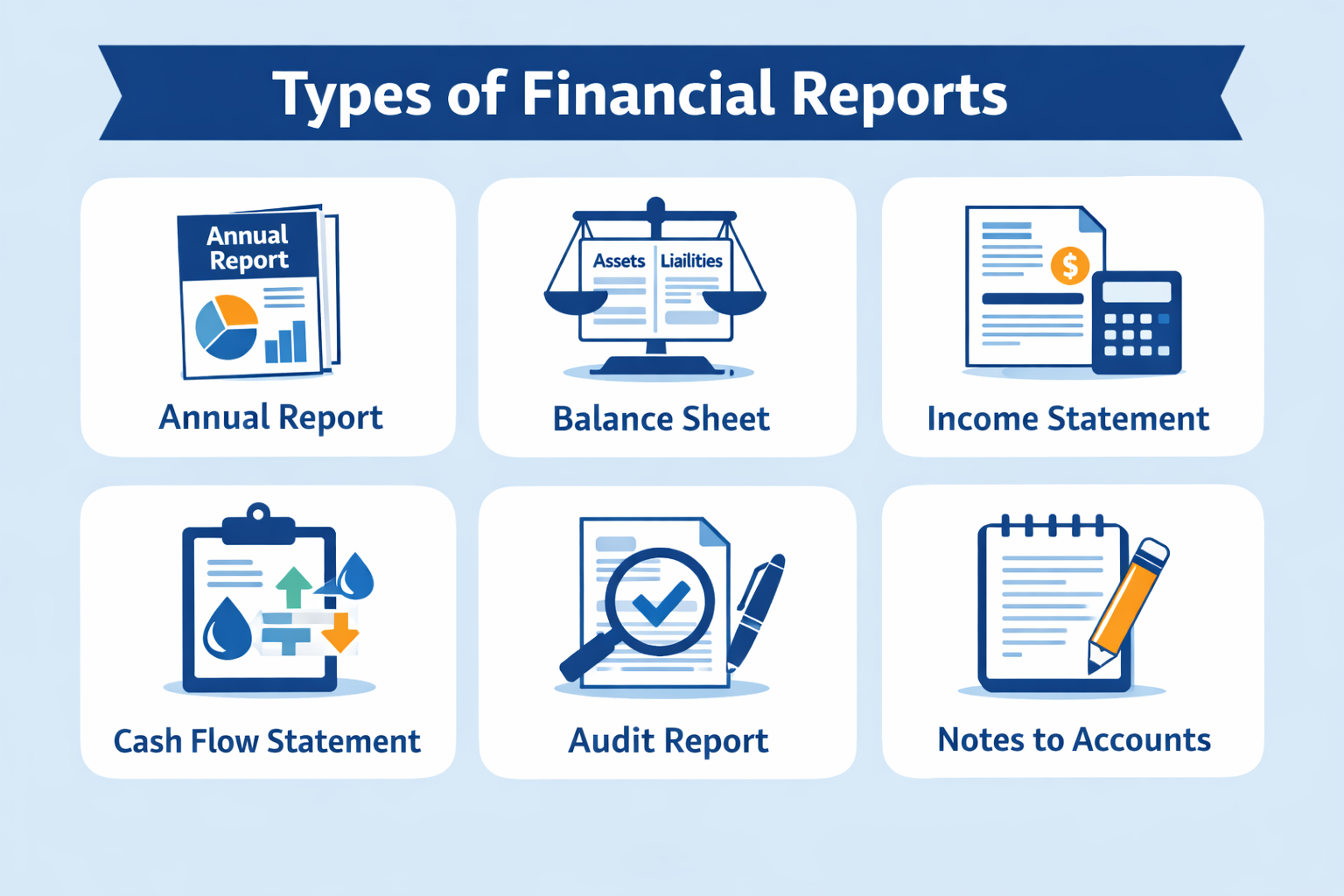
Annual Reports vs. Audited Financial Statements:
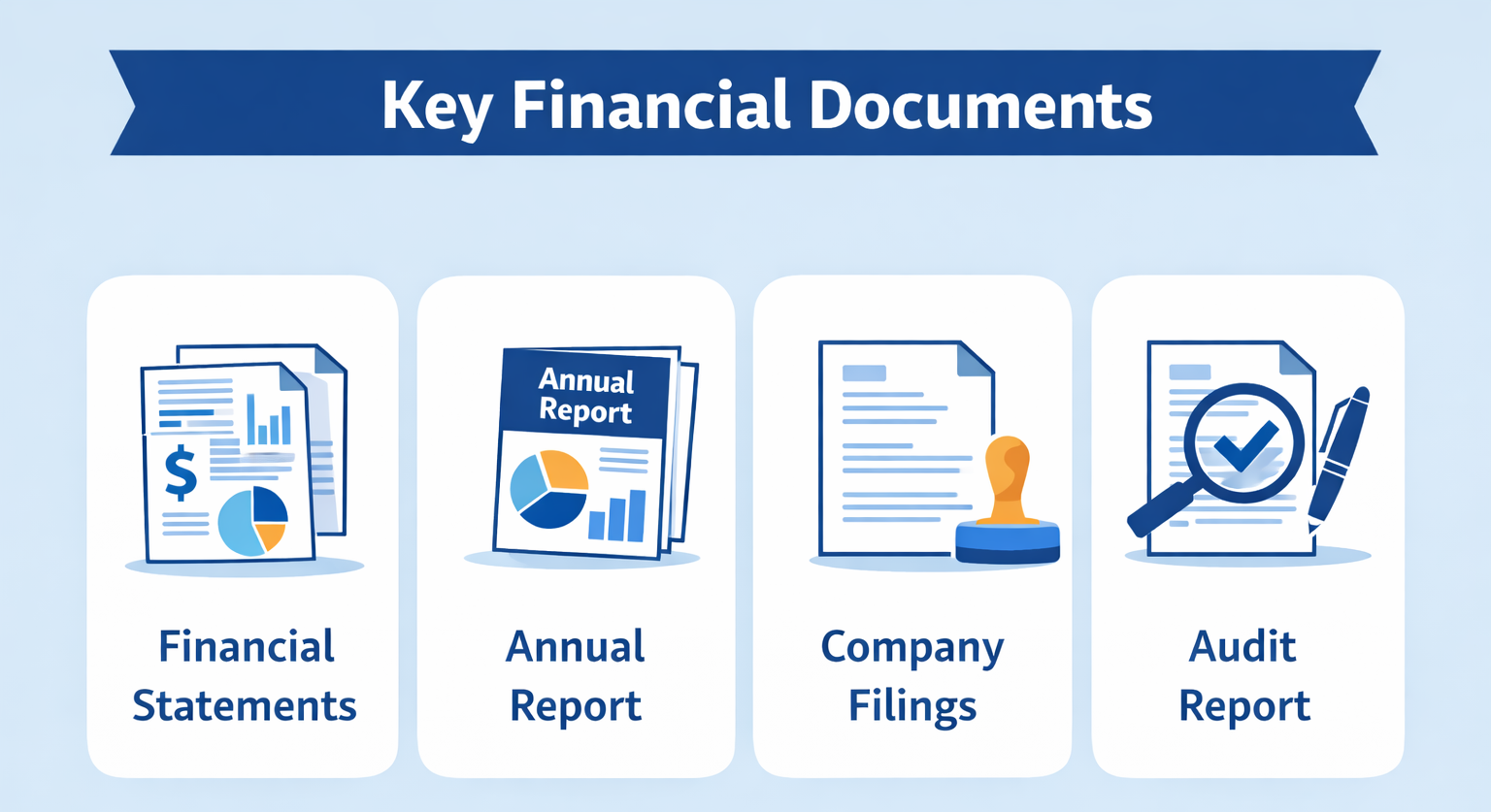
Annual Reports are often glossy, high-level documents summarizing a company’s performance, strategies, and goals. While they are insightful, they are not as detailed as audited financial statements.
Audited Financial Statements, on the other hand, are the official documents that are rigorously examined by independent auditors. They include comprehensive figures like the balance sheet, profit and loss (P&L) statement, and cash flow statement, and are a critical tool for financial analysis.
Key Financial Documents:
Balance Sheet: Reflects the company’s assets, liabilities, and equity.
Profit & Loss Statement (P&L): Shows the company’s revenue, expenses, and profit over a period.
Cash Flow Statement: Tracks the flow of cash into and out of the business, providing insights into its liquidity.
Quarterly Filings: For public companies, these filings provide a more frequent update than annual reports. They contain similar information but for a shorter period (typically three months).
Investor Presentations vs Regulatory Filings: Investor presentations often offer a strategic overview and are generally not as detailed or regulated as formal filings required by authorities.
Audit Reports: These are critical for verifying the authenticity of financial statements. Auditors provide their opinion on whether the company’s financial records present a fair view in accordance with generally accepted accounting principles (GAAP).
Step-by-Step: How to Find Financial Reports for Public Companies
Step 1: Search the Official Regulatory Database
Regulatory databases are the most authoritative sources of financial reports. Many countries require public companies to file detailed financial reports with regulatory authorities. These filings include the annual reports and audited financial statements that you’re looking for.
United States: The U.S. Securities and Exchange Commission (SEC) maintains the EDGAR database, which is a treasure trove of financial documents for all publicly traded companies. You can search by company name, ticker symbol, or even by specific filing types (like 10-K or 10-Q).
India: The Ministry of Corporate Affairs (MCA) hosts a portal where you can search for filings of companies registered in India.
United Kingdom: Companies House is the go-to portal for finding official financial filings for UK-based companies.
To find reports, all you need is the company’s name, registration number, or ticker symbol. You can then filter through the reports to find the specific documents you’re looking for, such as annual reports or quarterly filings.
Step 2: Check Stock Exchange Websites
Stock exchanges often require listed companies to publish regular financial reports. For example:
New York Stock Exchange (NYSE), National Stock Exchange of India (NSE), and London Stock Exchange (LSE) often host links to corporate financial disclosures in their respective “Investor Relations” sections.
While the reports on these sites are usually not as comprehensive as those in regulatory databases, they are still a reliable and easily accessible source of financial information.
Step 3: Visit the Company’s Investor Relations (IR) Page
Most companies, especially large ones, maintain an Investor Relations page on their website. This is where you’ll find a range of financial documents, including annual reports, earnings calls transcripts, and SEC filings.
Many companies provide downloadable versions of their financial reports in PDF format, often organized by year. If the company’s IR page hasn’t been updated in a while or is missing financial reports, it could be a red flag that the company is not providing transparent information.
How to Find Financial Reports for Private Companies
Finding financial reports for private companies is more challenging than for public companies, as they are not required by law to disclose their financials. However, there are still a few ways to obtain this data:
Government Registries: In many countries, private companies must file certain documents with government bodies. For example, in the UK, private companies must file financial statements with Companies House.
Paid Databases: Platforms like Dun & Bradstreet, PrivCo, and Orbis offer access to financial reports from private companies. These services often aggregate data from various sources, providing insights into companies that are not publicly traded.
Requesting Financials Directly: Sometimes, you can contact the company directly and request financial reports, especially if you’re a potential investor or partner.
Credit Bureaus: Some financial bureaus provide limited financial data on private companies based on credit reports and financial activity.
Struggling to Find Financial Reports for Private Companies?
Access verified private company financial reports, filings, and risk indicators in one centralized platform.
Save hours of manual searching across multiple government portals and fragmented databases.
Using Financial Data Platforms
Free Options
There are several free ways to access financial reports, though they often come with limitations. Regulatory portals, stock exchange websites, and company IR pages are all good starting points. These sources generally provide the most accurate and up-to-date filings, but they can be difficult to navigate and search.
Paid & Aggregated Platforms
For those looking for more comprehensive, easily accessible data, paid platforms offer a wealth of information in one place. Some of the top names include:
Bloomberg L.P.: Offers in-depth financial data and analysis tools.
FactSet: Known for its analytical tools and deep market data.
S&P Global (Capital IQ): A leading platform for financial intelligence, providing detailed company data and research.
AlphaSense: Specializes in extracting insights from financial filings, earning calls, and news.
Dun & Bradstreet: Well-known for providing data on private and public companies alike.
These platforms allow users to compare data across companies, industries, and regions, which is invaluable for market research, due diligence, and investment analysis.
Common Challenges When Searching for Financial Reports
When searching for financial reports, you may face several challenges:
Incorrect Company Names: Companies might file under different names or use multiple subsidiaries, making it hard to find the right documents.
Delayed Filings: Some companies delay their filings, especially if they are experiencing financial difficulties.
Non-searchable PDFs: Many financial documents are uploaded as scanned images, making it difficult to extract and analyze the data quickly.
Language Barriers: Financial reports may not always be in the language you’re familiar with, depending on the company’s location.
How to Verify Financial Reports Are Authentic
To avoid relying on false or manipulated data, it’s crucial to verify the authenticity of the financial reports you find. Some key verification steps include:
Confirming filings from official regulators: Always cross-check the report on an official government or regulatory website.
Digital Signatures: Check whether the document includes valid digital signatures to confirm its authenticity.
Verifying Auditors: Ensure that a reputable auditing firm has signed off on the company’s financials.
Comparing Numbers: Look for consistency in figures across different filings or over multiple years.
Red Flags to Look for in Financial Reports
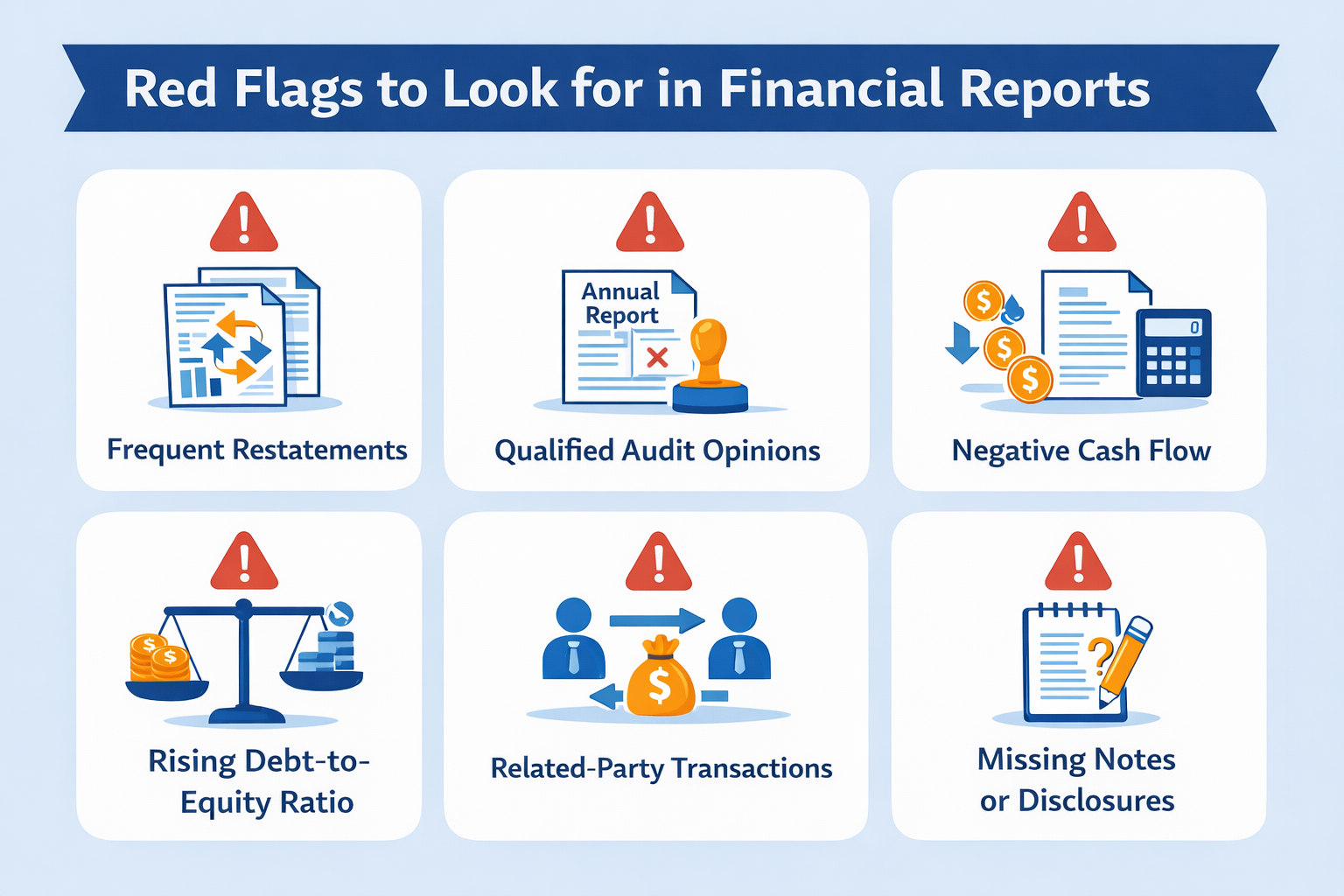
When reviewing financial reports, there are certain warning signs that could indicate potential issues:
Frequent Restatements: If a company frequently revises its financial reports, it could indicate poor management or intentional manipulation.
Qualified Audit Opinions: If auditors provide a qualified opinion, it suggests that the company’s financials may not fully comply with accounting standards.
Negative Cash Flow with Rising Revenues: This could signal unsustainable growth or a deteriorating business model.
Rising Debt-to-Equity Ratio: An increasing debt burden relative to equity might signal higher financial risk.
How SignalX Simplifies Finding Financial Reports
Finding financial reports can be time-consuming and complex, especially when you need to cross-reference data across multiple platforms. SignalX simplifies the process by offering centralized access to verified company filings. Here’s how it works:
Centralized Access: SignalX aggregates financial data from multiple sources, so you don’t need to search through various websites and databases.
Automated Extraction: It automatically extracts key financial data from filings, such as balance sheets and profit and loss statements, saving you time.
Standardized Data: SignalX normalizes financial statements, making it easier to compare data across companies or industries.
Real-Time Alerts: You’ll receive notifications whenever a company updates its filings, keeping you up to date with the latest data.
SignalX offers both a web interface and an API for bulk data retrieval, making it easy to integrate financial report data into your own tools or processes.
See SignalX in Action
Access verified company financials and risk insights all in one platform.
Conclusion
Finding financial reports for a company doesn’t have to be an overwhelming task. By using official regulatory databases, stock exchange websites, and company investor relations pages, you can access reliable financial data. For private companies, you may need to rely on government registries or paid databases. Tools like SignalX can streamline the process, saving you valuable time and providing easy access to verified financial filings. Always verify the authenticity of the reports you find and be aware of potential red flags to make informed decisions.