Scaling Enterprise TPRM: Why Disconnected Data Fails and How a 26-Parameter Risk Infrastructure Automates Vendor Due Diligence





If you are a Chief Risk Officer, CFO, or Procurement Head at a large enterprise, you already know the nightmare.
Your procurement team brings in a critical, high-volume vendor. On day one, everything looks pristine. They pass a basic PAN and MCA check. Six months later, your finance team flags a massive roadblock: your Input Tax Credit (ITC) is frozen because that same vendor has been systematically defaulting on their GST filings. Or worse, a sudden legal injunction from a regional tribunal halts their operations entirely, throwing your supply chain into absolute chaos.
When things blow up, the question from the board is always the same:
“Didn’t we run due diligence on these guys?”
The uncomfortable truth? You did. But you ran it using a broken, legacy blueprint.
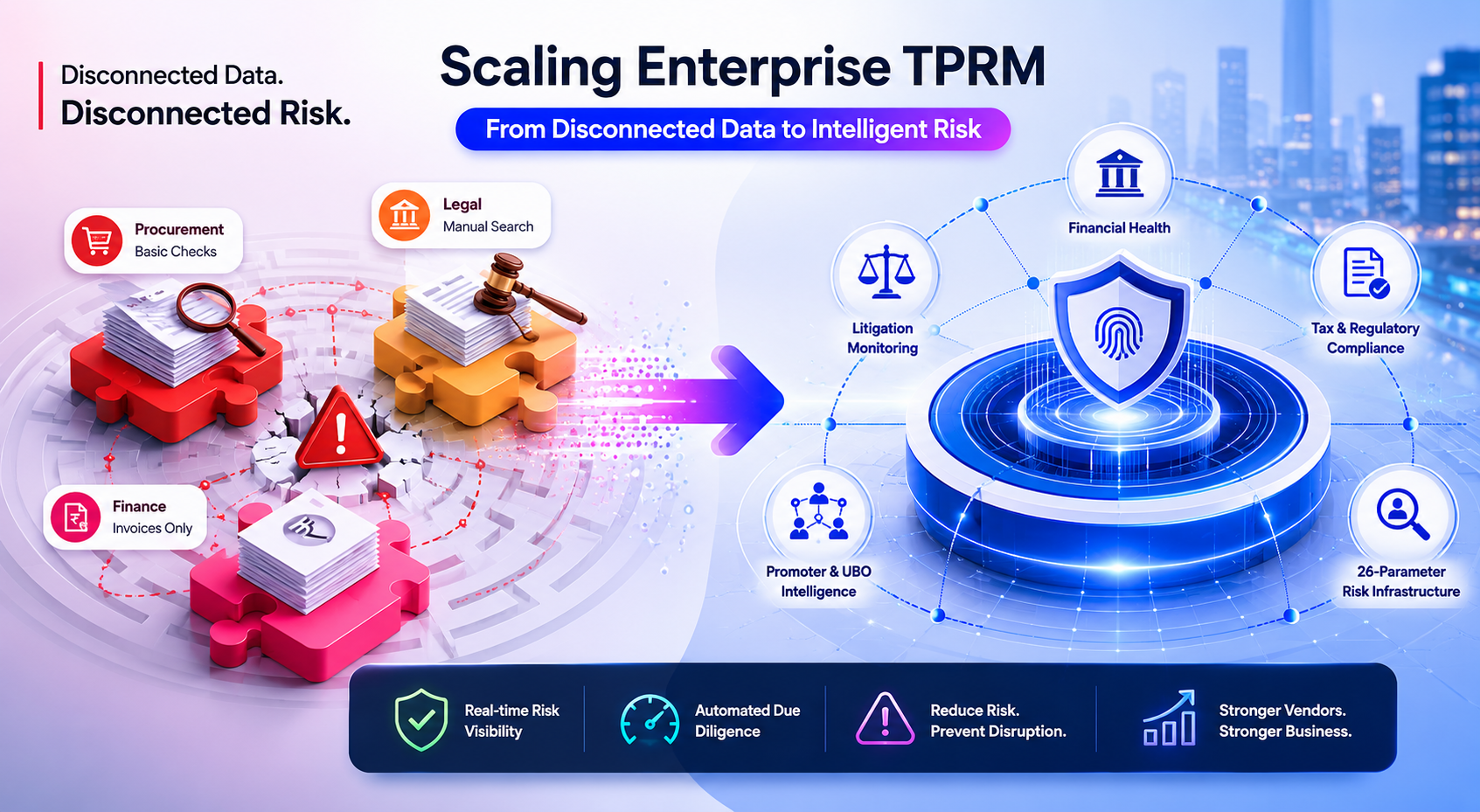
In today’s hyper-regulated, fast-moving business ecosystem, traditional, point-in-time third-party risk management (TPRM) is no longer just inefficient it is an active corporate liability. Let’s look at why disconnected data keeps failing enterprise supply chains and how transitioning to a unified, AI-powered 26-parameter risk infrastructure completely changes the game.
The Enterprise Trap: The Illusion of “Due Diligence“
Most enterprises don’t have a data problem; they have an orchestration problem. When we look closely at how large organizations evaluate vendor risk, we consistently see data scattered across isolated silos: 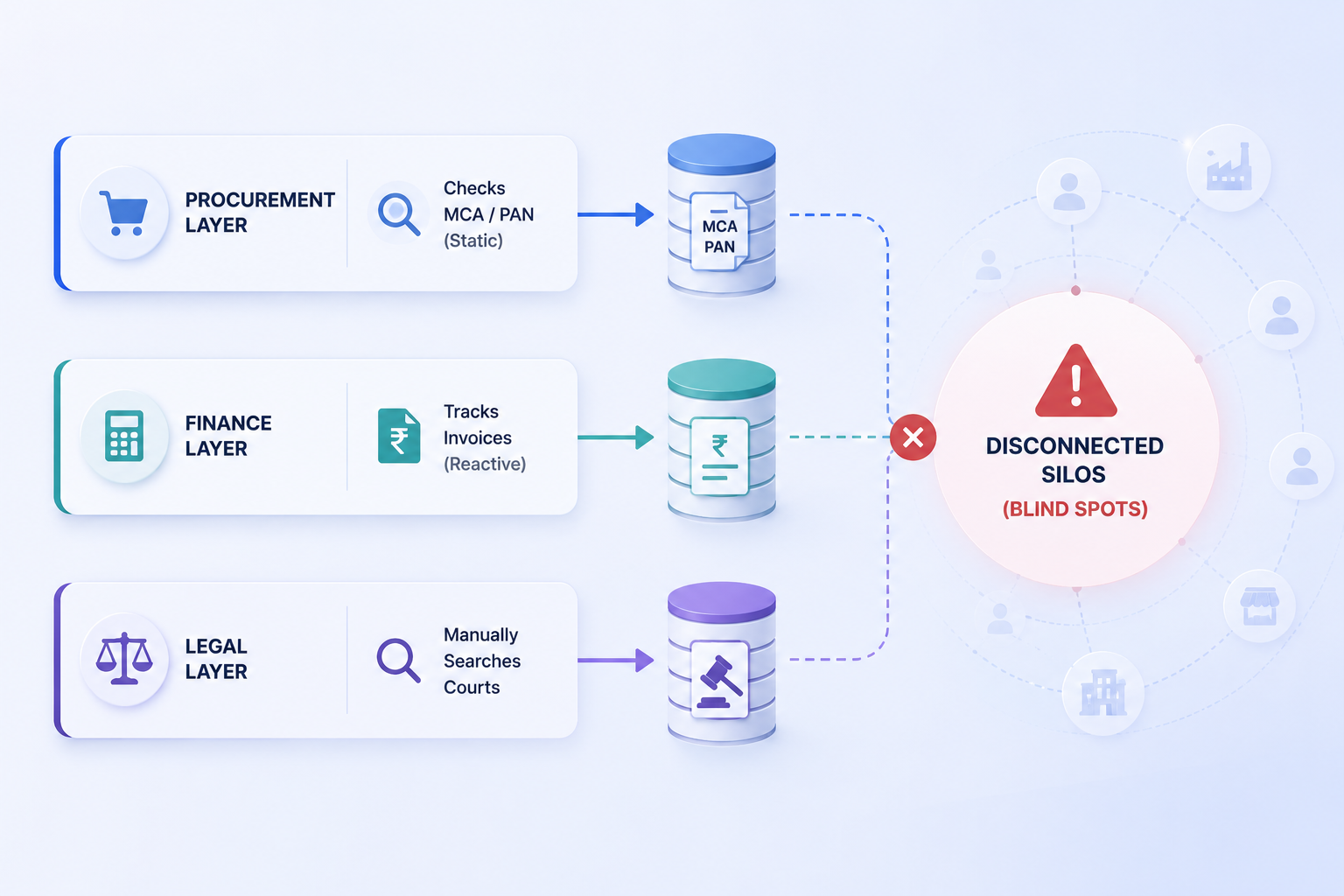
The Procurement View:
Verifies basic corporate identities (CIN, PAN) to onboard the vendor quickly.
The Legal View:
Manually searches premium court databases if a high-value contract is on the line.
The Finance View:
Tracks active invoice clearances and historical accounting parameters, completely isolated from operational risk signals.
This fragmented approach creates a massive blind spot. Because these data points never talk to each other in real time, you end up checking a vendor’s health only once a year, or only when a contract comes up for renewal.
But risk isn’t static. A vendor who is perfectly compliant on a Tuesday can face an operational freeze by Friday. When your internal risk infrastructure relies on manual document collection and periodic web-scraping, you are essentially driving forward while looking exclusively in the rearview mirror.
| Connect Your ERP to SignalX → |
Enter the 26-Parameter Risk Infrastructure
To safely scale a modern enterprise, you must move away from point-in-time “checks” and transition to an automated system of record. Scaling Enterprise TPRM requires a comprehensive risk infrastructure that automatically assesses a vendor across a multi-dimensional matrix.
A high-fidelity framework, such as the 26-parameter risk matrix pioneered by SignalX, continuously evaluates every counterparty across four critical risk pillars:
-
Financial Quality & Liquidity Resilience
Instead of just analyzing a static balance sheet from the previous financial year, an automated infrastructure continuously tracks active financial health indicators. It looks for hidden signs of operational distress, debt-to-equity anomalies, and credit defaults before they lead to a sudden bankruptcy or supply chain failure.
-
Multi-Tribunal Litigation Scraping
India’s legal landscape is vast, spanning over 7,000 central, state, and district courts, alongside specialized tribunals like the NCLT (National Company Law Tribunal). A generic web search will not surface an early-stage insolvency petition filed against your vendor in a regional court. An advanced risk infrastructure utilizes specialized Natural Language Processing (NLP) models to continuously scrub court logs, isolating active, existential legal threats from minor, everyday commercial disputes.
-
Direct Tax & Regulatory Discipline
For enterprises operating in India, a vendor’s tax discipline directly impacts your cash flow. If a supplier fails to file their GSTIN returns correctly, your Input Tax Credit is immediately compromised. An automated infrastructure maintains direct, secure API gateways to sovereign registries (like the GSTN and EPFO), flagging compliance lapses the moment they occur not months later during an audit.
-
Promoter Networks & Ultimate Beneficial Ownership (UBO)
Risky vendors frequently attempt to hide behind complex, multi-layered corporate structures or shell networks. Advanced risk engines use automated entity link analysis to map out the entire corporate graph. This instantly uncovers if a vendor’s directors or ultimate beneficial owners are connected to blacklisted companies, politically exposed persons (PEPs), or active regulatory sanctions.
| Integrate Real-Time Risk Monitoring → |
From Manual Reports to Developer-First API Orchestration
The ultimate goal of modernizing your corporate governance isn’t to generate longer PDF reports for your risk team to read. The goal is complete, frictionless automation.
By implementing an API-driven risk infrastructure, your technical teams can plug advanced compliance nodes directly into your existing ERP systems, such as SAP, Oracle, or Microsoft Dynamics.
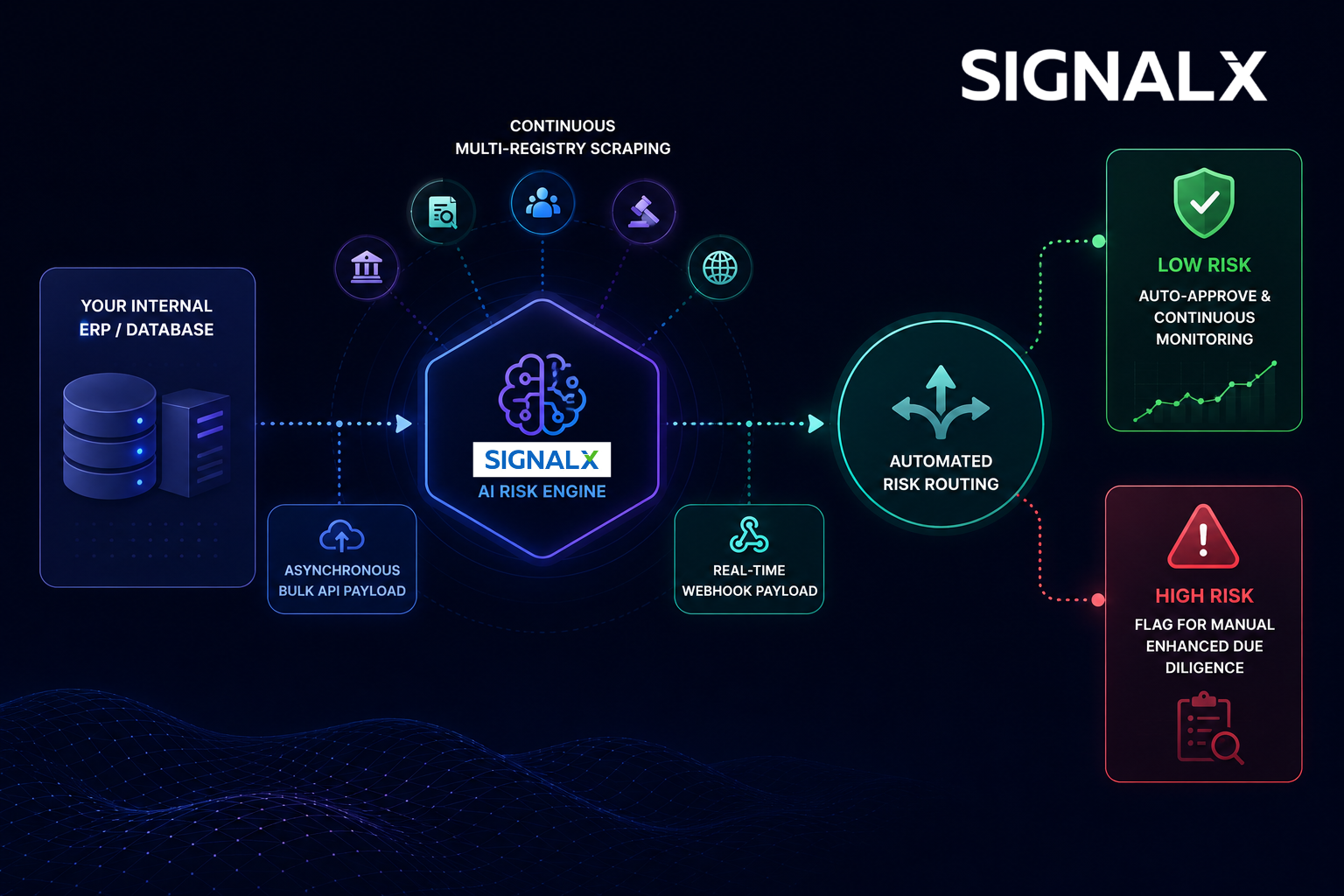
When onboarding a new supplier or auditing an existing database of over 10,000 vendors, your system fires a high-throughput, asynchronous batch request to the risk engine. In milliseconds, the platform matches the corporate identifiers against live, authoritative databases and returns structured risk scores directly to your procurement dashboard. Low-risk vendors are instantly greenlit, while high-risk entities are flagged for manual, Enhanced Due Diligence (EDD) before any corporate capital is put at risk.
The Ultimate ROI: Protecting Your Bottom Line
When you transition from fragmented due diligence to a unified, automated risk infrastructure, the benefits extend far beyond a cleaner compliance checklist:
Zero Supply Chain Disruptions:
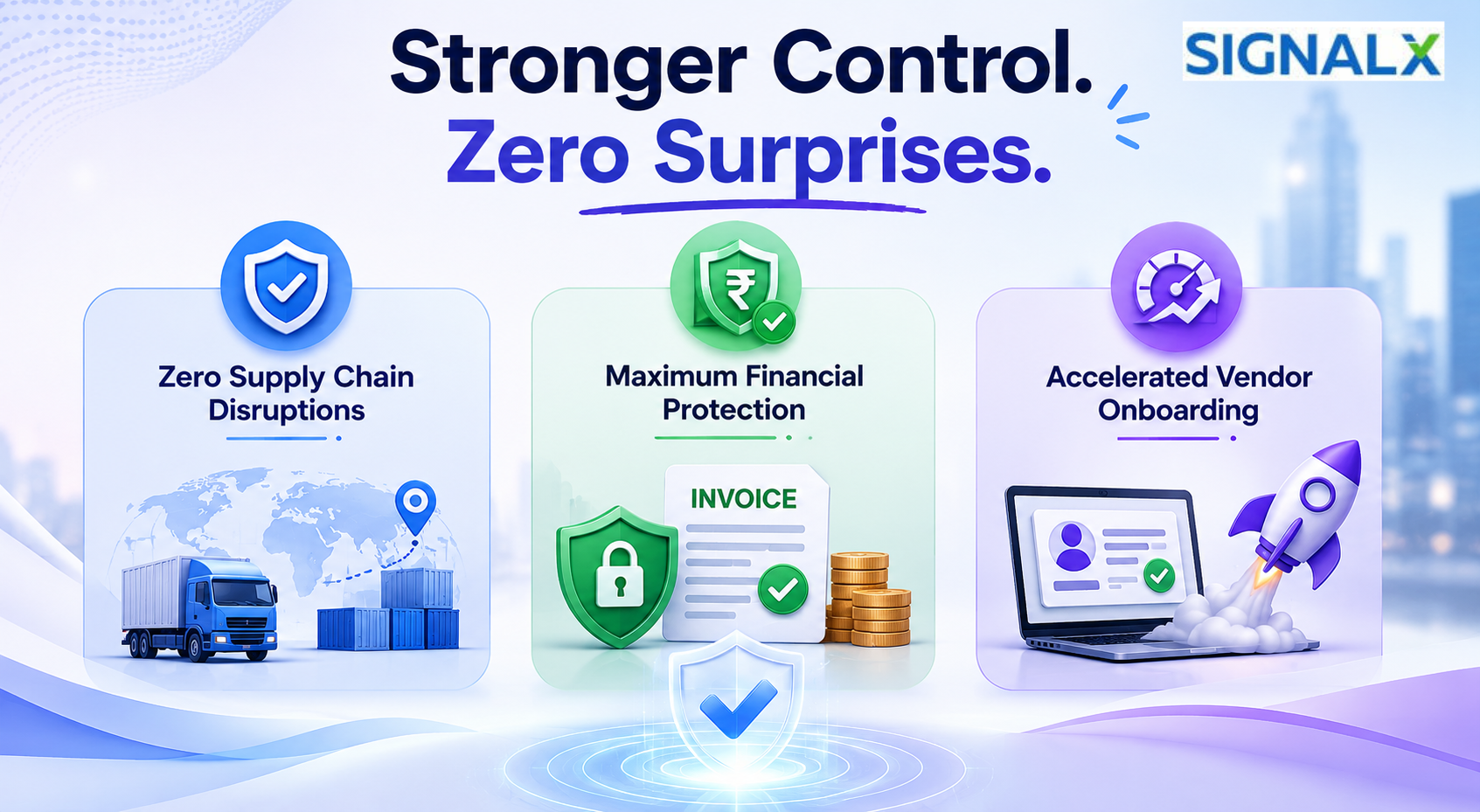
Catch early warning signs of insolvency, labor strikes, or legal shutdowns weeks before they impact your manufacturing or service timelines.
Maximum Financial Leakage Protection:
Eradicate Input Tax Credit losses by automatically pausing invoice clearances for vendors with suspended GST compliance statuses.
Accelerated Vendor Onboarding:
Reduce vendor cycle times from weeks to minutes, allowing your business units to move quickly without compromising on security or compliance.
If you are still managing your third-party risks through manual spreadsheets, legacy portals, and disconnected point-in-time checks, it is time to upgrade your operational blueprint. Your enterprise deserves an automated, resilient system of record that protects your brand, your data, and your capital at scale.
Ready to see how a unified, 26-parameter risk infrastructure can transform your enterprise compliance? Explore SignalX’s automated API orchestration suites today and bring unmatched clarity to your corporate database.
| Explore SignalX Risk APIs → |