How to Evaluate TPRM Platforms for India Banks in 2026
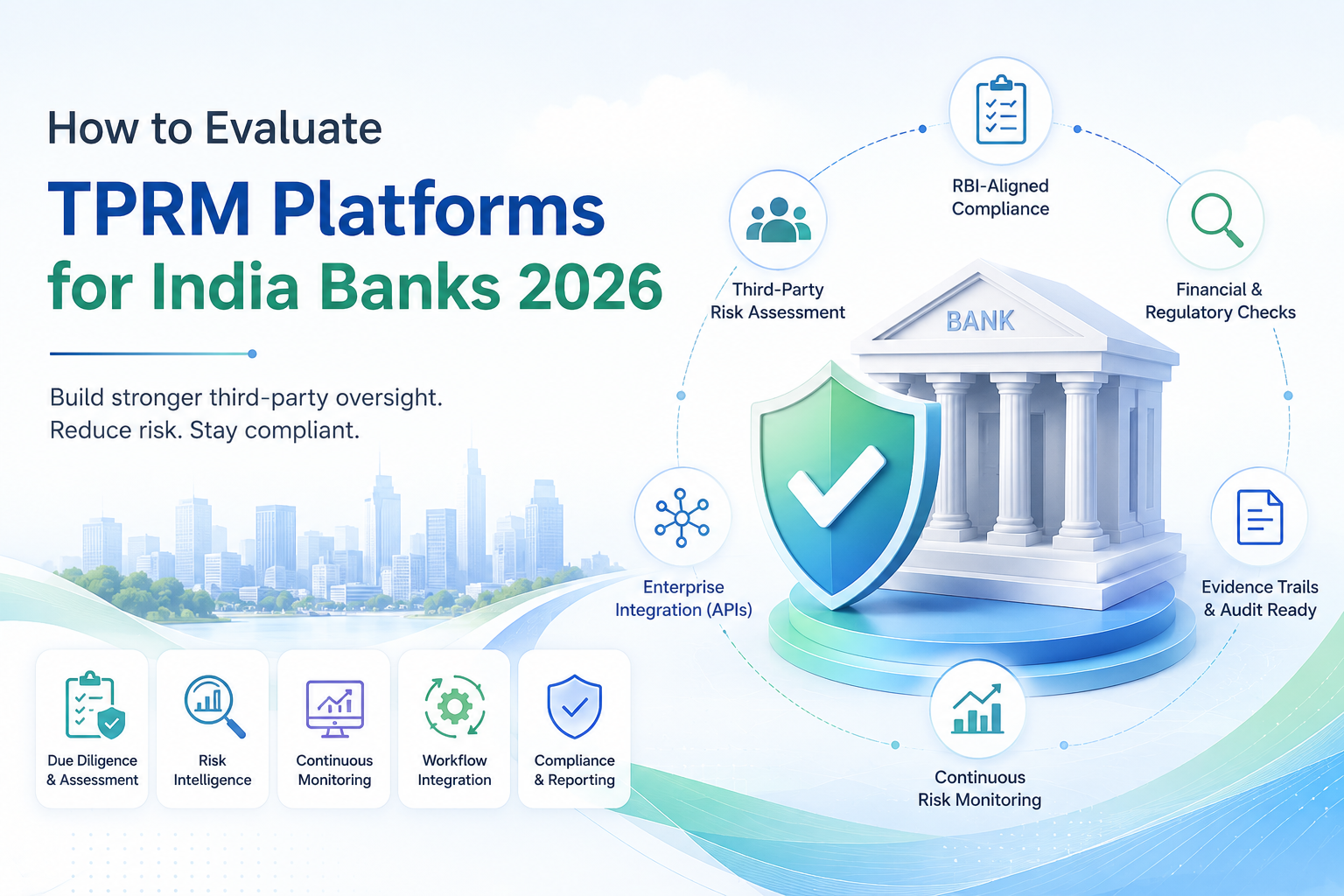





Banks in India are no longer managing a small ecosystem of vendors. Today, you depend on hundreds and sometimes thousands of third parties across payment processing, fintech partnerships, cloud infrastructure, KYC providers, outsourcing vendors, cybersecurity providers, and core banking technology partners.
The challenge is that risk does not always originate inside your organization anymore.
It enters through the external ecosystem around you.
A vendor with weak compliance controls, deteriorating financial health, unresolved litigation, or operational disruption can quickly become your problem. And by the time annual reviews or manual assessments uncover the issue, the damage may already affect customer trust, regulatory exposure, and business continuity.
This is why selecting the right third-party risk intelligence platform is becoming a strategic decision for banks in India.
The question is no longer:
“Do you have a TPRM process?”
The real question is:
“Does your TPRM infrastructure continuously detect risk before it becomes a problem?”
This framework helps you evaluate TPRM platforms using a practical, problem-first approach.
| Evaluate Vendor Risk Beyond KYC → |
Why Traditional Vendor Risk Processes Break at Scale
Most banks already have some form of vendor risk management process.
You collect documents.
You verify registrations.
You conduct periodic assessments.
You maintain risk questionnaires.
On paper, everything appears controlled.
But as your vendor ecosystem grows, several problems emerge:
- risk data exists across disconnected systems
- due diligence becomes manual and repetitive
- evidence trails become difficult to maintain
- monitoring happens periodically instead of continuously
- onboarding slows down significantly
The result is a dangerous gap:
You continue operating with a static view of a dynamic risk environment.
A third party that appears compliant today may face:
- regulatory actions
- financial stress
- litigation exposure
- operational disruptions
- cybersecurity incidents
within weeks.
| Build a Smarter Vendor Risk Framework → |
Step 1: Evaluate Data Coverage Beyond Basic KYC
Most vendor screening platforms verify:
- company registration
- GST information
- corporate identifiers
- sanctions lists
Basic verification helps establish identity.
It does not establish risk.
When evaluating a third-party risk intelligence platform, ask:
Does the platform provide intelligence across:
✓ litigation records
✓ regulatory filings
✓ financial health indicators
✓ ownership structures
✓ Ultimate Beneficial Ownership (UBO) relationships
✓ adverse media signals
✓ compliance history
✓ operational risk indicators
If the platform only validates registrations, you may simply be replacing one checklist with another.
Step 2: Assess Alignment with RBI Expectations
For Indian financial institutions, compliance cannot operate independently from regulatory expectations.
Banks increasingly need to demonstrate:
- vendor oversight
- continuous monitoring
- governance controls
- audit readiness
- evidence-based risk decisions
Your evaluation framework should ask:
Does the platform support:
✓ ongoing vendor assessments
✓ risk classification models
✓ control evidence collection
✓ audit documentation
✓ escalation workflows
Because during an audit, proving your process matters as much as running the process.
Step 3: Examine API and Workflow Integration Capabilities
A common mistake when evaluating TPRM tools is focusing only on dashboards.
Dashboards do not reduce operational workload.
Integrated workflows do.
Your teams already operate inside systems such as:
- SAP
- Oracle
- ServiceNow
- procurement systems
- internal banking applications
Your risk intelligence for banking platform should integrate into these workflows rather than create another standalone process.
Ask:
Can the platform:
✓ connect through APIs
✓ automate onboarding workflows
✓ trigger alerts automatically
✓ support batch processing
✓ integrate into existing procurement systems
If your teams still export spreadsheets after implementation, you have not solved the problem.
Step 4: Audit Readiness and Verify Evidence Trails
One of the biggest operational challenges inside financial institutions is evidence management.
When risk teams evaluate vendors, regulators may later ask:
“What information supported this decision?”
Your platform should not simply generate risk scores.
It should provide:
- evidence sources
- supporting records
- historical changes
- timestamped activities
- audit trails
Strong evidence trails reduce friction during:
- internal audits
- RBI reviews
- compliance assessments
- governance reporting
Step 5: Move Beyond Point-in-Time Assessments Toward Continuous Risk Monitoring
Traditional third-party risk assessment processes operate in snapshots.
You assess a vendor during onboarding.
You review them annually.
Then you assume everything remains stable.
Risk does not work that way.
Modern vendor ecosystems require continuous visibility.
Ask:
Does the platform continuously monitor:
✓ financial deterioration
✓ legal developments
✓ ownership changes
✓ regulatory events
✓ compliance deviations
✓ operational disruptions
Continuous monitoring shifts your process from:
reactive risk management → proactive risk intelligence
| Enable Continuous Third-Party Monitoring → |
Evaluation Scorecard for India Banks
| Evaluation Area | Questions to Ask |
|---|---|
| Data Coverage | Does it go beyond basic KYC? |
| RBI Alignment | Does it support governance requirements? |
| API Integration | Can it integrate into existing systems? |
| Evidence Trails | Can decisions be traced and audited? |
| Continuous Monitoring | Does it identify evolving risks automatically? |
Final Thoughts
The goal of implementing a third-party risk intelligence platform is not simply to digitize vendor onboarding.
The objective is to build a system capable of continuously identifying risk across your external ecosystem.
As vendor networks become larger and regulatory expectations continue increasing, banks that rely only on manual reviews and point-in-time checks will face increasing operational pressure.
The institutions that move faster in 2026 will be those that build connected, evidence-driven, continuously monitored risk infrastructures.
Because effective TPRM is no longer about checking boxes.
It is about maintaining visibility long after onboarding is complete.
| Build a Smarter TPRM Infrastructure → |