Due Diligence on Indian Exporters: A Complete Guide for Global Buyers
India has become a preferred sourcing destination for businesses worldwide, offering competitive pricing, skilled manufacturing, and access to diverse industries. Yet, for global buyers, engaging with Indian exporters without proper verification can expose them to unexpected risks. Differences in regulatory systems, business practices, and market transparency make careful evaluation essential before entering any trade relationship. This is where due diligence on Indian exporters plays a decisive role. It enables buyers to move beyond surface-level trust and make informed, evidence-based decisions that protect capital, reputation, and supply chains.
What Is Due Diligence and Why Is It Used?
Due diligence is a systematic investigation carried out before entering into a business, financial, or contractual relationship. Its purpose is to help buyers and decision-makers gain a clear, fact-based understanding of who they are dealing with and what risks may exist.
Rather than relying on trust, referrals, or self-declared information, due diligence enables buyers to verify facts independently and make informed decisions.

Uses of Due Diligence in Global Trade
In the context of international trade, due diligence is used to:
- Confirm the legal existence and authenticity of a business
- Assess the financial strength and stability of suppliers
- Ensure compliance with local and international trade regulations
- Identify potential red flags, disputes, or reputational risks
Protect buyers from fraud, non-performance, and regulatory penalties
For global buyers sourcing from emerging and high-growth markets, due diligence acts as a risk filter, allowing them to engage with confidence.
Understanding Due Diligence in International Trade
Due diligence is the process of gathering, verifying, and analysing critical information about a business before committing to a commercial relationship. In global trade, it acts as a safeguard helping buyers understand
who the exporter is, how they operate, and whether they can be relied upon.
Rather than being a one-time checklist, due diligence is a risk assessment exercise designed to uncover potential weaknesses early, when corrective action is still possible.
Why Due Diligence Matters for Global Buyers
In cross-border transactions, buyers often face:
- Limited visibility into supplier operations
- Dependence on digital documentation
- Jurisdictional and regulatory complexity
Due diligence helps bridge these gaps by creating transparency and reducing uncertainty.
What Does Due Diligence on Indian Exporters Involve?
Due diligence on Indian exporters focuses on validating the credibility and capability of Indian companies engaged in export activities. It ensures that an exporter is not only registered and compliant but also financially and operationally prepared to meet international commitments.
Given India’s vast exporter base, due diligence enables buyers to identify partners that align with their risk tolerance and business objectives.

Why Buyers Should Prioritise Due Diligence on Indian Exporters Today
The current trade environment is shaped by speed and scale. Buyers increasingly onboard suppliers remotely and rely on third-party intermediaries or online marketplaces. While this accelerates sourcing, it also increases exposure to:
- Inaccurate self-disclosures
- Overstated production capabilities
- Compliance gaps
- Unstable financial structures
Conducting due diligence on Indian exporters today helps buyers avoid costly disruptions and ensures long-term trade stability.
Key Areas Reviewed During Due Diligence
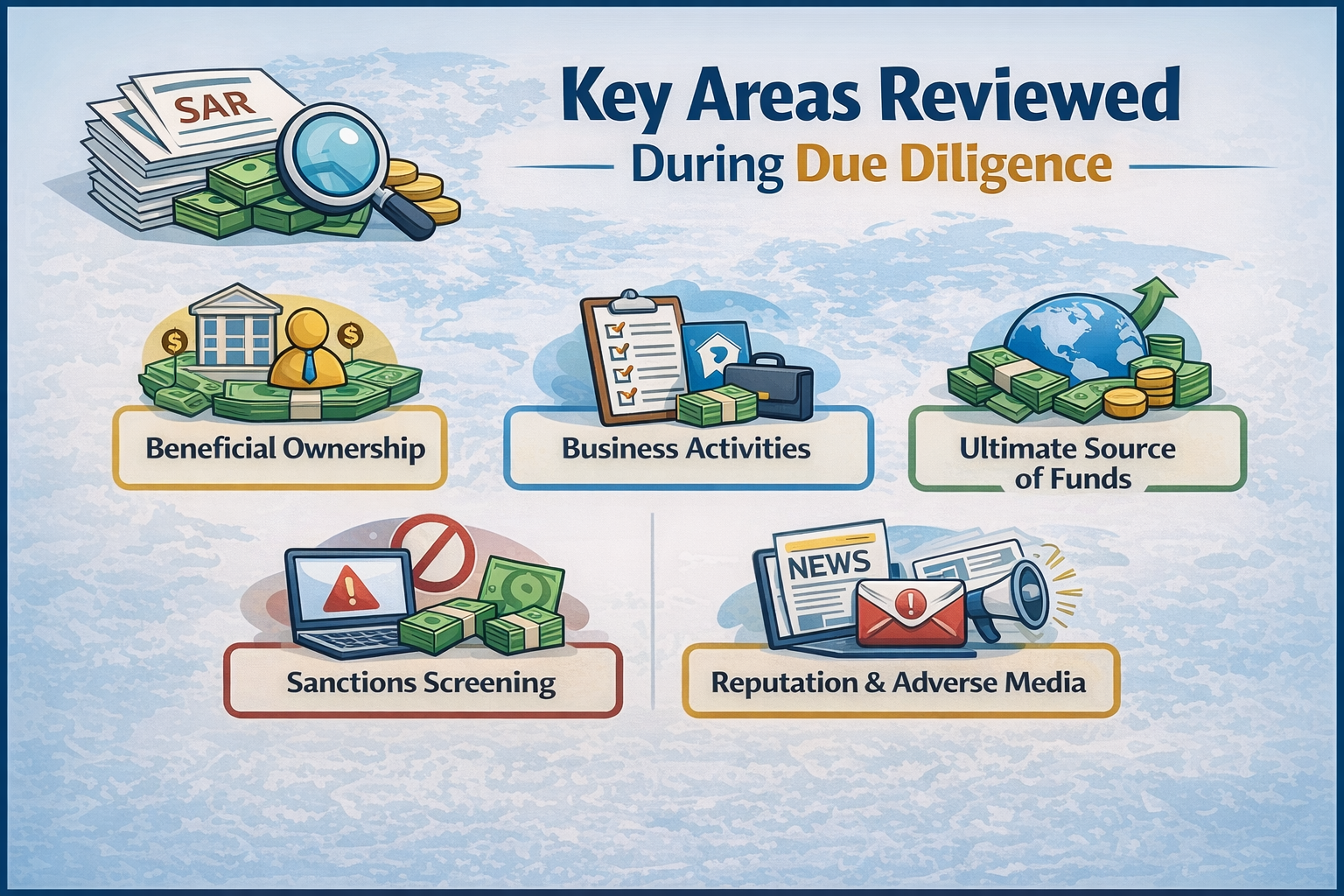
Company Legitimacy and Authorisation
Any effective due diligence process begins with confirming that the exporter is legally established and authorised to conduct business. This foundational step ensures that the company exists within the formal regulatory framework and is permitted to engage in export activities.
Verification typically includes examining official incorporation documents, validating export licences, reviewing tax registrations, and understanding the ownership and management structure. These checks help determine whether the business operates transparently, complies with statutory requirements, and is accountable to recognised authorities. Establishing legitimacy at the outset significantly reduces the risk of engaging with fraudulent or unregistered entities.
Financial Stability Assessment
Evaluating financial health provides critical insight into an exporter’s capacity to meet contractual obligations over time. A company’s financial condition directly influences its ability to manage production cycles, absorb market fluctuations, and maintain quality standards.
Key financial indicators include consistency in revenue generation, sustainable profit margins, liquidity position, debt exposure, and any visible signs of financial stress. An exporter facing financial strain may struggle with cash flow, delay shipments, compromise on quality, or fail to honour agreements. Therefore, assessing financial resilience is essential for long-term commercial reliability.

Regulatory and Trade Compliance
Compliance with legal and trade regulations is a central pillar of export due diligence. Exporters must adhere not only to domestic laws but also to the regulatory requirements of the importing country.
This evaluation involves reviewing export control compliance, verifying product-specific certifications, conducting sanctions and restricted-party screenings, and examining the company’s compliance track record. Any deficiencies in regulatory adherence can lead to shipment disruptions, financial penalties, customs holds, or even termination of contracts. A strong compliance framework signals operational discipline and risk awareness.
Operational Capability and Readiness
Operational due diligence focuses on determining whether the exporter has the practical capacity to deliver on commitments. Beyond contractual assurances, buyers must evaluate whether the exporter’s infrastructure and systems support consistent performance.
This review considers production capacity, sourcing arrangements, quality control procedures, supply chain reliability, and historical performance on previous orders. Assessing these factors ensures that delivery timelines, product specifications, and volume commitments are achievable in practice. Operational readiness confirms that promises are supported by real capabilities.
Risk and Reputation Analysis
A comprehensive due diligence review extends beyond internal records to assess the exporter’s external reputation and risk profile. Publicly available information can reveal patterns of behaviour that formal documentation may not capture.
his includes analysing past legal disputes, reviewing adverse media coverage, gathering industry feedback, and examining any history of trade-related disputes. Such insights help buyers evaluate ethical standards, reliability, and overall business conduct. Reputation often reflects long-term business practices and can serve as an early warning signal for potential concerns.
Risks of Insufficient Due Diligence
Failure to conduct thorough due diligence exposes buyers to significant commercial and operational risks. Without proper verification, businesses may unknowingly engage with illegitimate exporters, receive substandard goods, experience shipment delays, or encounter regulatory complications.
Cross-border disputes can be complex, time-consuming, and costly to resolve. Financial losses, reputational damage, and strained business relationships may follow. For this reason, preventive due diligence is far more effective and economical than attempting to resolve problems after they arise.
How SignalX Supports Due Diligence on Indian Exporters
SignalX simplifies and strengthens due diligence on Indian exporters by offering a structured, intelligence-driven approach to exporter evaluation.
SignalX Contribution to Buyer Decision-Making
SignalX enables buyers to:
- Access verified exporter profiles
- Identify legal, financial, and compliance risks
- Detect early warning signs through data analysis
- Receive tailored due diligence insights
By centralising information and analysis, SignalX reduces uncertainty and supports confident sourcing decisions.
SignalX Supports Due Diligence
SignalX simplifies and strengthens due diligence on Indian exporters by offering a structured, intelligence-driven approach to exporter evaluation.
When Should Due Diligence Be Conducted?
Due diligence is not a single checkpoint in the buyer exporter relationship; it is an ongoing risk management practice. Its value lies in being conducted at the right moments throughout the business lifecycle.
The process should begin before onboarding a new supplier, ensuring that the exporter’s legal standing, operational capacity, and compliance framework are properly verified before any commercial relationship is formalised. This early assessment reduces the likelihood of entering into agreements with unsuitable or high-risk partners.
It is equally important to conduct due diligence before releasing advance payments. Prepayment arrangements increase financial exposure, making it essential to confirm the exporter’s credibility and ability to deliver as promised.
Contract renewals also present a critical review point. Over time, a company’s financial position, ownership structure, regulatory status, or operational capabilities may change. Reassessment at renewal ensures that previously acceptable risk levels remain valid.
For long-term partnerships, periodic monitoring is essential. Markets evolve, regulations shift, and business conditions fluctuate. Ongoing review helps maintain an updated understanding of the exporter’s risk profile and prevents unexpected disruptions.
In essence, due diligence should be viewed as a continuous safeguard rather than a one-time procedural formality.
Practical Guidance for Buyers
Effective due diligence requires both caution and structure. Buyers should avoid relying exclusively on documents supplied directly by the exporter. While such documents are necessary, they may not always present a complete or independently verified picture.
Independent verification is crucial. Cross-checking registrations, certifications, financial indicators, and compliance records through reliable third-party sources strengthens accuracy and reduces bias.
The depth of investigation should also align with the scale and complexity of the transaction. High-value contracts, advance payment arrangements, or dealings in regulated sectors warrant more comprehensive scrutiny than low-risk transactions.
Finally, leveraging professional due diligence platforms or structured verification systems can enhance consistency, efficiency, and scalability. Standardised processes help organisations manage multiple supplier evaluations systematically while maintaining risk control.
FAQ
Why is due diligence necessary when importing from India?
It helps buyers verify exporter authenticity, reduce operational risk, and avoid compliance failures.
Is due diligence expensive?
The cost of due diligence is significantly lower than the potential losses caused by fraud, delays, or regulatory action.
Can due diligence be customised?
Yes. Buyers can scale due diligence based on industry, product type, and transaction value.
How does SignalX improve the process?
SignalX consolidates fragmented checks into a unified, data-backed assessment framework.
Final Thoughts
In a fast-moving global trade landscape, due diligence on Indian exporters is a critical tool for managing risk and building sustainable supplier relationships. It empowers buyers to act with clarity rather than assumption. By combining structured evaluation methods with platforms like SignalX, global buyers can engage Indian exporters confidently, reduce uncertainty, and protect their long-term commercial interests.


Samruddhi Kulkarni
Samruddhi is a marketing professional who creates content that simplifies complex topics such as third-party risk management, compliance, and vendor governance. By combining market research, insights, and domain understanding, she develops blogs, e-books, and best-practice guides that help organizations strengthen their risk posture and build long-term resilience.
