How to Verify Vendors and Reduce Third-Party Risk Before Onboarding
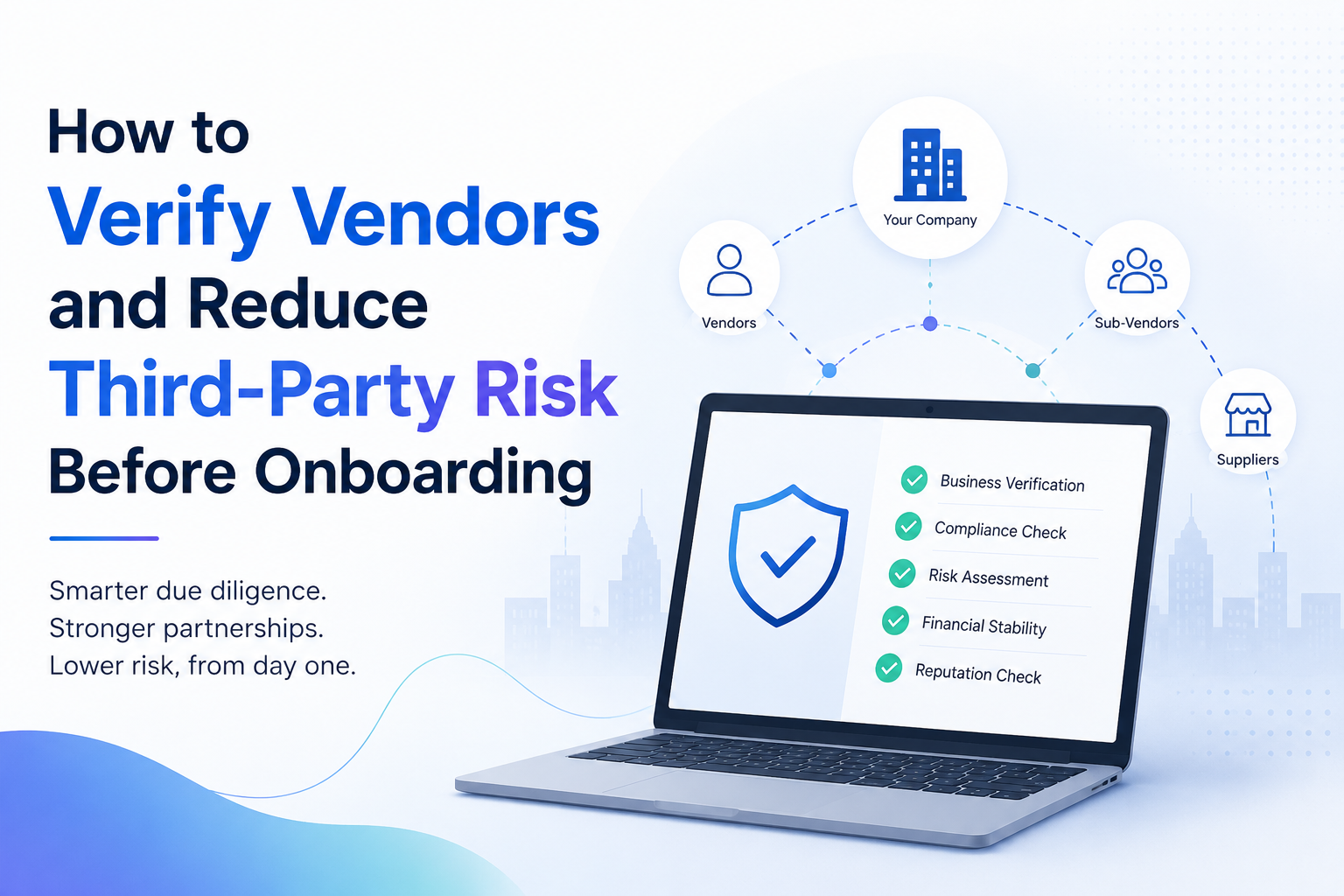





Vendor verification and onboarding has become far more complex than simply collecting compliance documents and signing contracts.
Modern enterprises today rely on a vast ecosystem of third parties including SaaS providers, logistics partners, cloud vendors, contractors, AI platforms, payment processors, and outsourced service providers. While these partnerships help businesses scale faster, they also introduce growing operational, cybersecurity, financial, and compliance risks.
Traditional vendor onboarding models built around manual questionnaires, spreadsheets, and one-time compliance checks are no longer sufficient in today’s interconnected business environment.
As vendor ecosystems expand, organizations need a smarter and more scalable approach to vendor verification, third-party risk management (TPRM), and continuous vendor monitoring.
What Is Vendor Onboarding?
Vendor onboarding is the process organizations use to evaluate, verify, approve, and manage third-party vendors before granting them access to systems, data, operations, or supply chains.
The process often includes:
- vendor due diligence
- compliance verification
- sanctions screening
- cybersecurity assessments
- financial risk analysis
- contract validation
- data privacy reviews
Modern vendor onboarding is no longer only a procurement activity. It has become a critical component of enterprise risk management, cybersecurity, and regulatory compliance.
What Is Third-Party Risk Management (TPRM)?
Third-Party Risk Management refers to the process of identifying, assessing, monitoring, and mitigating risks introduced by external vendors, suppliers, contractors, and service providers.
Organizations today face growing exposure to:
- cybersecurity threats
- supply-chain disruptions
- sanctions violations
- operational failures
- reputational damage
- financial instability
- data privacy risks
As businesses increasingly depend on third-party ecosystems, effective TPRM has become essential for maintaining operational resilience and regulatory compliance.
Why Traditional Vendor Verification Processes Are Failing
Many organizations still manage vendor verification through:
- manual questionnaires
- spreadsheets
- fragmented due diligence workflows
- one-time compliance reviews
While these methods may work for smaller vendor ecosystems, they become difficult to scale as organizations grow.
The larger issue is that most companies focus only on Tier 1 vendors the vendors they directly engage with.
However, significant risks often exist deeper within the ecosystem, including:
- Tier 2 vendors
- subcontractors
- downstream data processors
- hidden supply-chain dependencies
A vendor may appear compliant during onboarding, while their extended ecosystem may still expose organizations to:
- cybersecurity vulnerabilities
- sanctions exposure
- operational disruption
- reputational concerns
- financial instability
- data privacy violations
This has become one of the biggest blind spots in modern TPRM programs.
Recent third-party breaches and supply-chain attacks have demonstrated that organizations often lack visibility beyond their direct vendors.
Common Challenges in Modern Vendor Onboarding
As vendor ecosystems expand, procurement, compliance, legal, and security teams face growing operational pressure.
Organizations spend significant time:
- collecting compliance documents
- validating certifications
- reviewing questionnaires
- performing adverse media checks
- maintaining audit trails
- following up with vendors manually
The result is often:
- delayed vendor approvals
- inconsistent risk assessments
- fragmented visibility
- increased compliance burden
- slower onboarding cycles
Most enterprises want faster vendor onboarding, but manual due diligence processes frequently become the operational bottleneck.
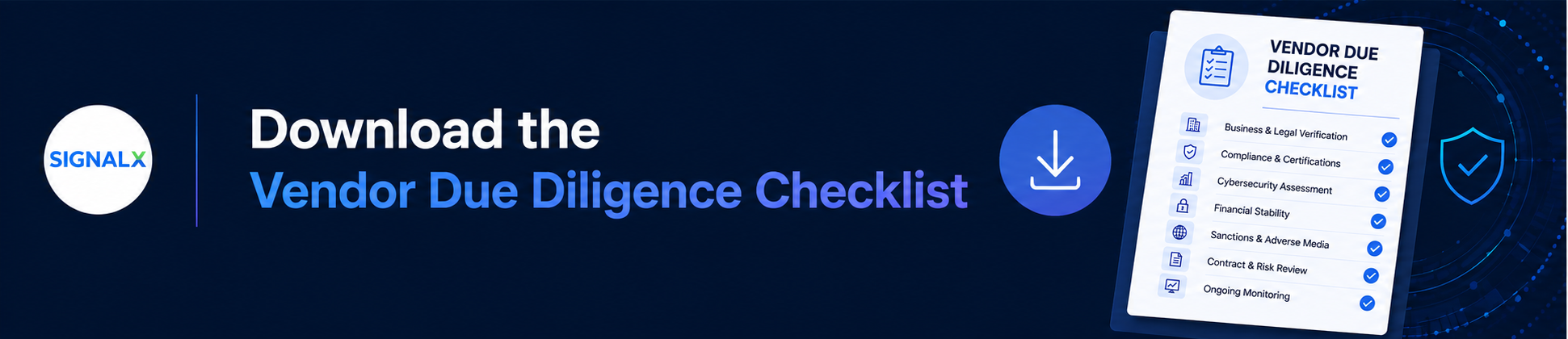
See How SignalX Automates Vendor Due Diligence →
Why Continuous Vendor Monitoring Matters
Vendor risk is not static.
A vendor that appears low-risk during onboarding may become high-risk later due to:
- cyber incidents
- regulatory actions
- operational failures
- ownership changes
- financial deterioration
- data breaches
- supply-chain vulnerabilities
Traditional onboarding models were designed for a slower and less connected business environment.
Today, vendor risks evolve continuously:
- compliance certifications expire
- vendors adopt new AI tools
- cyber posture changes
- ownership structures shift
- subcontractors are added without visibility
Yet many organizations still assess vendors only once during onboarding.
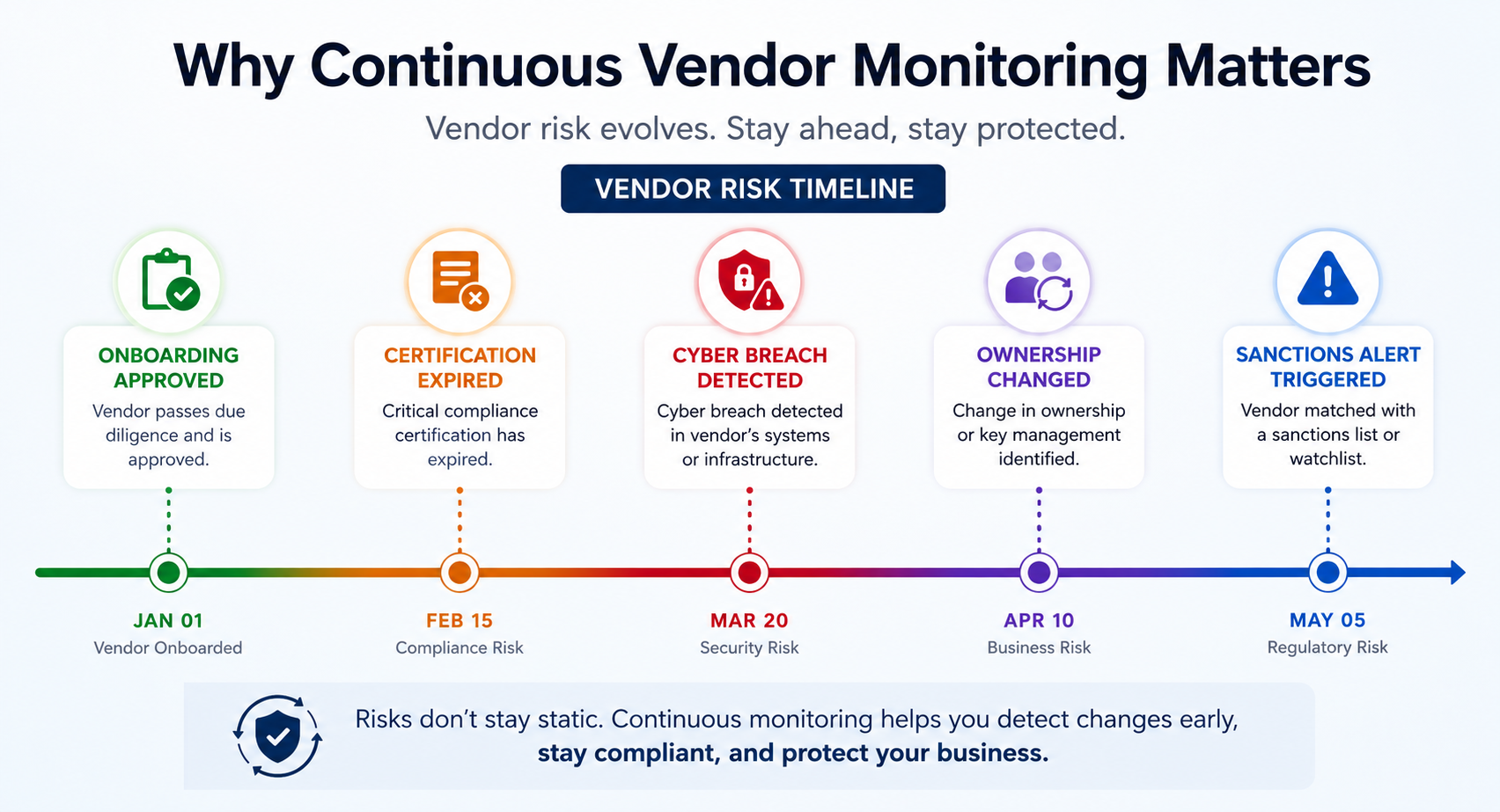
This creates a major gap between:
- vendors that were compliant during onboarding
- vendors that remain continuously trustworthy over time
Without continuous monitoring, organizations often discover vendor-related risks only after incidents occur.
The Growing Importance of Ecosystem-Level Risk Visibility
Modern vendor risk management(VRM) requires organizations to move beyond surface-level verification.
Organizations increasingly need visibility into:
- adverse media exposure
- litigation history
- sanctions risks
- ownership structures
- reputational concerns
- ecosystem-level dependencies
This is especially important as third-party risks now extend far beyond direct suppliers into broader interconnected ecosystems.
Supply Chain Risk Management is becoming a major priority for enterprises seeking to reduce operational disruptions and improve resilience across global vendor networks.
By improving visibility across the broader vendor ecosystem, businesses can make better-informed onboarding decisions while reducing long-term operational and compliance risks.
How AI Improves Vendor Due Diligence and TPRM
AI-powered vendor intelligence is transforming how organizations manage vendor onboarding and third-party risk management. 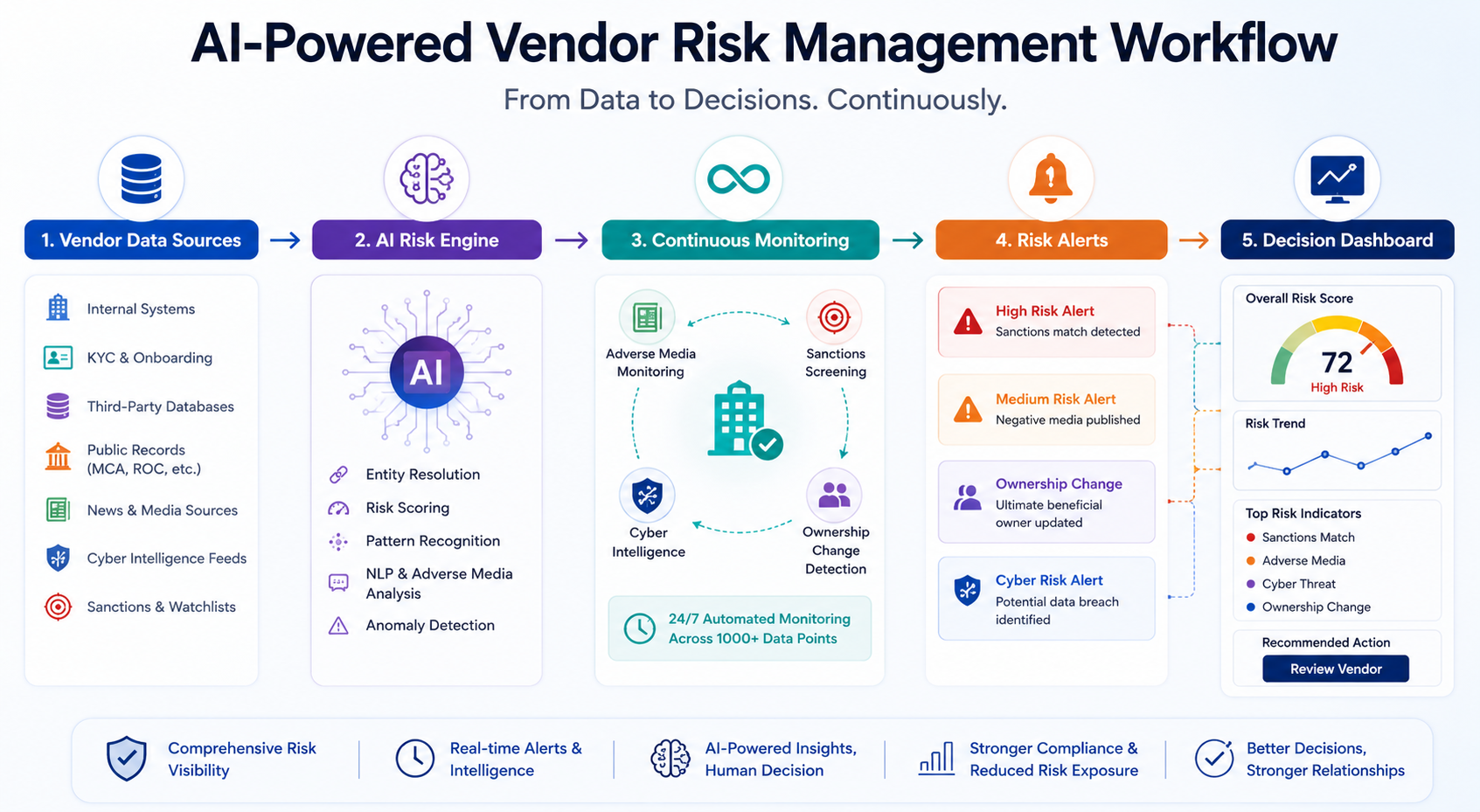
Instead of relying only on static manual reviews, organizations are increasingly adopting AI-driven workflows to:
- automate vendor due diligence
- centralize vendor intelligence
- identify hidden risk indicators
- improve onboarding efficiency
- strengthen compliance workflows
- monitor vendors continuously
- reduce operational burden on internal teams
AI-driven vendor onboarding also helps organizations improve consistency across risk assessments while enabling faster decision-making.
Traditional Vendor Onboarding vs AI-Driven Vendor Onboarding
| Traditional Vendor Onboarding | AI-Driven Vendor Onboarding |
|---|---|
| Manual questionnaires | Automated intelligence workflows |
| One-time compliance checks | Continuous monitoring |
| Fragmented visibility | Centralized vendor intelligence |
| Reactive risk management | Proactive risk detection |
| Limited ecosystem visibility | Tier 2 and Tier 3 risk visibility |
| Slower onboarding cycles | Faster onboarding decisions |
How SignalX Helps Organizations Improve Vendor Verification
SignalX helps enterprises modernize vendor onboarding and TPRM through an intelligence-driven and AI-powered approach.
SignalX enables organizations to:
- automate vendor due diligence workflows
- centralize third-party intelligence
- identify hidden risk indicators
- improve ecosystem-level visibility
- continuously monitor vendor risk posture
- reduce onboarding turnaround time
- strengthen operational resilience
Rather than focusing only on onboarding vendors faster, the goal is to help organizations onboard vendors with greater confidence, visibility, and continuous trust.
Why This Matters for Procurement, Compliance, and Security Teams
Modern vendor ecosystems directly impact:
- procurement operations
- cybersecurity programs
- regulatory compliance
- operational resilience
- financial risk exposure
Teams responsible for vendor governance increasingly need tools that support:
- continuous intelligence gathering
- automated monitoring
- scalable due diligence
- ecosystem-wide visibility
This is becoming particularly important for organizations operating in highly regulated industries or managing large global supplier ecosystems.
Potentially relevant standards and compliance areas include:
- ISO frameworks
- GDPR compliance
- sanctions screening
- cybersecurity risk assessments
- third-party compliance reviews
Frequently Asked Questions About Vendor Onboarding
What is vendor onboarding?
Vendor onboarding is the process of verifying, evaluating, and approving third-party vendors before establishing a business relationship.
Whose approval is required for new vendor onboarding?
New vendor onboarding typically requires approval from procurement, compliance, legal, finance, and cybersecurity teams depending on the vendor’s risk level and business impact. High-risk vendors may also undergo additional third-party risk and security assessments.
What is continuous vendor monitoring?
Continuous vendor monitoring refers to the ongoing assessment of vendor risk posture after onboarding, helping organizations identify new or evolving risks over time.
What are Tier 2 vendor risks?
Tier 2 vendor risks originate from subcontractors or downstream vendors connected to a primary vendor. These hidden dependencies can introduce cybersecurity, operational, and compliance risks.
How does AI improve vendor due diligence?
AI helps automate vendor intelligence gathering, improve risk visibility, reduce manual effort, and enable continuous monitoring across vendor ecosystems.
Conclusion
Vendor onboarding is no longer just a procurement process it has become a core business risk management function.
As vendor ecosystems become larger and more interconnected, organizations need a more intelligent and scalable approach to vendor verification and third-party risk management.
By combining:
- AI-driven intelligence
- automated due diligence
- ecosystem-level visibility
- continuous monitoring
organizations can significantly reduce the operational burden of vendor onboarding while strengthening trust across their third-party ecosystem.
Because the real challenge today is no longer simply:
“How do we onboard vendors faster?”
It is:
“How do we continuously trust the vendors we do business with?”
Build a Smarter Vendor Onboarding and TPRM Strategy
SignalX helps enterprises automate vendor due diligence, improve ecosystem visibility,
and continuously monitor third-party risk across global vendor networks.